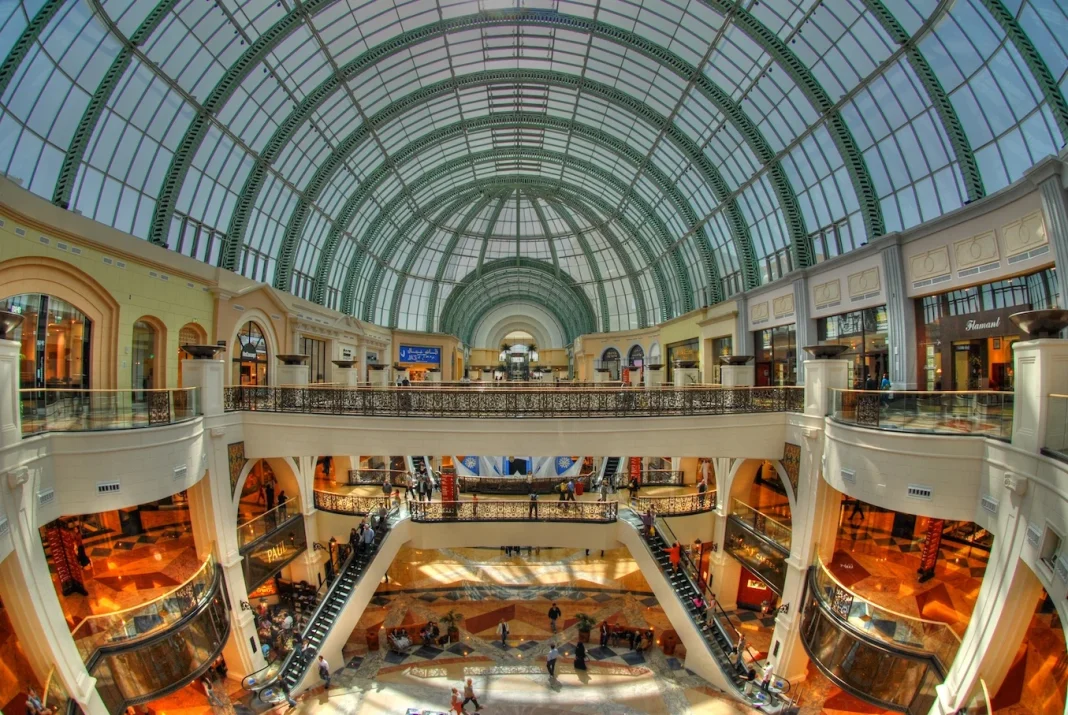


Can an emirate built on oil lead the Green Tourism revolution? Dubai has not only raised the question: in 2026, it already has concrete answers on the table. The emirate closed 2025 with 19.6 million international visitors and is now targeting a much more profitable —and selective— segment than traditional mass tourism.
The global wellness tourism market is growing at a double-digit rate each year, and the MENA region —with Dubai as its flagship— is currently the fastest-growing in the world within this segment: 13.3% annually according to the Global Wellness Institute. This is not a passing trend. It is a complete reconfiguration of the Gulf’s tourism model.
What exactly is Green Tourism and why Dubai needs it
Green Tourism is not about placing plants in the hotel lobby or printing brochures on recycled paper. It is a tourism model that integrates real environmental respect, economic profitability, and visitor well-being into the same value proposition. For Dubai, adopting it is not just a matter of image: it is a survival strategy in a market where high-net-worth travelers increasingly choose destinations with a verifiable positive impact.
The emirate has a perception problem that it has decided to tackle head-on. For decades, the world saw it as the symbol of excess —artificial islands, impossible towers, energy waste—. Today, with Green Tourism as its banner, Dubai wants to prove that modernity and environmental responsibility can not only coexist, but together they generate more money than any other model.
How the Green Tourism strategy works in the United Arab Emirates
In 2026, the UAE accelerated its transition toward Green Tourism with tax incentives for certified operators, low-impact infrastructure, and a regulatory framework that rewards the private sector for adopting internationally verifiable sustainable tourism standards. This is not rhetoric: there is public money behind every green accreditation achieved by a hotel or agency in the emirate.
The most striking project of this strategy is the Al Layan Oasis, a one-million-square-meter ecosystem in the heart of the desert approved with an investment of 1.080 billion dollars. Designed to welcome 330,000 visitors a year, it combines luxury wellness experiences with active environmental regeneration —something unthinkable just five years ago in this corner of the world.
Wellness tourism: the great market pursued by Green Tourism
The UAE’s health and wellness sector was valued at 67.9 billion dollars in 2023 and is projected to reach 118.6 billion by 2032. The wellness traveler —someone who travels specifically to improve their physical or mental health— spends between 30% and 50% more than the conventional tourist. Dubai knows this, and Green Tourism is its vehicle to capture that spending.
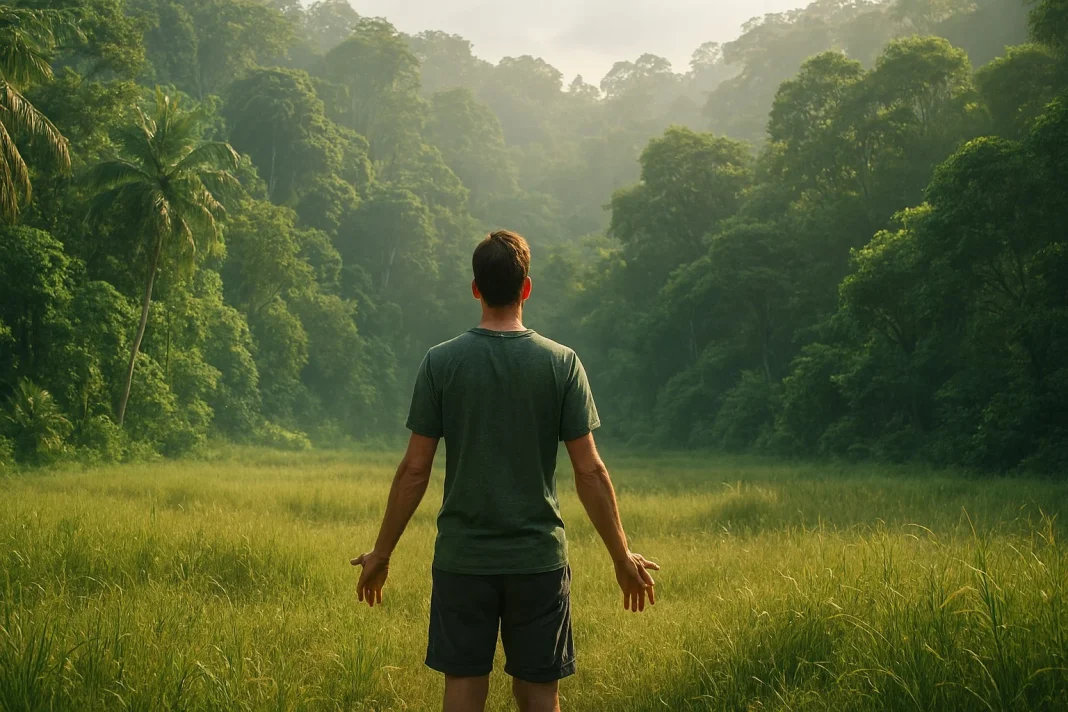
The bet is not limited to luxury spas. It includes certified hiking trails in Hatta, meditation retreats in the desert, gastronomy based on local products, and corporate wellness programs for international companies headquartered in the emirate. Green Tourism in Dubai is, above all, an ecosystem of experiences designed to make visitors spend more, stay longer, and return.
Dubai versus its competitors: who is winning the Green Tourism race
Saudi Arabia, with its Vision 2030, and Qatar, with its post-World Cup sustainability agenda, are Dubai’s most direct rivals in the race for the luxury green traveler. However, the emirate has an advantage: it possesses a mature infrastructure, unparalleled air connectivity —more than 260 direct destinations from Dubai Airport— and a globally recognized city-brand. Green Tourism is the differentiating argument that allows it to steer away from low-margin mass tourism.
What Dubai has understood better than anyone else is that the wellness traveler does not choose the cheapest destination, but the one that offers a coherent narrative between luxury and environmental awareness. This narrative, built on real data and verifiable projects, is precisely what Green Tourism provides to the emirate to compete within the global tourism elite.
| Indicator | Dubai 2023 | Dubai 2026 (projection) |
|---|---|---|
| International visitors | 17.1 million | +20 million |
| GCC wellness market | $67.9 B | $118.6 B (2032) |
| MENA wellness tourism growth | 13.3% annually | World leadership |
| Green Tourism project investment | Expanding | +$1.080 B (Al Layan alone) |
| Certified sustainable destinations | Emerging | Hatta + new green axes |
The future of Green Tourism in Dubai: where the model is heading in 2027 and beyond
The UN proclaimed 2027 as the International Year of Sustainable and Resilient Tourism, and Dubai is already positioned to be one of its global benchmarks. Industry analysts predict that the emirate will consolidate its leadership in Green Tourism by combining massive public investment, strict green regulation, and a sustainable luxury offering that has no equivalent in the region. This is not science fiction: it is the roadmap that the Dubai Department of Economy and Tourism has already laid out.
If you are thinking of Dubai as a destination —or as a market—, the smartest advice is this: Green Tourism is not a trend that will last a couple of seasons. It is the structural reconfiguration of how the emirate wants to relate to the world over the coming decades. Those who arrive first in this ecosystem, whether as travelers, investors, or tourism operators, will gain an advantage that will be very difficult to catch up with later.