

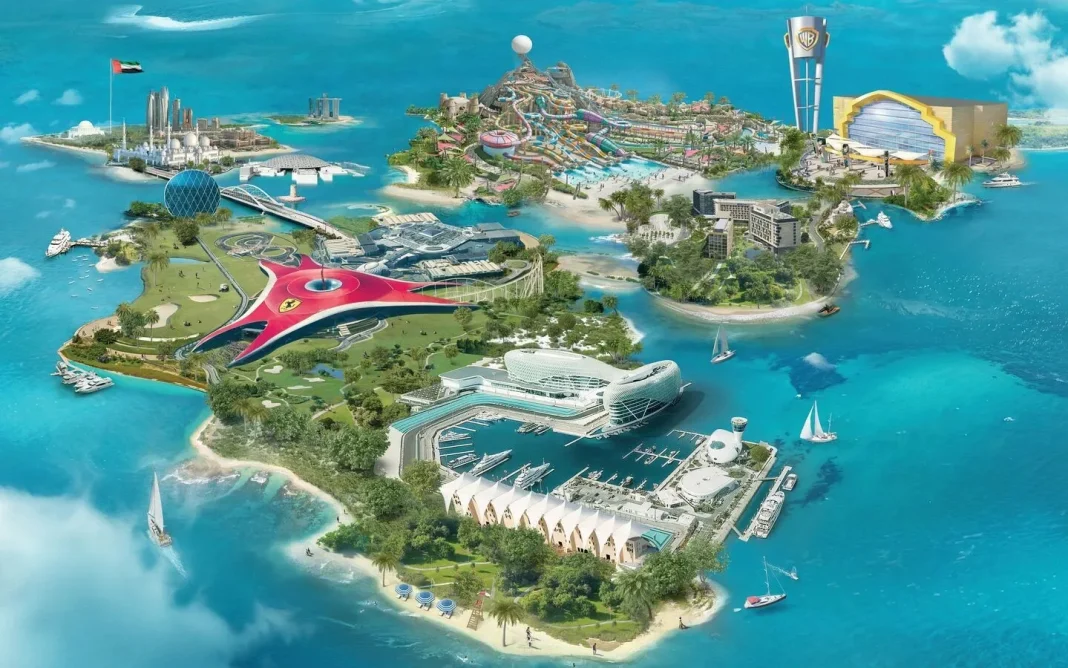
Is it possible to build the most exclusive refuge on the planet for ultra-high-net-worth individuals without destroying a protected natural sanctuary? The answer to this dilemma is being crafted right now on the shores of Sir Bani Yas Island, a geographical corner that has ceased to be the Middle East’s best-kept secret to become the epicenter of an unprecedented real estate and tourism revolution.
The rules of international luxury have changed drastically, and high-net-worth travelers are no longer looking for artificial opulence, but rather wild authenticity. The ultimate plan seeks to capture that visitor willing to pay astronomical rates for absolute privacy, backed by an infrastructure that completely redefines the standards of the tourism sector in the Asian region.
Mohamed Khalifa Al Mubarak’s vision for Sir Bani Yas Island
The ambitious sustainable infrastructure expansion plan is not a commercial coincidence, but a strict institutional roadmap. Chairman Mohamed Khalifa Al Mubarak has designed a perfect gear where the high culture of urban museums connects directly with the exclusive isolation of maritime environments.
This tourism strategy marks an insurmountable competitive distance from other traditional Persian Gulf destinations by prioritizing low-density open spaces. Investments focus on building complexes that comply with the strict ecological regulations in force, attracting investments from international sovereign wealth funds that see the area as a very safe safe-haven asset.
The new standard of premium ecotourism in Abu Dhabi
Turning a wild environment into the temporary home of the planet’s largest fortunes requires delicate conservation engineering. In the heart of Sir Bani Yas Island live thousands of specimens of protected exotic fauna that roam completely free in front of the resort villas.
This communion with the local ecosystem is the central pillar of the project promoted from the capital of Abu Dhabi, a territory that leads the transition toward sustainable business in the Arab world. Foreign investors have understood that the true exclusivity of tomorrow consists in guaranteeing the active preservation of nature while enjoying fully personalized attention.
Absolute privacy for the world’s greatest fortunes
The millionaires who choose to spend their summer in this destination seek total disconnection shielded against any unwanted external intrusion. The island’s natural geographical isolation is complemented by a state-of-the-art security deployment and restricted access via private air and sea transport terminals.
The architectural design of each resort on Sir Bani Yas Island ensures that guests can enjoy turquoise beaches without crossing paths with other visitors. This level of radical privacy is the main advantage highlighted by Mohamed Khalifa Al Mubarak‘s team to win the global race for the most profitable vacation market.
The transformation of transport infrastructure in Abu Dhabi
The success of any megaproject of these dimensions depends on seamless connections capable of meeting the demanding levels of corporate and diplomatic clients. The expansion of airports and private yacht terminals in the Abu Dhabi region ensures flawless transit to the island accommodations.
Logistics are prepared to handle everything from large-length superyachts to direct charter flights without disrupting the acoustic peace of the Sir Bani Yas Island animal sanctuary. Every detail of transport has been optimized under premises of extreme energy efficiency so as not to increase the overall carbon footprint of the emirate.
| Strategic Indicator | Development Period | Estimated Impact on the Sector |
|---|---|---|
| Green Investment | 2025 – 2026 | Doubling of ecological funds |
| Hotel Capacity | Low Density | Strict control of luxury slots |
| Protected Fauna | Active Monitoring | Increase of species in the wild |
The future of the exclusive travel market on Sir Bani Yas Island
Projections for the coming years confirm that the premium ecotourism model applied in the emirate is completely viable and scalable in the long term. Sector analysts estimate that controlled development will keep prices stable in the hyper-luxury segment, consolidating the international reputation of the regional brand.
The management led by Mohamed Khalifa Al Mubarak demonstrates that economic growth does not have to be at odds with environmental protection in Abu Dhabi. The true jewel of the tourism destination of the future will not only be the spectacular nature of the buildings to be constructed, but the firm political decision to protect the original environment.