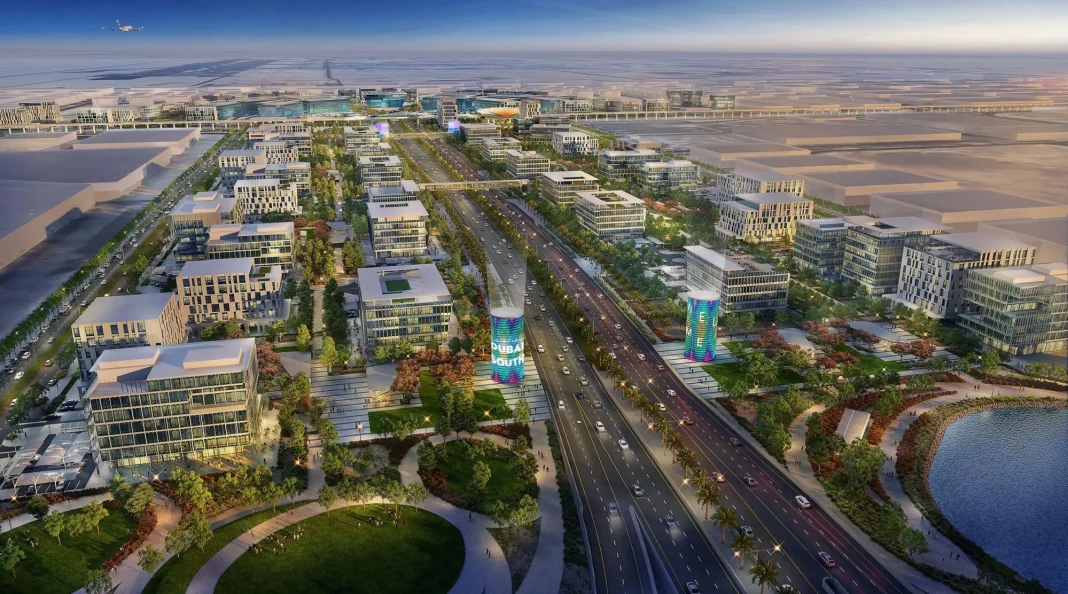


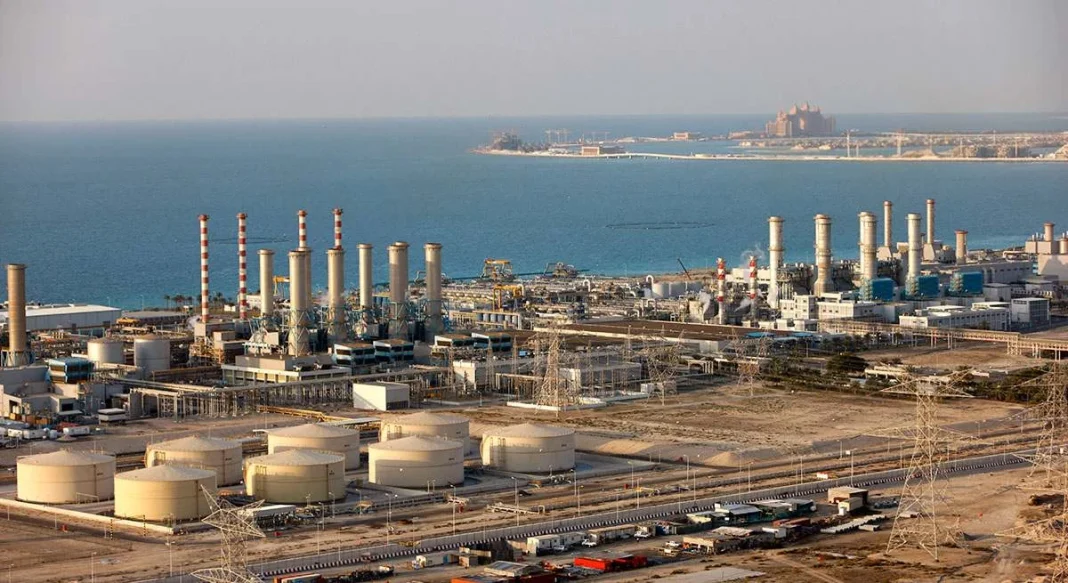
Can the growth of an international financial superpower be sustained if the engine of its oil wells is suddenly turned off? The Minister of Economy, Abdulla bin Touq Al Marri, has decided to challenge the traditional manuals of global macroeconomics with a roadmap that generates as much expectation as skepticism in Western markets.
Audited data prove that the goal of reaching 3 trillion dirhams by the next decade is not a simple statement of political intent, but an ongoing structural transformation that already places non-oil activities above seventy-four percent of the national wealth generated.
Abdulla’s roadmap to shake up the global financial board
Is it possible to reinvent the identity of a country that holds six percent of the world’s oil reserves without destabilizing its trade balance in the attempt? The strategic plan designed by Abdulla relies on absolute diversification, using historical energy surpluses to finance a hyper-connected ecosystem where international private capital finds an unparalleled fiscal environment.
The government goal demands an unprecedented acceleration in strategic sectors such as artificial intelligence, financial technologies, and high-end real estate development across the different territories of the federation. The Minister of Economy argues that the true financial sovereignty of tomorrow belongs to nations that manage to digitalize their value chains and attract global technological talent.
The keys to diversification in the key sectors of the Emirates
The structural resilience of the Arabian Peninsula against global geopolitical tensions is due to the firm institutionalized leadership of leaders like Abdulla, who has been able to coordinate specific mandates so that each region develops integrated competitive advantages. Massive investments are no longer seeking to drill underground, but rather to consolidate the Emirates as the absolute epicenter of advanced logistical services and premium cultural tourism in the region.
Wholesale trade, the high-value-added manufacturing sector, and traditional financial activities jointly contribute more than forty percent of the gross domestic product non-related to hydrocarbons. This institutional cohesion allows the Emirates to compete advantageously against other emerging markets in Southeast Asia, projecting a legal and monetary stability indispensable for large international sovereign wealth funds.
Tourism and aviation as the new pillars to replace crude oil
The federation’s air transport infrastructure and the efficiency of its logistical services lead international competitiveness rankings, transforming airports into true global connection hubs. The national tourism strategy aims to exceed forty million annual guests through a diversified offer that combines luxury hotel infrastructure with sustainable cultural proposals.
The management led by Abdulla understands that commercial aviation is the connective tissue that guarantees the constant flow of international investors and consumers into the internal market. This industry is no longer conceived in isolation, but as a direct economic multiplier that revitalizes local retail trade and corporate technological services.
The role of startups in the new national economy
The ambitious national plan aims to surpass the barrier of two million active startups by the beginning of the next decade, consolidating a flexible business fabric. The Minister of Economy has promoted regulatory frameworks and deep corporate reforms that facilitate the incorporation of companies by foreign entrepreneurs without bureaucratic hurdles.
The sectorial goal includes the creation of at least ten tech unicorn companies born and expanded from the national territory towards international markets. Small and medium-sized enterprises currently represent the backbone of private employment in the Emirates, providing a fundamental agility to absorb innovations in artificial intelligence applied to commercial management.
| Non-Oil Sector | Contribution to Real GDP (%) | Strategic Objective 2031 |
|---|---|---|
| Wholesale and Retail Trade | 16.8% | Consolidation of global corridors |
| Manufacturing Industry | 13.5% | Automation and Artificial Intelligence |
| Financial Services and Insurance | 13.2% | Global hub for crypto assets and fintech |
| Tourism and Hospitality | 11.7% | Attract 40 million guests per year |
The future of the Emirates under the vision of the Minister of Economy
Macroeconomic projections estimate sustained growth exceeding five percent annually, driven almost entirely by the dynamics of the non-oil private market. The leadership coordinated by Abdulla demonstrates that the transition to an economy based on knowledge and technological innovation is a viable and profitable path in the long term.
International investors should analyze the Emirates market not as a temporary destination for oil revenues, but as an advanced logistical and industrial platform fully integrated into global trade. Economic diversification has ceased to be an option for the future and has become a tangible reality that redefines the balance of international financial power.
TITLE: Abdulla bin Touq Al Marri’s ambitious economic plan to double the United Arab Emirates’ non-oil GDP in record time
KEYWORD 1: Abdulla
KEYWORD 2: Emirates
SLUG: abdulla-emirates-economic-plan-gdp
PHOTO CAPTION: The financial transformation of the Middle East advances driven by state strategies seeking total independence from hydrocarbons.
TITLE CAPTION: A historic turn of the helm in the Persian Gulf promises to break the historic dependence on crude oil. The Minister of Economy leads an aggressive strategy of digitalization, tourism, and attraction of foreign capital that aims to shield the productive fabric against global fluctuations in the energy market.
Can the growth of an international financial superpower be sustained if the engine of its oil wells is suddenly turned off? The Minister of Economy, Abdulla bin Touq Al Marri, has decided to challenge the traditional manuals of global macroeconomics with a roadmap that generates as much expectation as skepticism in Western markets.
Audited data prove that the goal of reaching 3 trillion dirhams by the next decade is not a simple statement of political intent, but an ongoing structural transformation that already places non-oil activities above seventy-four percent of the national wealth generated.
Abdulla’s roadmap to shake up the global financial board
Is it possible to reinvent the identity of a country that holds six percent of the world’s oil reserves without destabilizing its trade balance in the attempt? The strategic plan designed by Abdulla relies on absolute diversification, using historical energy surpluses to finance a hyper-connected ecosystem where international private capital finds an unparalleled fiscal environment.
The government goal demands an unprecedented acceleration in strategic sectors such as artificial intelligence, financial technologies, and high-end real estate development across the different territories of the federation. The Minister of Economy argues that the true financial sovereignty of tomorrow belongs to nations that manage to digitalize their value chains and attract global technological talent.
The keys to diversification in the key sectors of the Emirates
The structural resilience of the Arabian Peninsula against global geopolitical tensions is due to the firm institutionalized leadership of leaders like Abdulla, who has been able to coordinate specific mandates so that each region develops integrated competitive advantages. Massive investments are no longer seeking to drill underground, but rather to consolidate the Emirates as the absolute epicenter of advanced logistical services and premium cultural tourism in the region.
Wholesale trade, the high-value-added manufacturing sector, and traditional financial activities jointly contribute more than forty percent of the gross domestic product non-related to hydrocarbons. This institutional cohesion allows the Emirates to compete advantageously against other emerging markets in Southeast Asia, projecting a legal and monetary stability indispensable for large international sovereign wealth funds.
Tourism and aviation as the new pillars to replace crude oil
The federation’s air transport infrastructure and the efficiency of its logistical services lead international competitiveness rankings, transforming airports into true global connection hubs. The national tourism strategy aims to exceed forty million annual guests through a diversified offer that combines luxury hotel infrastructure with sustainable cultural proposals.
The management led by Abdulla understands that commercial aviation is the connective tissue that guarantees the constant flow of international investors and consumers into the internal market. This industry is no longer conceived in isolation, but as a direct economic multiplier that revitalizes local retail trade and corporate technological services.
The role of startups in the new national economy
The ambitious national plan aims to surpass the barrier of two million active startups by the beginning of the next decade, consolidating a flexible business fabric. The Minister of Economy has promoted regulatory frameworks and deep corporate reforms that facilitate the incorporation of companies by foreign entrepreneurs without bureaucratic hurdles.
The sectorial goal includes the creation of at least ten tech unicorn companies born and expanded from the national territory towards international markets. Small and medium-sized enterprises currently represent the backbone of private employment in the Emirates, providing a fundamental agility to absorb innovations in artificial intelligence applied to commercial management.
| Non-Oil Sector | Contribution to Real GDP (%) | Strategic Objective 2031 |
|---|---|---|
| Wholesale and Retail Trade | 16.8% | Consolidation of global corridors |
| Manufacturing Industry | 13.5% | Automation and Artificial Intelligence |
| Financial Services and Insurance | 13.2% | Global hub for crypto assets and fintech |
| Tourism and Hospitality | 11.7% | Attract 40 million guests per year |
The future of the Emirates under the vision of the Minister of Economy
Macroeconomic projections estimate sustained growth exceeding five percent annually, driven almost entirely by the dynamics of the non-oil private market. The leadership coordinated by Abdulla demonstrates that the transition to an economy based on knowledge and technological innovation is a viable and profitable path in the long term.
International investors should analyze the Emirates market not as a temporary destination for oil revenues, but as an advanced logistical and industrial platform fully integrated into global trade. Economic diversification has ceased to be an option for the future and has become a tangible reality that redefines the balance of international financial power.
.
La implicación activa del [sector privado](https://es.wikipedia.org/wiki/Abu_Dabi) no se limitará a la aportación de capital, sino que importará innovación tecnológica y metodologías de trabajo altamente competitivas. Gracias a marcos regulatorios transparentes y seguros, el emirato ha conseguido blindar la confianza de los mercados internacionales, acelerando la licitación de contratos en un entorno de alta certidumbre jurídica.
<h2>Infraestructura de transporte y conexiones globales</h2>
https://www.youtube.com/watch?v=KvTKakM72Ag
El segmento dedicado al transporte acapara la mayor partida presupuestaria del plan, con una asignación que asciende a los 35.000 millones de dirhams. El objetivo principal es construir y optimizar más de 300 kilómetros de carreteras, túneles e intersecciones avanzadas que agilizarán el tráfico comercial e industrial dentro de todo el territorio emiratí.
Estas obras de ingeniería no solo resolverán problemas actuales de movilidad, sino que anticipan los flujos logísticos de la próxima década. La conectividad terrestre mejorada reforzará las cadenas de suministro regionales, conectando de forma óptima los puertos principales y las zonas francas industriales con las nuevas áreas de expansión residencial.
<h2>Impacto social y sostenibilidad del modelo emiratí</h2>
Más allá del asfalto y el hormigón, el plan de ADIO destina partidas cruciales para garantizar el bienestar de los ciudadanos. Se invertirán unos 9.000 millones de dirhams en infraestructura social, un apartado enfocado de forma directa en la creación de centros educativos, complejos universitarios avanzados e instalaciones de salud especializada.
El suministro hídrico y la resiliencia climática también reciben una asignación fundamental de 11.000 millones de dirhams para sistemas de control de inundaciones y almacenamiento de agua. Estas medidas aseguran que el crecimiento económico marche de la mano con la sostenibilidad ambiental, protegiendo las inversiones frente a los desafíos del cambio climático global.
| Sector Estratégico | Inversión (Dirhams) | Proyectos Principales |
|--------------------|---------------------|-----------------------|
| Transporte y Vías | 35.000 Millones | 300 km de carreteras y túneles |
| Gestión Hídrica | 11.000 Millones | Presas y control de inundaciones |
| Infraestructura Social | 9.000 Millones | Colegios, universidades y hospitales |
<h2>Hacia dónde camina el horizonte económico de la región</h2>
El despliegue de este ambicioso programa de inversiones marca el inicio de una era de madurez financiera para la economía del Golfo Pérsico. Los analistas internacionales coinciden en que la estrategia implementada servirá de guía para otros estados de la región que buscan reducir de forma drástica su exposición a la volatilidad de los mercados de hidrocarburos.
El dinamismo que aporta el **sector privado** garantiza que las infraestructuras mantengan altos estándares de operación y mantenimiento a lo largo de su ciclo de vida útil. La apuesta decidida por un entorno regulatorio transparente seguirá actuando como un potente imán para el capital extranjero, consolidando una economía sostenible, diversificada y preparada para liderar los mercados del futuro.](https://noticias.ae/wp-content/uploads/2026/05/dubai-rascacielos-1068x713.webp "Historic Alliance in Abu Dhabi: ADIO Seals a 55 Billion Dirham Agreement with the Private Sector to Transform the Local Economy")