


In February 2026, the average property price in Dubai Hills Estate rose by 16.5% year-on-year. This is not an isolated piece of data: it is a snapshot of a silent exodus of European capital towards the desert. While European stock markets fluctuate and taxation tightens in several countries, high-net-worth individuals from the old continent are betting on Gulf brick-and-mortar with a conviction that blends strategy, instinct, and, at times, a certain dose of faith.
The question circulating in the offices of wealth advisors in Madrid, Milan, or Zurich is not whether Dubai is profitable, but how much longer it will remain so. That nuance —between real opportunity and speculative overbuying— is precisely where the most interesting debate in the ultra-luxury real estate market in 2026 is concentrated.
Why Dubai Hills Estate has become the favorite destination for European millionaires
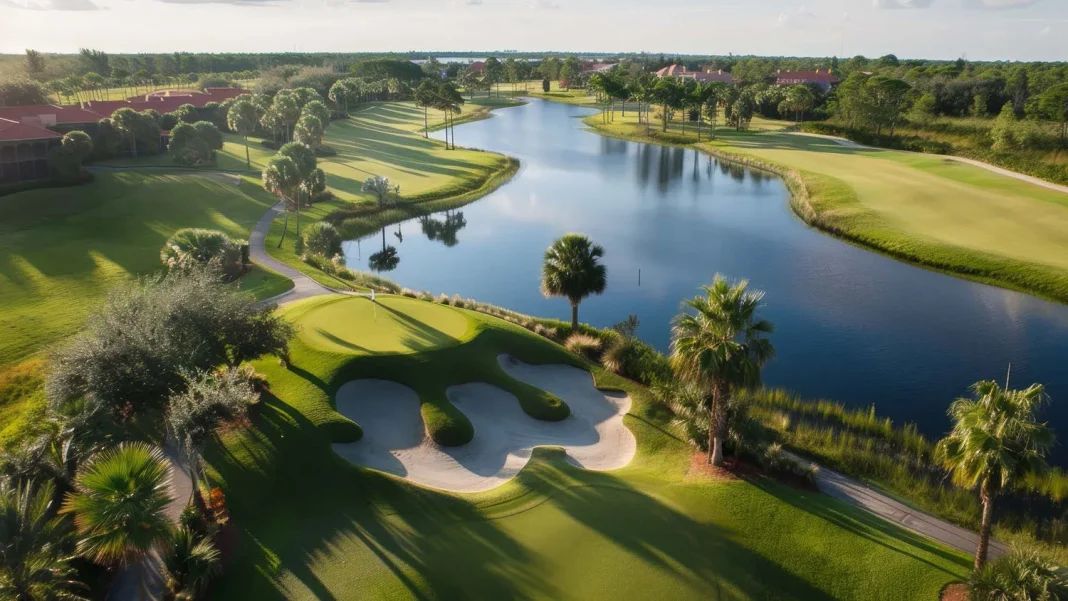
Dubai Hills Estate is not just another generic luxury development. It is a city within the city, built around an 18-hole golf course and a 180,000-square-meter central park, designed to offer something in short supply in the Gulf: tranquility and family privacy. Its developer, Emaar Properties, has built a proposition here that combines urban exclusivity with world-class infrastructure —international schools, hospitals, shopping malls— making daily life viable without leaving the perimeter.
What has triggered European interest is not only the quality of the product, but the context. The firm Henley & Partners estimates that more than 6,700 millionaires relocated to the Emirates in 2024, and 2025 broke that record. Dubai captures that demand with a combination that is hard to replicate: zero income tax, a regulated environment, rental yields of 7-8% compared to 3% in Europe, and a residential visibility that investors can touch with their own hands.
The ultra-luxury market and the signs that raise doubts
The coin has two sides. Dubai Hills Estate and the rest of the emirate closed 2025 with more than 270,000 real estate transactions valued at 917 billion dirhams, a historical record. But that very success has fueled alarms: between 2023 and 2025, thousands of off-plan projects were launched that are now hitting the market simultaneously, creating downward pressure on prices in some segments, especially the vertical one.
According to the consulted analysts from Dubai Hills Estate, the premium between off-plan and ready-to-move-in assets has already compressed to less than 5% in areas like Marina or Business Bay —a classic sign of saturation—. However, the residential golf villa sector behaves differently: the supply is structurally finite, and that protects it from the massive oversupply affecting apartments.
What the real numbers of 2026 say
Data from February 2026 shows that commercial property prices in Dubai Hills Estate skyrocketed by 611.5% year-on-year —a figure that responds to the extreme shortage of office space—, while residential prices grew by 16.5%. The number of new rental contracts rose by 8.4%, a sign that demand from actual residents, not just speculators, is sustaining the market. The distinct solidity of this development compared to other areas of Dubai is based on a scarce element: non-buildable land around the perimeter of the golf course.
Anyone buying a villa overlooking the fairway in Dubai Hills Estate is not buying square meters: they are buying the certainty that there will never be another tower across from them. This is the hidden asset that European high-net-worth individuals managed to spot before the mass market, and the reason why value appreciation in this segment continues to double that of the general market.
Real advantages and risks for the European investor
The main reasons to buy
- Villas in Dubai Hills Estate generate net yields between 6% and 8%, which are hard to find in Western Europe.
- The Emirati Golden Visa for real estate investment starting from 2 million dirhams opens up long-term legal residence.
- RERA regulations and mortgage controls reduce systemic risk compared to the 2008 cycle.
- The dirham-euro exchange rate has provided additional protection against the depreciation of the euro in recent years.
Factors that call for caution
- The massive delivery of projects scheduled between 2026 and 2027 could compress yields in apartments and affect secondary market liquidity.
- Dubai remains a market without full transparency: official data and actual transaction prices can diverge.
- Regional geopolitics is a variable that no valuation model can completely neutralize.
- Community fees, utilities, and maintenance costs reduce net returns above what many spreadsheets project.
Where Dubai Hills Estate will be in 2028 and what investors should do today
The consensus among analysts tracking the Emirati market points to an orderly moderation, not a bubble burst. Unlike in 2008, today’s market is mostly cash-funded —without the banking leverage that blew up the previous cycle— and end-user demand outpaces purely speculative demand. The buyer profile has changed: before, it was the short-term speculator; today, it is the high-net-worth European family looking for a second home with real profitability.
For anyone evaluating a position in Dubai Hills Estate at this moment, the soundest advice is the usual: buy based on fundamental value criteria, not market momentum. The golf course and green spaces are not just an aesthetic appeal; they are the most effective barrier to entry against future oversupply. In a market that rewards scarcity, golf-front villas will likely remain the most defensible asset in the entire emirate.