

When a country born from the desert and oil manages to ensure that 78% of its wealth no longer depends on either the desert or oil, something extraordinary has happened. In 2026, the United Arab Emirates confirmed a 5.6% GDP growth, leading regional economic expansion according to the Global Investment Outlook 2026 report by First Abu Dhabi Bank. This figure is not just a number: it is the result of decades of a strategic commitment that is now beginning to bear its most mature fruits.
What makes this scenario particularly striking is not the growth figure itself, but what lies behind it: non-oil sectors are growing at more than 5.5% and already contribute 78% of the national GDP, according to statements by Minister of Economy Abdullah bin Touq Al Marri at the Investopia Partners event. Tourism, financial services, logistics, technology, and construction are completely redrawing the economic landscape of the Emirates.
The Emirates Faces an Economic Turning Point of No Return
To understand the magnitude of this shift, it is worth recalling that just two decades ago, oil dominated nearly 70% of the UAE’s GDP. The diversification strategy that the federal government initiated with Vision 2021 —and which now continues with plans leading up to 2031— has achieved something that very few crude-producing nations had managed until now: making black gold stop being the main engine of the economy without causing it to suffer a transition crisis.
Dubai’s real estate sector closed 2025 with more than 230 billion dirhams in transactions, and the city’s financial market has accumulated five consecutive years of growth, with an annual return of 17.22% in 2025. These are the visible pillars of an economic architecture that relies less and less on the fluctuations of crude oil prices.
The Emirates and Its Commitment to the Diversification Transforming the GDP
The UAE economy is today a model studied in international forums, and the country’s economic diversification has reduced dependence on oil and gas to levels that many analysts considered impossible just a generation ago. The Central Bank of the UAE had already projected in September 2025 a 5.3% growth for 2026, backed by “strong anticipated activity in non-hydrocarbon sectors.” Reality has surpassed even those estimates.
The government has revised more than 40 laws and regulations in recent years to facilitate business activity and attract foreign direct investment, which reached 45.2 billion dollars in 2025. Legislation, attractive taxation, and world-class infrastructure form the tripod supporting this accelerated growth model.
Why Leaving OPEC Reinforces the Diversification Narrative
The UAE’s announcement to leave OPEC on May 1, 2026, was not a whimsical breakup, but the logical consequence of a country that no longer needs the oil cartel as an anchor for its economic model. When crude represents less than 22% of the GDP, the production restrictions imposed by Riyadh cease to make the strategic sense they did in the 1990s. The Emirates has decided that its future is being written in a different key.
The exit from the organization shook global energy markets, but in Abu Dhabi, the message was clear: diversification is now irreversible. The country can afford a sovereign stance on energy policy precisely because state revenues no longer existentially depend on how many barrels it sells each month.
Tourism, Finance, and Technology: The Three Engines of the New GDP
Tourism as a Top-Tier Industry
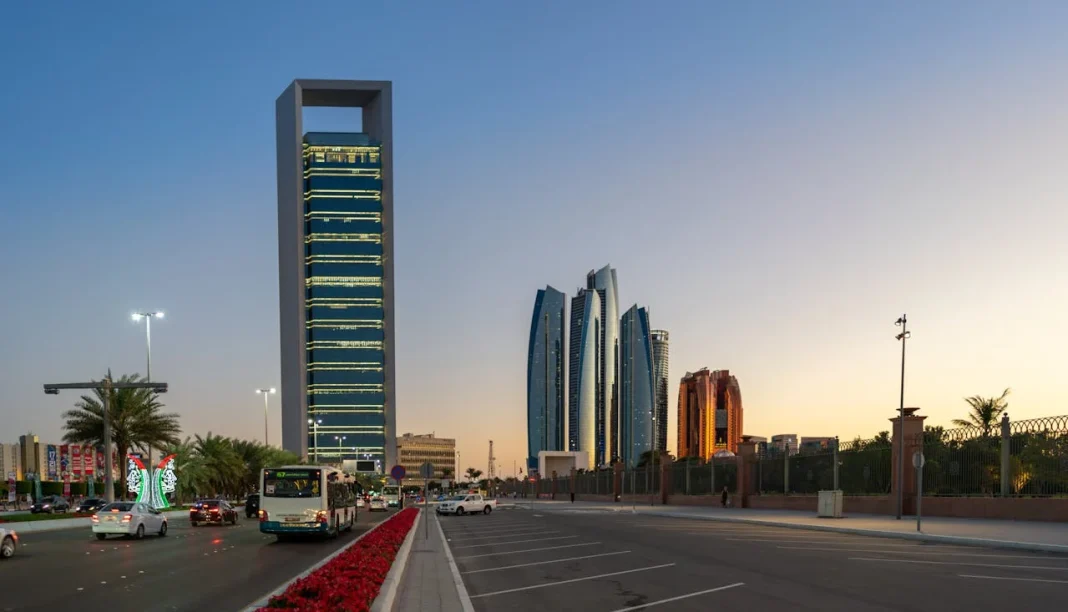
The UAE’s tourism sector generated a historic record of 257.3 billion dirhams in economic contribution in 2025. Dubai and Abu Dhabi compete in a league of their own on a global level, with projects like Dubailand, the Saadiyat cultural district, or the eco-resorts of the Liwa desert attracting high-net-worth travelers from all five continents. The diversification of the tourism product —from urban luxury to experiential desert tourism— is one of the factors that has contributed most to the sector’s resilience.
Finance and Technology, the 21st Century Duo
The Emirates has been positioning Dubai and Abu Dhabi for years as alternative financial hubs to London and Singapore, and the data proves that strategy right. The government recently launched the National Policy for Economic Clusters, with the aim of increasing GDP by more than 30 billion dirhams annually through the knowledge economy. Artificial intelligence, financial services, and digital logistics are the clearest bets for the future.
The Emirates in 2030: Sustainability and Knowledge as the Next Frontier
Macroeconomic projections suggest that the Emirates will maintain an expansion rate above 4% until the end of the decade, driven by sectors that are increasingly knowledge-intensive and less dependent on natural resources. The diversification that GDP figures celebrate today is not over: the next chapter involves the knowledge economy, the energy transition, and attracting global talent.
For investors and those observing emerging markets from abroad, the Emirati model offers a concrete lesson: the structural transformation of an economy is possible when there is sustained political will, modern legislative frameworks, and a decisive commitment to sectors with a future. The UAE is no longer just the country of oil and skyscrapers; it is, increasingly, the most ambitious economic laboratory of the 21st century.