

Can a financial hub really grow by 62% while the rest of the world slows down? Dubai has been proving for months that it can, and the data from the first quarter of 2026 confirms it overwhelmingly. The question is no longer whether to invest in the emirate, but whether there is still room left in what is arguably the most dynamic financial market on the planet.
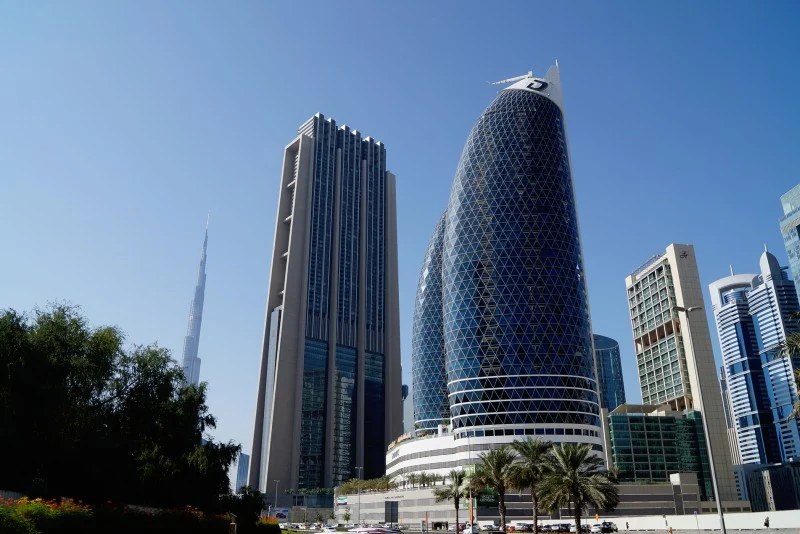
What is happening in Dubai is not a response to a favorable economic cycle, but rather a deliberate strategy executed with pinpoint precision. The DIFC has ceased to be a regional bet and has become the gateway to global capital, and the figures just published by its authority leave no room for doubt.
Why Dubai is becoming the new magnet for global capital
The first quarter of 2026 recorded the arrival of 775 new companies to the DIFC, a 62% increase compared to the same period of the previous year, when 478 firms had chosen Dubai‘s financial center as their regional headquarters. In March alone, 258 companies established themselves, compared to 162 in March 2025, representing a 59% year-on-year increase. Numbers that, in any other geopolitical context, would seem impossible.
Among the new tenants are major heavyweights such as Janus Henderson Investors, National Bank of Canada, and Arrowpoint Investment Partners, along with a wave of family offices and asset managers that until two years ago were based in London or Singapore. The diversification of those choosing Dubai speaks to a structural shift, not a passing trend.
Dubai and the DIFC: the formula that turns uncertainty into opportunity
The key to Dubai‘s success as a financial hub lies in a combination that few territories can replicate: zero corporate and income taxes for 50 years, 100% foreign ownership without the need for a local partner, and free repatriation of capital without restrictions. The DIFC operates as an independent jurisdiction within the emirate, with its own courts based on English common law and regulation in English, which removes one of the major friction points for Western institutions.
Sheikh Maktoum bin Mohammed, President of the DIFC, directly linked these results to the emirate’s economic model: “Dubai continues to consolidate a unique model, rooted in a proactive and agile response to regional and global changes”. A statement that fits perfectly with the D33 ambition, the strategic plan that aims to position Dubai among the top four global financial centers by 2033.
The record year of 2025 that anticipates what lies ahead
In 2025, the DIFC registered 1,924 new companies, up 28% from the previous year, with giants like PIMCO, Warburg Pincus, Allianz Trade, and Starwood Capital among the newcomers. The center’s revenue reached AED 2.13 billion, showing a growth of 20%, while net profit advanced 28% to AED 1.48 billion. More than 50,000 professionals now work within the 8,844 active companies operating inside Dubai.
One of the most striking growth drivers was family wealth: entities linked to family offices grew by 61% year-on-year to 1,289 firms, while family foundations established in the DIFC increased by 66%. Dubai has become the unofficial capital of major wealth management in the Middle East.
The DIFC Zabeel project that will double the district’s size
| Indicator | 2025 | Q1 2026 |
|---|---|---|
| New companies | 1,924 (+28%) | 775 (+62%) |
| DIFC Revenue | AED 2,130 M (+20%) | In progress |
| Total active companies | 8,844 | Exceeding 9,600 |
| Registered family offices | 1,289 (+61%) | Accelerated expansion |
| FinTech/AI organizations | 1,677 | +30% in January 2026 |
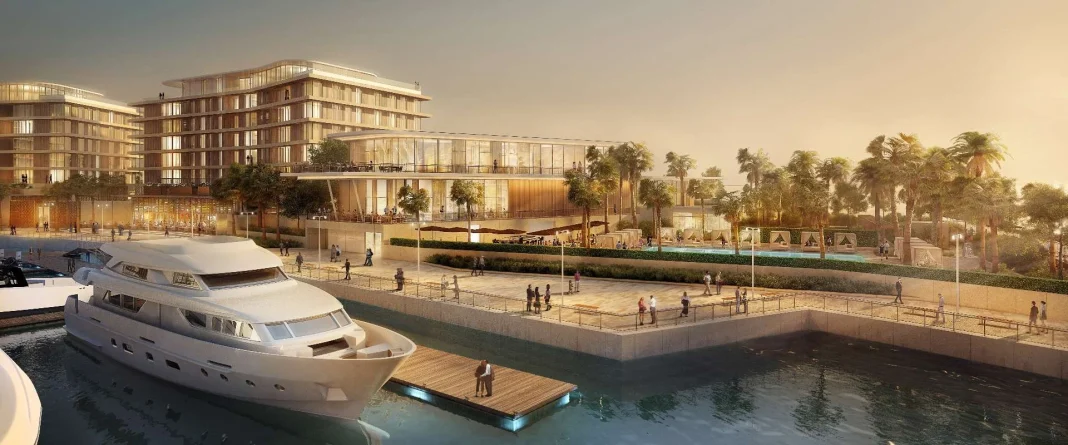
To absorb this unprecedented demand, Dubai approved the DIFC Zabeel project, a master plan backed by AED 100 billion (around $27 billion) that will add 17.7 million square feet to the current 110-hectare complex. The expansion will be developed over six successive phases, with the first opening scheduled for 2030 and the completion of the full plan by 2040. This is not real estate speculation: it is the response to a real waiting list of global corporations.
The window of opportunity that experts do not want to close
The question every investor should be asking right now is whether the most favorable entry cycle for Dubai has already passed or if it is still ongoing. Analysts closely monitoring the DIFC point out that the combination of physical space still available before Zabeel goes live, competitive pricing compared to Hong Kong or Luxembourg, and a regulatory framework that keeps improving, creates a window that is unlikely to be repeated in the coming years.
The Global Wealth Outlook 2026 report published by the DIFC itself points to Dubai as one of the major beneficiaries of the largest intergenerational wealth transfer in history, with approximately 9,800 new millionaires settling in the UAE in 2025 alone. For anyone still evaluating whether to position themselves in this market, the clock has not stopped: it is simply moving faster than many expected.