


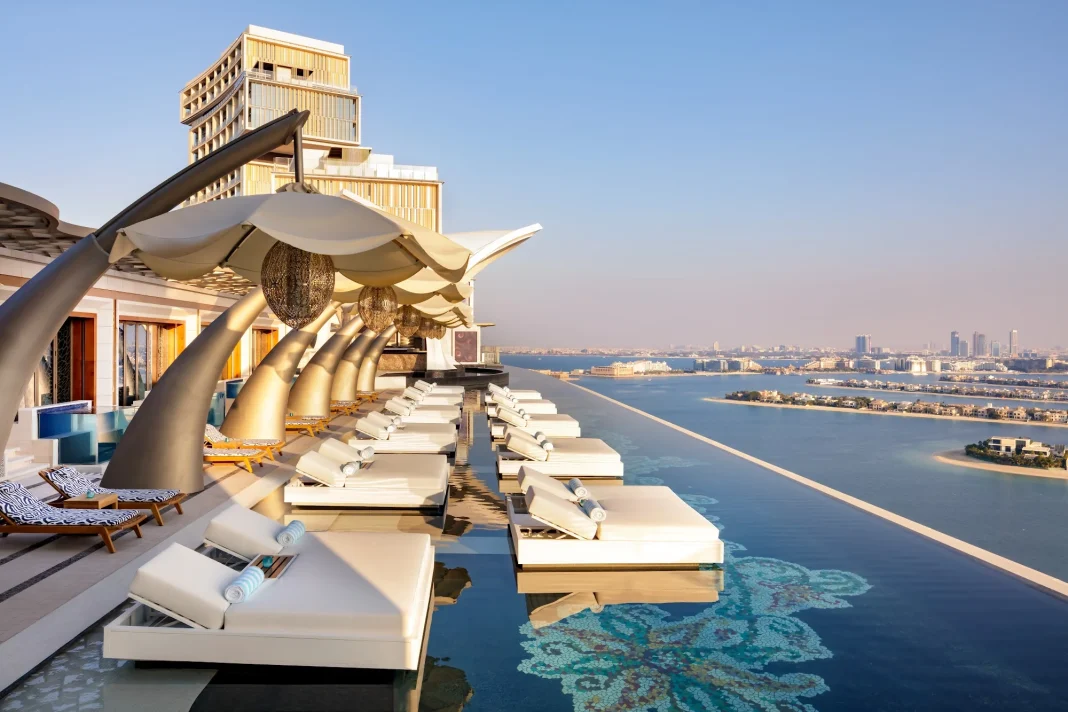
Do you really believe that extreme opulence in the middle of the desert is incompatible with environmental preservation in Dubai? For decades, it has been assumed that wasting resources was an indispensable condition for sustaining the most exclusive lodging complexes in the Persian Gulf. However, the global demands of conscious travelers are forcing industry giants to completely rewrite the premium hospitality manuals.
The avant-garde complex Atlantis The Royal has demonstrated that the ecological transition is viable through the implementation of its comprehensive Atlantis Atlas Project program. This initiative has achieved the absolute elimination of single-use plastic bottles in its facilities, preventing the disposal of more than eight million containers thanks to a state-of-the-art internal water filtration and bottling plant.
The ecological transformation of hotel architecture in Dubai
The fragmented design of this gigantic hotel does not merely respond to an aesthetic whim that defies gravity on Dubai’s coastal silhouette. The modular structures facilitate much more efficient thermal management, drastically reducing the energy requirements of air conditioning systems in a climatic environment where temperatures hover near historical highs.
The resort’s management has installed extensive networks of photovoltaic solar panels to self-power key service and water entertainment areas. The intelligent use of these renewable energy sources directly mitigates the emission of thousands of tons of carbon dioxide into the atmosphere, setting a real precedent for new developments planning to be built over the Gulf.
The scientific audit backing change in the Persian Gulf
Uncontrolled opulence is no longer a valid selling point in the residential and real estate market that characterizes Dubai. Ecological auditing standards are becoming increasingly strict, forcing hotel corporations to submit their operational balances to international scientific certification programs such as EarthCheck Gold, a rigorous seal that validates the true environmental impact of tourism activity.
This international control methodology aligns with the World Tourism Organization’s guidelines regarding sustainable tourism, a concept focused on balancing current socioeconomic repercussions with native biological conservation. Premium guests no longer just demand personalized butler service, but actively check whether the accommodation has external audits that verify real care for the environment.
Artificial intelligence against food waste in kitchens
Managing the gastronomic offering of seventeen world-class restaurants, many of them led by Michelin-starred chefs, requires massive logistics that used to generate tons of organic waste in Dubai. To solve this critical sustainability problem, the hotel has integrated advanced scanning technology and artificial intelligence Winnow into its kitchens.
This digital system analyzes each food discard in the complex’s buffets and restaurants with mathematical precision, allowing kitchen teams to optimize food purchasing and daily production. The results confirm a reduction of over fifty percent in edible food waste, proving that technical efficiency and sustainable development can coexist with haute cuisine menus.
Marine traceability and protection of local biodiversity
The hotel complex’s gastronomy has also transformed its supply chains through the adoption of digital traceability platforms such as SFS Trace. This technology allows chefs to know the exact origin and distribution route of each piece of fish served at the tables, ensuring that supply comes exclusively from responsible and local fisheries in the Dubai ecosystem.
The commitment to the marine environment goes beyond the kitchens and includes breeding and reinsertion programs for native fauna in the waters of the Persian Gulf. Qualified biologists supervise the care of tens of thousands of species in its aquariums, driving scientific conservation and education projects that actively promote the development of a sustainable tourism respectful of the desert’s delicate marine fauna.
| Environmental Management Indicator | Technology Implemented | Verifiable Impact on the Resort |
|---|---|---|
| Plastic Reduction | Internal micro-filtration plant | 8.2 million disposable bottles avoided |
| Food Waste Control | Winnow Artificial Intelligence | 53.4% reduction in edible waste |
| Supplier Traceability | SFS Trace digital platform | 100% of contracted seafood products traceable |
| Carbon Footprint Mitigation | Photovoltaic solar capture | Equivalent to the absorption of 40,000 trees |
The future of ultra-luxury travel in the Emirates
The premium sector trend points toward an absolute consolidation of biological conservation regulations and circular operations in Dubai. The United Arab Emirates hotel market has understood that long-term commercial viability depends on its ability to decouple economic growth from the excessive consumption of fossil and water natural resources.
As industry analysts, we consider that the strategy adopted by Atlantis The Royal will set the mandatory baseline for upcoming large-scale resorts in the region. The true luxury of the future will not be measured solely by the sophistication of its marbles or the renown of its celebrity guests, but by the technological capacity to operate with neutral emissions and actively protect the planet’s natural heritage.