

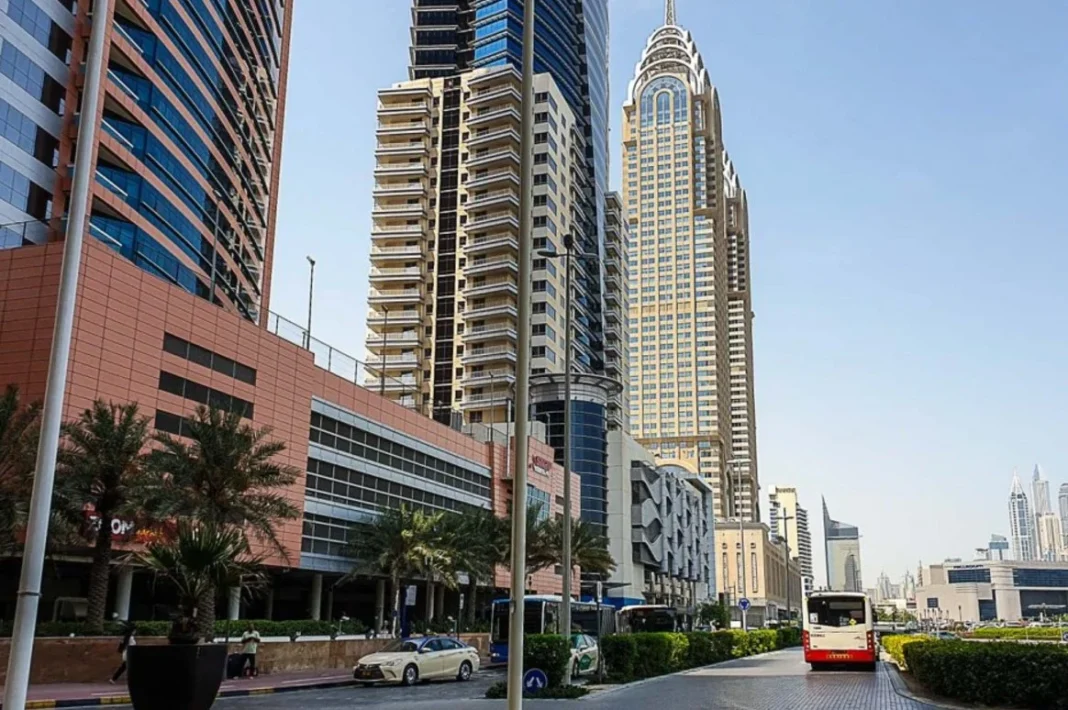
How many companies does a desert need to become a global tech reference? Dubai Internet City has been answering that question for over two decades with facts, not promises. What was sand and ambition in 1999 has transformed into the largest tech hub in the Middle East, with giants like Microsoft, Google, IBM, or Oracle set up just minutes apart from each other.
The secret is not just fiscal, although the 50-year full tax exemption guaranteed by law is no minor detail. What sets Dubai Internet City apart from other free zones is its ecosystem: next-generation fiber-optic infrastructure, Tier III data centers, and a community of over 31,000 professionals sharing space, ideas, and contracts every single day.
Dubai Internet City: The world’s first tech hub built from scratch
Dubai Internet City was born in October 1999 by decree of Sheikh Mohammed bin Rashid Al Maktoum with a far from modest goal: to make Dubai the technological hub of an entire region. In just 25 years, that dream turned into more than 4,000 companies and 31,000 specialists operating under the same regulatory framework and in one of the most competitive environments on the planet.
The value proposition is hard to ignore: 100% foreign ownership, no corporate tax, no customs duties, and direct access to markets in Asia, Europe, and Africa from a single postal address. In 2025, Dubai’s ecosystem registered 1,690 new digital startups, a growth close to 40% compared to the previous year, confirming that the appeal of Dubai Internet City is not fading, but accelerating.
Dubai Internet City and Silicon Oasis: Two complementary models
Dubai’s tech map has two main protagonists. On one hand, Dubai Internet City concentrates digital multinationals and the major names of the industry; on the other, Silicon Oasis bets on a more integrated model: a free zone where one can live, work, and research within the same 7.2 square kilometer radius.
Silicon Oasis was founded in 2003 and has since grown to host companies like Microsoft, Schneider Electric, and Siemens, which maintain permanent R&D laboratories there. The main difference compared to other tech parks is its 15-minute city concept: housing, offices, hospitals, and shops accessible on foot, eliminating the time wasted that in Bangalore or San Francisco can mean two hours of daily commuting.
Why Spanish companies are looking at Dubai
The interest from Spain is not anecdotal. In the first weeks of 2026, more than 2,400 registration applications reached the Dubai Silicon Oasis authorities from India, the United States, and Spain, according to official data. The equation is tempting for any tech company: licenses starting from AED 12,000 per year (around $3,200), guaranteed tax exemption until 2053, and paperwork resolved in weeks, not years.
The profile of the arriving entrepreneur is increasingly younger and more digital. Programmers with salaries of €45,000 in Barcelona receive offers of up to $120,000 tax-free in Dubai Internet City, a difference that in terms of purchasing power can exceed 200%. For medium-sized companies invoicing international clients, the tax savings compared to the 25% Spanish Corporate tax regime makes relocation a purely financial decision.
Record Expansion: 3.5 billion dollars for Silicon Oasis
In January 2026, the Dubai government confirmed the largest investment in its history in technological infrastructure: AED 12.8 billion (approximately 3.5 billion dollars) destined to expand Silicon Oasis with two megaprojects, District IO and Block 14, scheduled for completion by 2029 to coincide with the opening of the new metro Blue Line. The move will connect the park directly with the city’s main financial and residential districts.
This injection comes at a time when competition among global tech hubs is more intense than ever. Dubai Internet City celebrated its 25th anniversary in 2024 with a clear message: what Silicon Valley took 40 years to build, Dubai has replicated in just over two decades. The Dubai AI Campus, inaugurated in 2025, acts as a specific magnet for machine learning engineers, reinforcing a specialization that goes far beyond the tax advantage.
| Indicator | Dubai Internet City | Silicon Oasis |
|---|---|---|
| Foundation | 1999 | 2003 |
| Registered companies | +4,000 | +1,000 |
| Professionals | +31,000 | +88,000 residents |
| 2026 Investment | Consolidated Hub | $3.5B expansion |
| Model | Pure tech free zone | 15-min integrated city |
| Major tenants | Microsoft, Google, IBM, Oracle | Microsoft, Siemens, Schneider |
The future of Dubai’s tech hub: AI, crypto, and European talent
The next frontier for Dubai Internet City and Silicon Oasis is not just growing in square meters, but leading the transition toward an artificial intelligence economy. The Expand North Star event in October 2026 will gather the world’s top venture capital funds in Dubai, and that doesn’t happen by accident: investors have understood that talent no longer needs to be in California to connect with global capital.
For companies and professionals who value regulatory predictability —taxation without surprises, standardized paperwork, seamless infrastructure— the message from Dubai Internet City is particularly relevant at a time when Europe tightens its tax frameworks and slows down bureaucracy. The recommendation from experts who have been operating there for years is always the same: before deciding, visit and compare. There is no pitch deck that beats a week walking through the park.