

Does it make sense to continue searching for profitability in traditional European markets when the gravity center of money has definitively shifted? The speed of real estate in the Persian Gulf breaks all molds and consolidates Dubai South as the new preferred investment corridor for high-net-worth individuals escaping fiscal uncertainty.
The confirmation of a macro-agreement worth 62 billion UAE dirhams does nothing less than shield the area’s land value. This is a masterstroke meticulously designed to absorb the tide of foreign capital seeking a safe haven and double-digit returns in this corner of the planet.
The multi-billion shield signed by Nabil Al Kindi
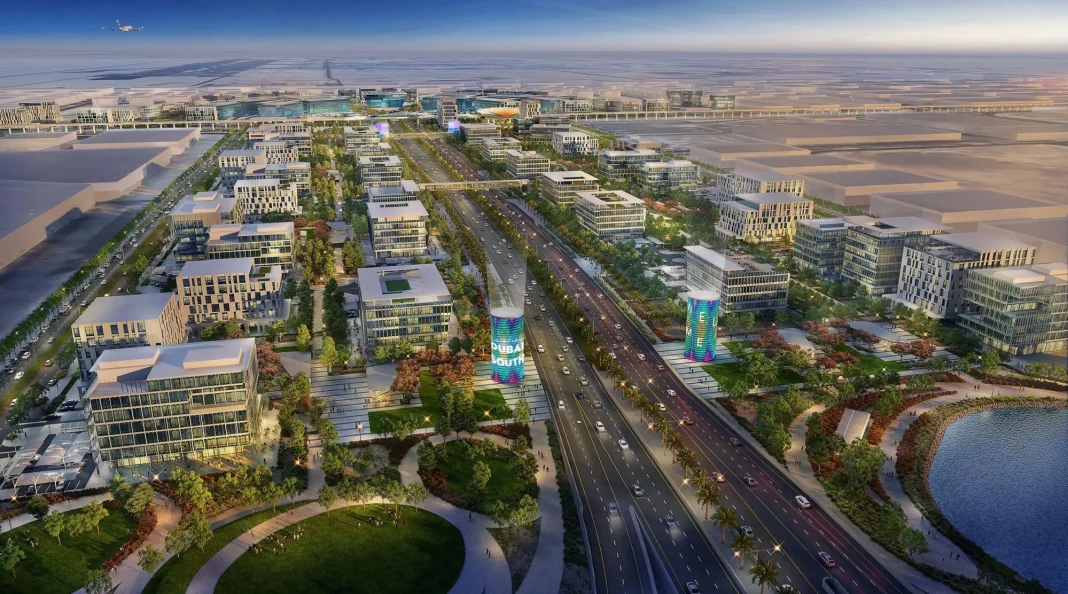
Behind this tectonic shift lies the signature of Nabil Al Kindi, Group CEO of the state-owned developer, who has sealed an unprecedented pact to build a mega mixed-use community. The master plan contemplates the immediate development of an intelligent urban fabric erected over a colossal area of 22 million square feet of pure strategic real estate.
The maneuver aims to build a shield of absolute trust for international funds, waving away the ghost of speculation through projects backed by already awarded infrastructure contracts. Al Kindi’s delivery commitment is firmly anchored in tangible realities and public execution plans that guarantee accelerated asset appreciation between now and the next decade.
The strategic alliance turning the desert into gold
The monumental strategic agreement between the public real estate division of Dubai South and the titanic private conglomerate founded by Majid Al Futtaim represents a historic milestone. The union of both giants ensures not only limitless financial muscle, but also the incorporation of an iconic shopping mall and world-class leisure options that will act as a magnet for thousands of new residents.
This corporate synergy provides the area with a commercial cohesion that investors from Spain know how to value very well when analyzing the cash flow cycle. By integrating luxury services, advanced wellness centers, and physical connectivity into a single infrastructure, the zone drastically reduces vacancy risks and immediately triggers the yield rates of the local real estate ecosystem.
Why foreign capital is fleeing to the south of the city
The reasons for this massive exodus of international funds toward the southern area are purely mathematical and geopolitical. While European capitals impose severe rental restrictions and tighten tax regulations, the Emirati legal environment offers a framework of stability and tax exemption that is practically unbeatable in current times.
The buyer profile landing in Dubai South seeks long-term legal stability combined with net rental yields that usually range between 8% and 12% annually. It is a perfect monetary refuge where money works in a currency pegged directly to the dollar, shielding wealth against the inflationary swings hitting the West.
The role of Al Maktoum Airport in the success equation
No serious analysis of this phenomenon can be complete without understanding the catalyst role of the new Al Maktoum International Airport, destined to become the largest aviation hub in the world. All the urban planning led by Al Kindi branches out radially from this hyper-connected global transport node that will receive millions of annual passengers.
Proximity to this logistics epicenter ensures uninterrupted residential demand from flight crews, international executives, and highly qualified service personnel. Investing today in Dubai South land is equivalent to acquiring assets adjacent to an inexhaustible global economic engine, multiplying the potential for land appreciation before the airfield construction is fully completed.
| Property Type in Dubai South | Average Entry Price (AED) | Estimated Gross Yield (%) |
|---|---|---|
| Residential Studio | 450,000 | 10.5% |
| 1-Bedroom Apartment | 650,000 | 9.5% |
| 2-Bedroom Apartment | 950,000 | 8.5% |
| Townhouse / Executive Villa | 1,500,000 | 8.0% |
The real estate horizon and investment keys for 2026
Market projections indicate that off-plan properties acquired in this district will experience a jump in market value of between 35% and 50% as the first commercial phases open by the hand of Majid Al Futtaim. This growth is firmly driven by the government’s D33 Economic Agenda, ensuring liquidity and an exit strategy for investors.
For the astute wealth strategist, the optimal window of opportunity lies precisely within this year’s initial launches, taking advantage of flexible post-handover payment plans. Expert advice is clear: diversify positions toward Dubai South before commercial infrastructure development fully matures and prices per square meter match those of the saturated northern coastal districts.