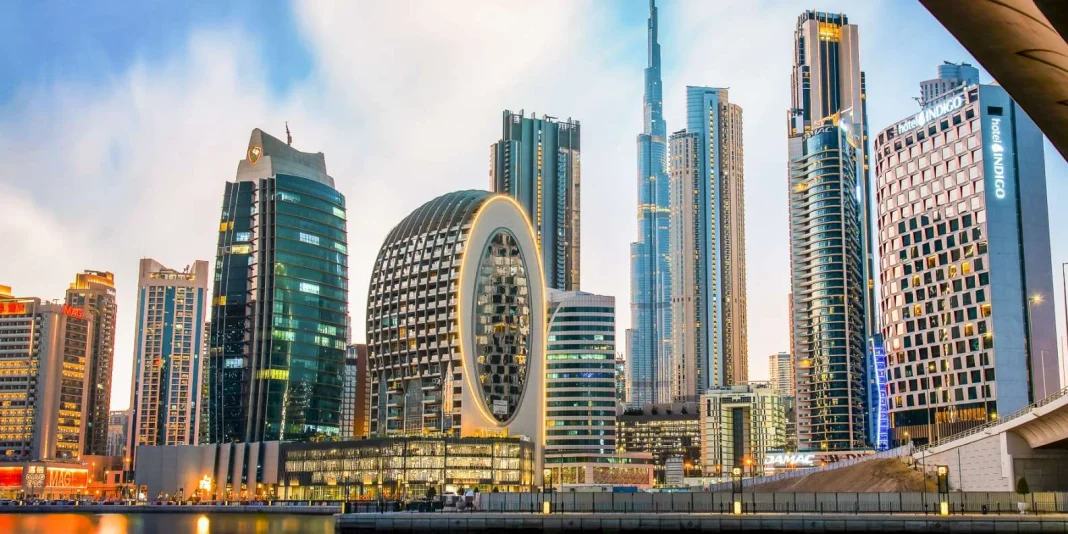


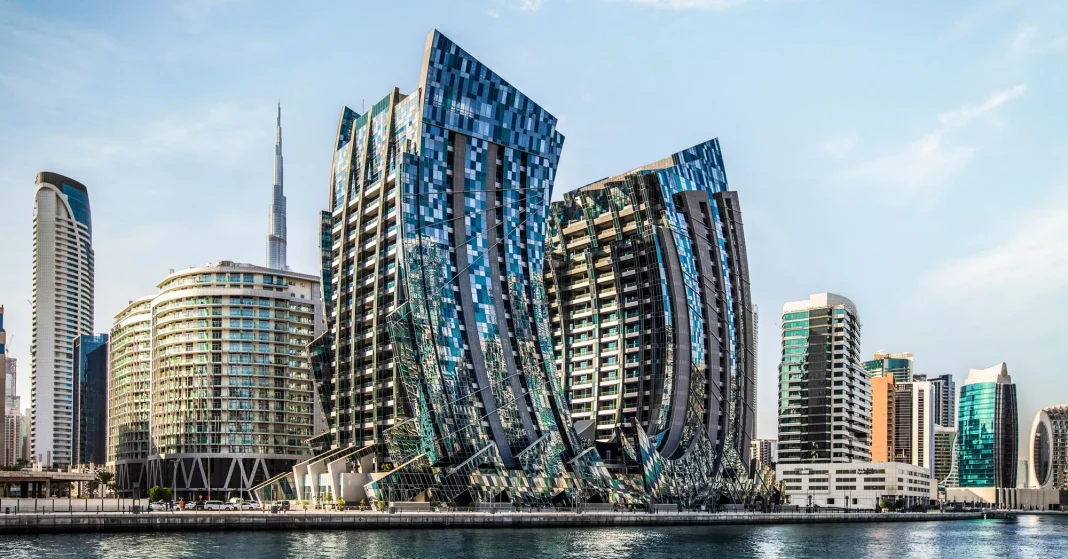
How much longer can a Gulf nation grow at superpower speeds without relying on crude oil? The UAE is answering that question with data, and the response is more solid than many expected. The country’s Central Bank has just confirmed a growth projection of 5.6% for 2026, leading the Gulf Cooperation Council rankings.
This is not empty institutional optimism. UAE banking assets exceeded 5.47 trillion dirhams in the first months of 2026, while domestic credit and resident deposits continue to grow steadily. These figures speak of an economy that no longer needs oil prices to justify its dynamism.
The UAE and a Growth Projection that Surprises the World
The Central Bank of the UAE published its quarterly report in March 2026 with a figure that few economists dared to question: 5.6% growth for the entire year. This projection places the country above the GCC regional average, estimated at 4.8%, and only behind Qatar in the Gulf ranking.
What distinguishes this forecast is its internal architecture. The momentum does not come from hydrocarbons, but from financial services, insurance, manufacturing, and construction. The non-oil sector has been gaining weight for years, and 2026 is the year this diversification strategy begins to bear its most visible fruits on an international scale.
UAE: When Banking and Trade Replace Crude Oil
That the UAE has turned its financial system into the main engine of growth is no accident: it is the result of decades of investment in regulation, capital attraction, and trade openness. The non-oil sector already represents more than 70% of the country’s GDP, an unprecedented structural transformation in the Gulf region.
The banking sector numbers confirm it: total assets exceeded 5.47 trillion dirhams in February 2026, with a monthly growth of 1.1% and a year-on-year increase of 17.4%. Resident deposits neared 3 trillion dirhams, a sign that domestic confidence in the UAE financial system is extraordinarily high even in a turbulent geopolitical environment.
Regional Uncertainty Does Not Slow Down the Non-Oil Sector
The UAE operates in one of the most unstable neighborhoods on the planet. Middle East tensions during 2025 and 2026—including the temporary closure of the Strait of Hormuz and the conflict between the U.S. and Iran—tested the country’s resilience. The response was a textbook demonstration: airports maintained 1.4 million passengers in just twelve days in March 2026.
The non-oil sector acts as a buffer that purely extractive countries do not have. When crude prices fluctuate or maritime routes are interrupted, the UAE economy has enough critical mass in logistics, tourism, technology, and finance to absorb the impact without collapsing. This diversification is precisely what makes the 5.6% projection credible.
The UAE Banking Sector Breaks Historical Records
By the end of 2025, UAE banking assets had already grown by 17.1% year-on-year, reaching 5.34 trillion dirhams. In the first months of 2026, that pace not only held steady but accelerated. Total credit reached 2.63 trillion dirhams, with domestic credit increasing by 20.6 billion dirhams in a single month.
This financial vigor is not separate from the non-oil sector: the expansion of corporate and retail credit reflects an economy that invests, hires, and consumes. The capital adequacy ratio remains at 17%, well above international standards, meaning that UAE banks are growing solidly without taking on systemic risks.
| Indicator | 2025 Data | Feb/Mar 2026 Data |
|---|---|---|
| Total banking assets | 5.34 trillion AED (+17.1% y-o-y) | 5.47 trillion AED (+1.1% monthly) |
| Total credit | 17.9% y-o-y expansion | 2.63 trillion AED |
| Resident deposits | 16.2% y-o-y growth | +3 trillion AED |
| 2026 GDP Projection | — | +5.6% (CBUAE) |
| Non-oil sector weight in GDP | — | >70% of total |
Can the UAE Sustain This Pace Beyond 2026?
The Central Bank of the UAE itself acknowledges there will be a moderation: growth could settle around 4.4% in 2027, as hydrocarbon production stabilizes following the latest OPEC+ quota increase. However, this slowdown should not be read as an alarm signal, but as the normalization of a mature economy. The non-oil sector will continue to be the true long-term engine.
For any investor or analyst following the region, the message is clear: the UAE has built an economic model capable of growing independently of oil prices, with a solid banking system, foreign trade nearing 6 trillion dirhams annually, and a firm commitment to structural diversification. In a global world full of uncertainty, that is exactly what differentiates a resilient country from a fragile one.