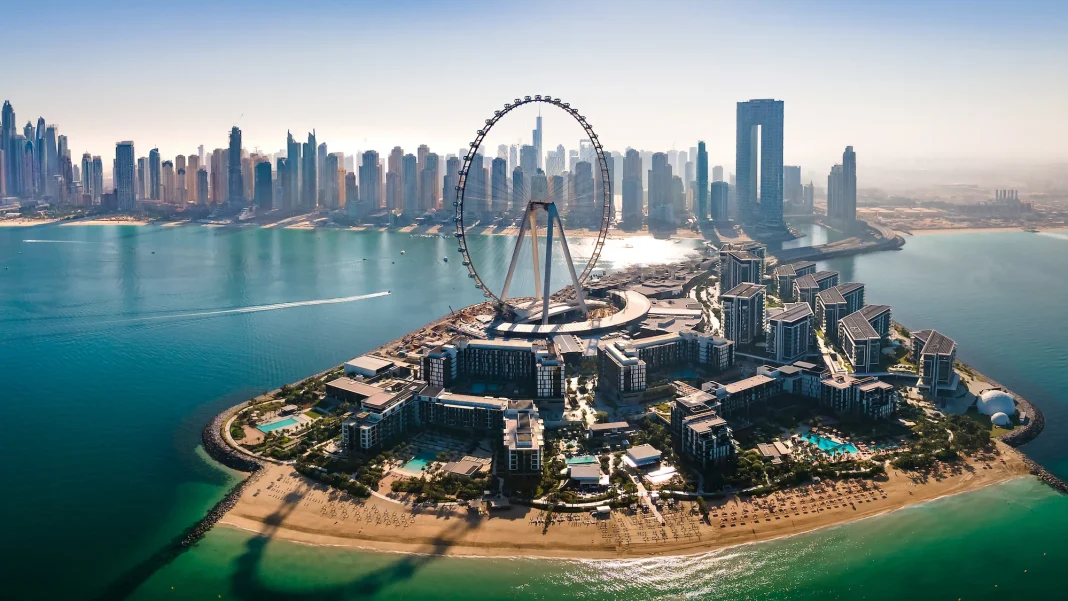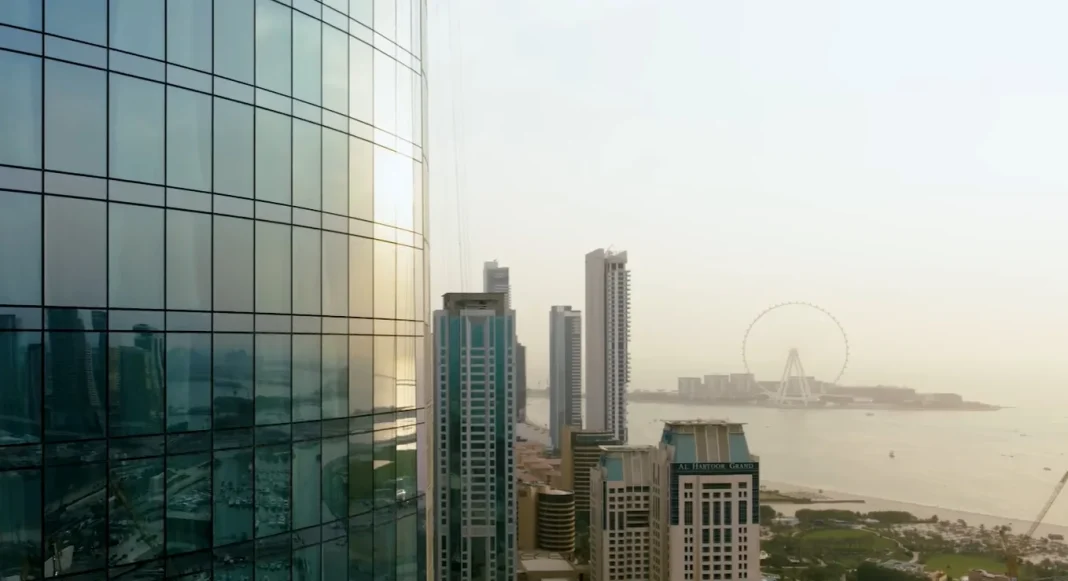


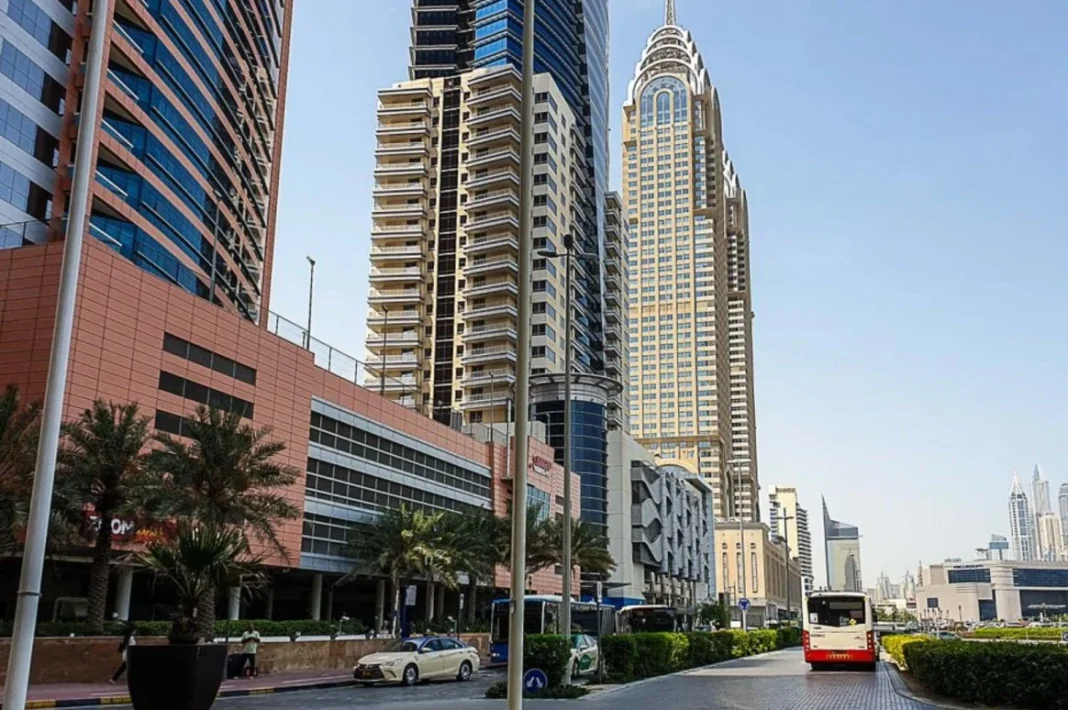
Can a desert country without Mediterranean beaches or millennia-old European heritage become the world’s leading tourism power? The UAE has spent years answering that question with actions, not declarations, and the plan it has just institutionally secured follows an overwhelming logic: making tourism what oil was in the 20th century.
The numbers responding to this challenge are not aspirational: they are signed commitments. The National Tourism Strategy 2031 sets a target of 40 million annual hotel guests, a contribution of 450 billion dirhams to the GDP, and 25 sectoral initiatives with responsible parties, deadlines, and tracking metrics. This is not a PowerPoint vision; it is state engineering.
UAE turns tourism into state policy with 25 initiatives
The heart of the strategy consists of 25 initiatives and policies structured into four pillars: strengthening the unified national tourism identity, diversifying specialized products, developing local talent, and attracting an additional 100 billion dirhams in private investment. Each pillar has a responsible ministry and a quarterly monitoring council under the umbrella of the Emirates Tourism Council.
What is relevant is that the UAE is not betting on a single star emirate, but on the whole. Abu Dhabi, Dubai, Sharjah, Ras Al Khaimah, and the northern emirates receive differentiated mandates: cultural luxury, trade and business, Arab heritage, and nature adventure. Internal competition thus becomes strategic complementarity for the international traveler.
The National Tourism Charter: The Glue That Binds the UAE Plan
One of the less discussed—and most decisive—elements of the strategy is the National Tourism Charter, launched by the Emirates Tourism Council to unify criteria, standards, and communication across the seven emirates. Without this document, the 25 projects would risk being executed in silos. With it, the UAE speaks with a single voice to airlines, hotel chains, and international organizations.
The charter obliges each emirate to align with common indicators of quality, sustainability, and visitor experience. The result is that Emirati tourism no longer depends on the individual genius of Dubai: it becomes a replicable, scalable, and auditable system, making it enormously attractive to institutional investors who need regulatory certainty before committing capital.
From 27 to 40 Million: The Mathematics of Tourism Growth
In 2019, before the pandemic, the UAE received nearly 27 million hotel guests. The goal of 40 million by 2031 represents a 48% growth over that historical peak. To achieve this, the strategy involves expanding hotel capacity, diversifying air connectivity routes, and developing medical, cultural, sports, and wellness tourism products that increase the average spend per visitor, not just the volume.
The committed annual increase of 27 billion dirhams in GDP contribution requires that new demand segments be incorporated every year, rather than just growing the flow of existing ones. This is why meeting tourism (MICE), ultra-personalized luxury, and climate tourism—with Al Ain as a laboratory—are bets with specific funding within the plan’s 25 projects.
Non-Oil GDP and Why Tourism Now Rules in the UAE
The UAE’s strategic shift toward economic diversification has been underway for decades, but the pace has accelerated. The tourism sector is already one of the main drivers of non-oil GDP, and the 2031 strategy positions it as the central lever of a model that can no longer rely on hydrocarbons to fund its social welfare.
The projected 100 billion dirhams in new tourism investment is not provided by the state: it is attracted by it. Transport infrastructure, hotel free zones, tax incentives for international chains, and a predictable regulatory framework are the real instruments. The UAE competes with Singapore and Saudi Arabia for the same capital, and the National Tourism Charter is, in this context, an advantage of institutional credibility that is hard to replicate.
| Indicator | Starting Point (2022) | 2031 Target |
|---|---|---|
| Annual hotel guests | ~27 million | 40 million |
| Tourism contribution to GDP | ~150,000 M AED | 450,000 M AED |
| Additional tourism investment | — | 100,000 M AED |
| Committed annual growth | — | +27,000 M AED/year |
| Projected new jobs | — | ~178,000 by 2030 |
The UAE in 2031: Elite Tourism as a New Global Standard
The trends converging between now and 2031 play in favor of the plan: global travelers seek unique experiences, Asian middle-class markets continue to expand, and the connectivity of Emirates and Etihad guarantees that practically any city in the world has a direct flight to the UAE. This triangle—differentiated product, growing demand, and direct access—is a competitive advantage that few destinations can replicate in the same timeframe.
The advice from any sector analyst would be the same: do not view this strategy as a regional phenomenon, but as a model of state tourism policy that other countries are studying and copying. Emirati tourism in 2031 will not only be larger; it will be more sophisticated, more sustainable, and—if the National Charter does its job—more cohesive. This makes it a benchmark that transcends Gulf geopolitics.