


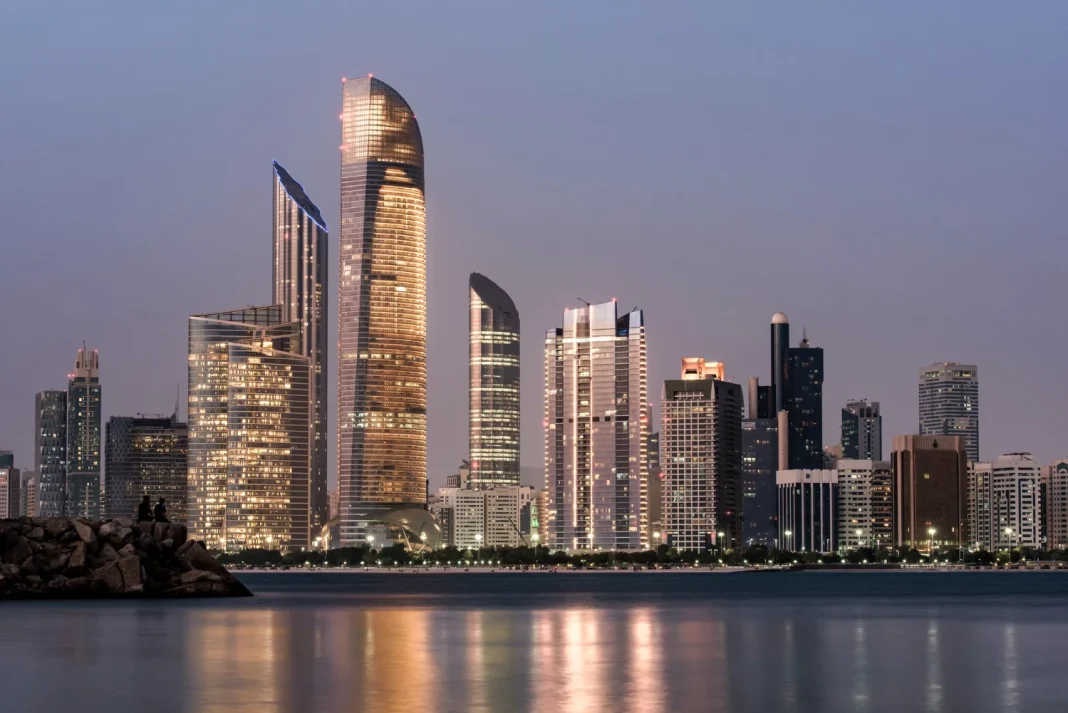
What if Dubai were no longer the only option for major financial corporations looking at the Middle East? For years, the automatic answer to “where should I set up a financial hub in the UAE?” pointed to a single city. Dubai seemed unshakeable, with its DIFC as the most established structure in the region and its reputation for openness to global capital.
But something is changing. In 2025, Abu Dhabi’s ADGM recorded 30% growth in active licenses, reaching 12,671, and assets under management rose 36%. These are not the figures of a secondary player; they belong to someone gaining ground meter by meter.
Dubai and Its DIFC: The Model Everyone Wanted to Copy
When the DIFC opened its doors in 2004, no one imagined that a financial free zone in the middle of the desert would become the obligatory reference between Europe, Asia, and Africa. Dubai built such a complete ecosystem — with its own common law-based legislation, an independent court, and top-tier regulation — that it attracted global banks, investment funds, and family offices en masse.
Today, more than 5,500 companies operate within the DIFC, with an infrastructure that includes Nasdaq Dubai and a financial community that generates synergies that are hard to replicate. The problem for Dubai is that this same formula has already been studied, improved, and relaunched from the capital.
How Dubai Watches the Rise of Abu Dhabi’s ADGM
The ADGM was not born to imitate the DIFC; it was born to surpass it in specific niches. Abu Dhabi has focused its efforts on asset management, ultra-high-net-worth family offices, and crypto-asset regulation — areas where the capital has a structural advantage: the backing of the world’s largest sovereign wealth funds, such as ADIA and Mubadala.
The result is that companies that previously chose Dubai out of inertia are now seriously evaluating Abu Dhabi. The FWA’s international conference, held in April 2026 with stops in both cities, was a signal of this new parity: institutional investors no longer see a clear leader and an aspiring challenger, but two first-tier financial destinations with complementary profiles.
The Regulatory Bet Abu Dhabi Uses as a Weapon
The great differentiator that ADGM has built over the past three years is not real estate or taxation — both centers offer similar conditions on that front — but regulatory agility. While Dubai’s DIFC manages an already enormous mass of operators, ADGM can move faster to approve new frameworks: it was among the first to comprehensively regulate digital assets, attracting Binance and stablecoin operators seeking legal certainty.
That speed is no accident: Abu Dhabi has less internal political noise and a shorter decision-making chain. ADGM can pivot its regulation in weeks, something that an ecosystem the size of DIFC cannot always afford. For next-generation funds and fintechs, that difference is decisive.
The FWA Chooses Both Cities: The Symbolism of April 2026
The fact that the Financial Women’s Association designed its 2026 international conference with simultaneous stops in Abu Dhabi and Dubai was no logistical accident. It was an explicit acknowledgment that the UAE’s financial map no longer has a single center of gravity. Delegates moved from one city to the other analyzing investment opportunities, meeting with regulators, and evaluating structures in both hubs.
For the Spanish or Latin American investor looking at the UAE as a destination, this rebalancing matters. Knowing Dubai alone is no longer enough; you must understand what each jurisdiction offers, because the choice between DIFC and ADGM can translate into real differences in licensing speed, operating costs, and access to sovereign capital.
| Indicator | DIFC (Dubai) | ADGM (Abu Dhabi) |
|---|---|---|
| Registered companies | +5,500 | +12,671 active licenses |
| 2025 growth | Mature and consolidated ecosystem | +30% licenses / +36% assets under management |
| Main strength | Global banking, funds, Nasdaq Dubai | Family offices, crypto, asset management |
| Legal framework | Own common law (DIFC Courts) | Own common law (ADGM Courts) |
| Regulatory speed | High, limited by scale | Very high, short decision chain |
Dubai Doesn’t Lose the Throne, But No Longer Reigns Alone
The most likely scenario for the coming years is not the defeat of Dubai, but the consolidation of a financial duality in the UAE that strengthens the country as a whole. Dubai will remain the magnet for international investment banks and the region’s most liquid ecosystem; Abu Dhabi, with its ADGM, will capture a growing share of institutional capital and wealth managers who prefer proximity to sovereign funds.
For those studying where to structure their next Middle East operation, the practical advice is clear: evaluate the type of capital and sector first, not the city. If your business depends on access to private banking and liquid capital markets, Dubai’s DIFC remains hard to beat. If your strategy involves alternative assets, crypto, or ultra-high-net-worth family offices, Abu Dhabi’s ADGM may offer you a cleaner, faster runway today.