

Dubai: Impact on energy markets and logistics security following the incidents. The stability of the southeastern Arabian Peninsula has recorded a significant alteration following the incidents reported this Saturday at strategic points in Dubai. The interruption of commercial operations in key logistics areas has generated an immediate reaction in international market volatility indices, especially affecting Brent crude futures contracts and the risk premiums of maritime insurers operating in the Strait of Hormuz.
From a technical perspective, Dubai represents the core of the United Arab Emirates’ economic diversification, functioning as a logistics and financial hub connecting Asia with Europe. Any breach of its security perimeter not only compromises the physical integrity of its infrastructure, but also tests the resilience of the regional security model and the confidence of foreign direct investment, a determining factor in the growth of the federation’s non-oil GDP.
Immediate repercussions on transport infrastructure in Dubai
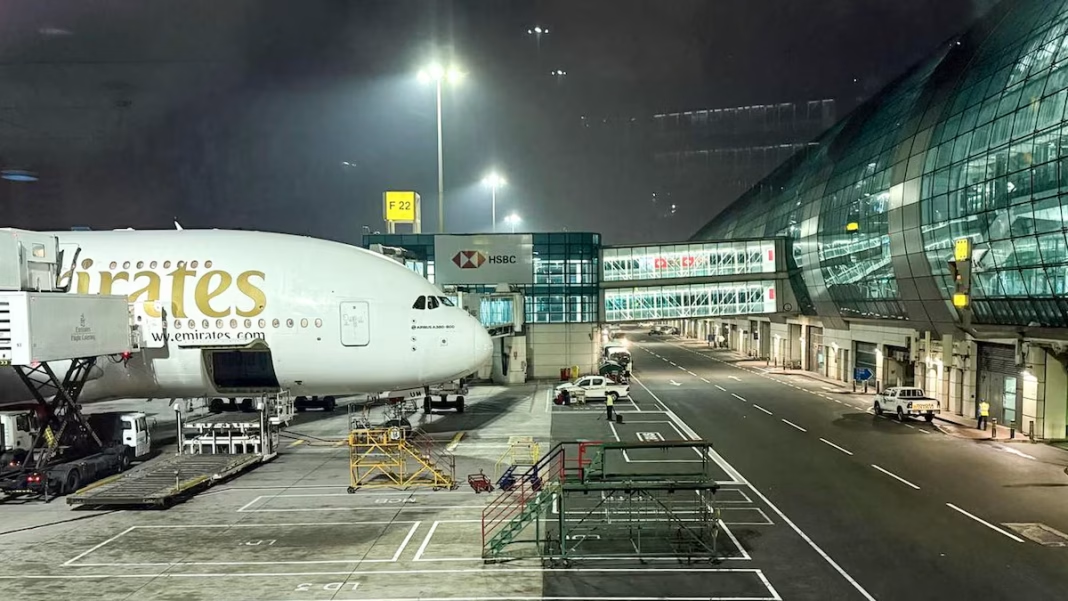
The temporary cessation of activities at Dubai’s cargo terminals has caused a bottleneck in the global supply chain. Port authorities have activated contingency protocols to divert maritime traffic to alternative ports, while structural damage is assessed and the necessary perimeter security is restored to operate.
International logistics experts point out that the paralysis of these routes increases the operating costs of shipping companies by 15%. The response capacity of security agencies in Dubai will be fundamental to ensuring that air and sea routes return to normal before the opening of stock markets in the next session.
Reaction of the markets and the Gulf Cooperation Council
The institutional response of the Gulf Cooperation Council has been unanimous in condemning the acts that compromise regional peace. According to the latest reports of the reference news in Dubai, an emergency meeting of finance ministers is expected to coordinate monetary stabilization measures in the face of possible short-term capital flight.
The role of the Gulf Cooperation Council is critical to maintaining exchange rate parity and ensuring that liquidity in the financial system is not eroded by uncertainty. Coordination between the region’s central banks seeks to mitigate the inflationary impact that could derive from a sustained increase in the import and logistics costs of consumer goods.
Tactical deployment and defense protocols in Dubai
The increase in surveillance at sensitive points in Dubai responds to a multilayer defense strategy designed to protect both physical and digital assets. The deployment of rapid response units and the reinforcement of cybersecurity in the power grids reflect the complexity of the current threat in a densely populated and technologically dependent urban environment.
The implementation of early detection systems in Dubai has allowed for the containment of the collateral effects of Saturday’s incidents, preventing an escalation of greater proportions. Transparency in official communication by the Ministry of Defense will be the axis upon which the perception of stability necessary for international cargo and passenger operators revolves.
| Economic Indicator | Pre-Event Value | Post-Event Value | Variation % |
|---|---|---|---|
| Brent Crude (USD) | 84.50 | 89.15 | +5.5% |
| Marine Insurance Premium | 0.05% | 0.12% | +140% |
| DFM Stock Index | 4,210 | 3,980 | -5.4% |
| Freight Cost (Container) | 2,400 | 2,750 | +14.6% |
Impact on the energy sector and supplies in Dubai
Although Dubai is not the main producer of hydrocarbons in the emirates, its position as a re-export center and headquarters for the world’s leading energy firms gives it a specific weight in price setting. Uncertainty over operational security in Dubai has led traders to take defensive positions, anticipating possible interruptions in the flow of liquefied natural gas.
Strategic reserves of consuming countries are under surveillance due to the possibility that the conflict in Dubai will be prolonged or extended to other areas of mass production. The resilience of Dubai’s storage infrastructure has proven to be adequate, but pressure on refining margins is beginning to be reflected in retail price projections for the second quarter of the year.
Analysis of Repercussions and Structural Impact
The structural analysis of the events in Dubai suggests a necessary reassessment of the security architecture in the Gulf region. The impact is not limited to immediate material losses, but affects the architecture of trust on which long-range economic integration projects are based, forcing state actors to increase their defense and resilience budgets.
Dubai’s ability to absorb the impact and maintain its status as a secure enclave will determine the speed of the regional economic recovery. In a global environment characterized by geopolitical fragmentation, Dubai’s stability acts as a barometer of the viability of global logistics centers against asymmetric threats, marking a precedent in crisis management for the current international economic order.