

Al Barari represents a radical transformation in the way ultra-luxury residential life is conceived in Dubai. Located in the heart of the desert, this 15.3-million-square-meter development defies conventional expectations by dedicating sixty percent of its territory exclusively to green spaces. Al Barari emerges as a sanctuary where botanical nature is not just an aesthetic complement, but the architectural centerpiece defining every urban decision and every life experience within its borders.
The genesis of Al Barari comes from a pioneering vision: to create an oasis where real estate luxury harmoniously coexists with environmental sustainability, a proposition that seemed contradictory just a decade ago. This residential development houses villas and apartments designed with maximum precision to integrate with the surrounding botanical landscape, generating a sense of luxurious isolation without giving up modern comforts. Each property has been conceived as a private refuge immersed in themed gardens and interconnected by natural paths, transforming urban life into a deep sensory experience.
THE BOTANICAL GENESIS: HOW A GREEN MIRACLE WAS BORN IN THE DESERT
Al Barari emerged in 2005 as the result of an ambitious gamble: to transform an arid land in the Dubai desert into a functional, self-sufficient botanical oasis. Its name in Arabic literally means “wild land” or “virgin desert,” reflecting the central paradox of the project. The founders, led by Mohammed Zaal, envisioned a development model that prioritized total integration with nature without compromising residential exclusivity, a revolutionary concept in the Gulf real estate industry. The initial investment required advanced water recycling systems and sophisticated horticultural techniques to sustain plant life in extreme climatic conditions.
The construction of Al Barari involved creating a complex artificial ecosystem based on long-term sustainability principles. Five hundred species of plants from twenty countries and six continents were meticulously selected for their adaptability and aesthetic value. Architects designed underground irrigation systems that minimize evaporation and maximize moisture retention using techniques derived from ancient desert traditions. In addition, a private nursery was established within the development to ensure permanent maintenance of the flora and constant renewal of the landscape.
THE SIX THEMED GARDENS: WHERE EACH SECTION TELLS A NATURAL STORY
Al Barari is structured into six distinct themed gardens, each representing a unique immersive ecosystem that transports residents to different geographies and historical periods. The Renaissance Garden evokes the elegance of 16th-century European green spaces, while the Balinese Garden incorporates architectural and plant elements from Indonesia’s tropical regions. The Mediterranean Garden faithfully replicates the visual and aromatic elements of the Mediterranean basin with cypresses, olive trees, and wildflowers, creating a radically contrasting atmosphere with the surrounding desert. Each themed garden houses about forty-three villas strategically distributed to maintain absolute privacy.
The other three gardens further expand Al Barari’s experiential diversity in equally impressive ways. The Woodland Garden introduces elements of dense vegetation typical of temperate forests, providing shade and freshness through the interplay of leafy trees and varied shrubs. The Aquatic Garden centers its design on artificial lakes, streams, and waterfalls that generate humid microclimates, allowing the proliferation of aquatic plants and migratory bird species. The Contemporary Garden synthesizes the previous five through clean lines and minimalist design, offering a space where architectural modernity coexists seamlessly with the surrounding botanical abundance.
SUSTAINABILITY INFRASTRUCTURE: THE INVISIBLE HEART OF THE OASIS
Al Barari’s operation relies on sophisticated sustainability infrastructure that silently maintains the natural oasis illusion. Water recycling systems capture surface runoff and treated wastewater, continuously reinjecting them into the irrigation cycle via an underground network of state-of-the-art pipes. It is estimated that about seventy percent of the water used in Al Barari comes from recycled sources, significantly reducing dependence on underground aquifers or external supplies. The private nursery grows plant species for replacement and renewal, ensuring the landscape maintains its aesthetic vitality for decades.
Al Barari’s environmental certification has made it a replicable model for future sustainable real estate initiatives in arid zones. Strategically distributed solar panels generate clean energy for pumping systems, climate monitoring, and lighting for paths and communal areas. The commitment to environmental management goes beyond the cosmetic and has become a fundamental operational principle affecting every maintenance, renewal, and expansion decision. Resident biologists monitor biodiversity, document the arrival of migratory bird species, and balance local ecosystems.
VILLAS AND ARCHITECTURE: WHEN LUXURY BOWS TO NATURE
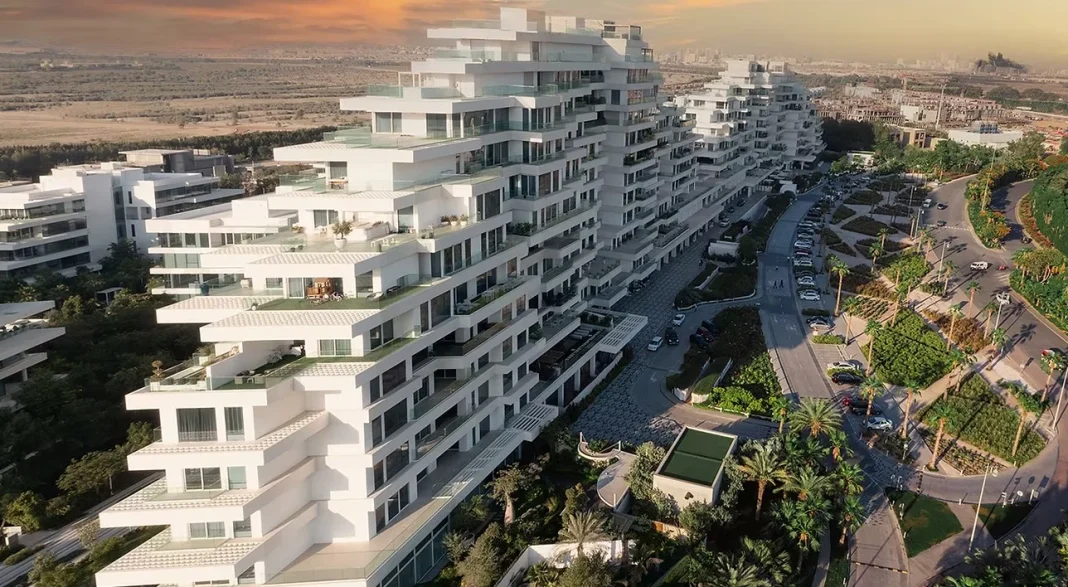
The residences within Al Barari represent an architectural paradigm where material exclusivity is balanced with environmental integration. The 260 villas range in size from three to seven bedrooms, distributed among the six themed gardens with exceptionally low density to guarantee absolute privacy. Each villa is designed with large windows that erase the distinction between interior spaces and the surrounding botanical landscape, allowing residents to wake up surrounded by greenery and nature. Building materials were selected not only for their luxury but for their sustainability and thermal compatibility with the desert climate.
Residential architecture at Al Barari exhibits stylistic diversity that enriches the visual experience without compromising the aesthetic cohesion of the complex. Some villas adopt biomorphic shapes that mimic the natural curves of the landscape, while others maintain rectilinear lines, creating deliberate contrast with the lush vegetation. Each property includes private pools, personalized gardens, and smart climate control systems that optimize indoor comfort without generating light or noise pollution. Building restrictions ensure no villa occupies more than forty percent of its lot, preserving extensive green spaces even within individual properties.
AMENITIES AND LIFE EXPERIENCE: BEYOND RESIDENCE
Dubai has undergone a radical transformation from its initial focus on the pearl trade to an economic diversification based on tourism, construction, and financial services—a shift that has enabled developments like Al Barari. The complex offers world-class amenities that go beyond conventional residential experience, including the restaurant The Farm, which is internationally recognized for its farm-to-table focus. This dining space represents a synthesis of Al Barari’s sustainable mission, serving food grown within the development itself, creating a closed production and consumption cycle.
The Heart and Soul Spa provides therapeutic treatments integrated with the surrounding nature, leveraging the complex’s tranquil atmosphere as an additional healing element. The Body Language health club offers state-of-the-art training facilities equipped with contemporary fitness technology, enabling residents to combine rigorous physical exercise with the tranquility of the botanical environment. Cultural Island, a future project within the complex, will house libraries, theaters, and a religious mausoleum, transforming Al Barari into a self-sufficient microcosm meeting spiritual, cultural, and physical needs based on a sustainable lifestyle paradigm.
THE EXCLUSIVITY STANDARD: HOW AL BARARI REDEFINES CONTEMPORARY LUXURY
Al Barari represents a fundamental redefinition of contemporary luxury in urban desert contexts, turning the material opulence of expensive properties into a holistic experience focused on well-being. The development does not only compete in terms of price or surface area, but establishes new standards of exclusivity through scarcity, inaccessibility to outsiders, and the irreproducible quality of its environment. The deliberate limitation of residential units to 260 villas creates a sense of membership that transcends conventional real estate ownership, elevating Al Barari to the status of an ultra-elite global gated community.
The constant appreciation of properties in Al Barari reflects the growing global demand for spaces offering escape from the urban frenzy while maintaining modern amenities and connectivity. Shrewd investors recognize that Al Barari is a strategic bet on a desirable lifestyle model combining sustainability with material exclusivity, factors ensuring long-term appreciation regardless of short-term economic fluctuations. The development is positioned as the preferred choice for high-net-worth families seeking not just a residence but a statement of personal values aligned with contemporary environmental awareness.