

Do you really still believe that the world’s most influential international congresses need the traditional environment of European financial districts to close million-dollar contracts? The reality of today’s corporate market proves that the old Western convention centers are losing steam against the massive deployment executed in Dubai, transforming boring executive routines into a highly profitable magnet.
The latest macroeconomic reports reveal that the meetings and exhibitions industry in the Middle East will exceed 9 billion dollars before the end of the decade, thanks to a radical shift in its strategy. It is no longer about attracting simple mass trade missions, but about monopolizing the global knowledge economy through hyper-connected infrastructures that make any other capital in the world look obsolete.
The impact of the new corporate axis led by Dubai
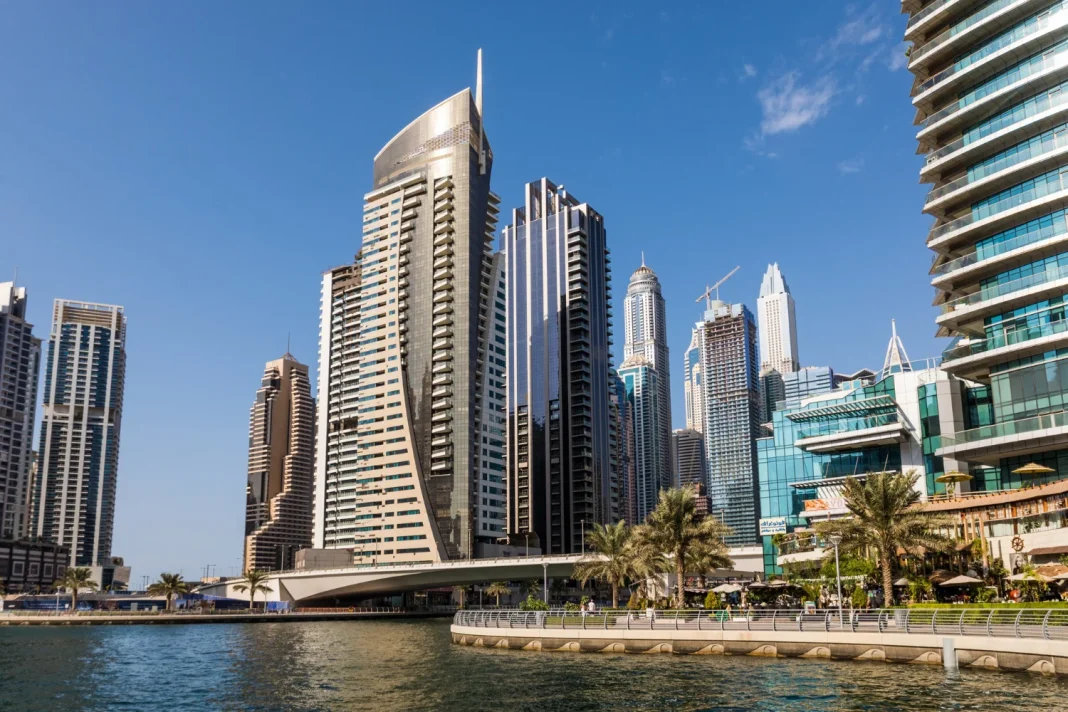
Multinationals’ obsession with optimizing their logistical budgets has found a perfect answer in the aggressive planning of the United Arab Emirates. The ability to gather thousands of delegates from Eastern and Western markets at a midpoint on the map has turned Dubai into the undisputed epicenter of the meetings sector.
This transformation is based on a public transport and hotel infrastructure that operates with surgical precision, designed to minimize waiting times for high-level executives. The sector has left behind the rigidity of conventional trade fairs to make way for an automated high-connectivity environment, where artificial intelligence manages everything from biometric accreditation to private meeting agendas.
The convergence of Abu Dhabi and the potential in business tourism
The true competitive advantage lies in the complementarity of two financial ecosystems that have decided to join forces instead of competing destructively. While the global financial hub of Dubai absorbs technology, advanced healthcare, and investment capital events, neighboring Abu Dhabi is consolidating its position as the great institutional palace for governance and heavy industry summits.
This duality offers organizers of major international congresses a unique opportunity to diversify their official programs, combining commercial dynamism with the institutional prestige of the Emirati territory. Current business tourism demands this geographical flexibility, allowing transnational firms to organize general assemblies in avant-garde financial districts and gala dinners in world-renowned cultural settings less than an hour away.
The festivalization of cutting-edge corporate events
Boring, enclosed rooms with carpets and artificial light have their days numbered within the demanding landscape of international incentive meetings. The dominant trend demands so-called festivalization, a concept that merges the strictest strategic presentations with exclusive leisure dynamics designed to build teamwork.
Organizing agencies operating from Spain confirm that steering committees are no longer satisfied with a basic itinerary of transfers and presentations. The Dubai environment stands out by organically integrating data analysis sessions in the morning in smart skyscrapers and networking dynamics at sunset in the desert or on private yachts.
Technological innovation and digitalization in world trade fairs
The competitive advantage of Middle Eastern exhibition complexes is not limited to the size of their pavilions, but to the invisible technological layer that wraps around every square meter. Major congress halls operate under a smart infrastructure that monitors visitor flows through advanced sensors to optimize commercial opportunities in real time.
The development of the local technological ecosystem allows exhibiting companies to deploy mixed reality solutions and replicated virtual environments for remote delegates, doubling the commercial impact of each working day. Massive public investment ensures that Dubai maintains an ultra-fast telecommunications network capable of sustaining thousands of simultaneous connections without experiencing drops or performance degradation during peak attendance periods.
| Strategic Indicator | Traditional MICE Model | New UAE 2026 Model | Sectoral Impact |
|---|---|---|---|
| Access Management | Physical registration and queues | Facial biometrics and AI | Time efficiency |
| Event Format | Static conferences | Festivalization and leisure | Higher retention |
| Delegate Reach | Physical attendance only | Mixed digital twins | Audience doubling |
The future of business tourism and market forecasts
The consolidation of this integrated trade fair model anticipates a definitive shift of the corporate power axis towards the new logistics hubs of the Middle East in the coming years. Experts point out that the regulatory agility and legal certainty offered by the region will keep interest on the rise compared to Western markets that are saturated or conditioned by fiscal uncertainty.
The main challenge for Spanish companies will be to adapt their commercial networks to actively participate in these major trade fair meeting points. The dynamism projected by business tourism in this geographical environment is not a passing fad, but a structural change where business competitiveness will be measured by the ability to position oneself in the centers where the future of the global industry is decided.