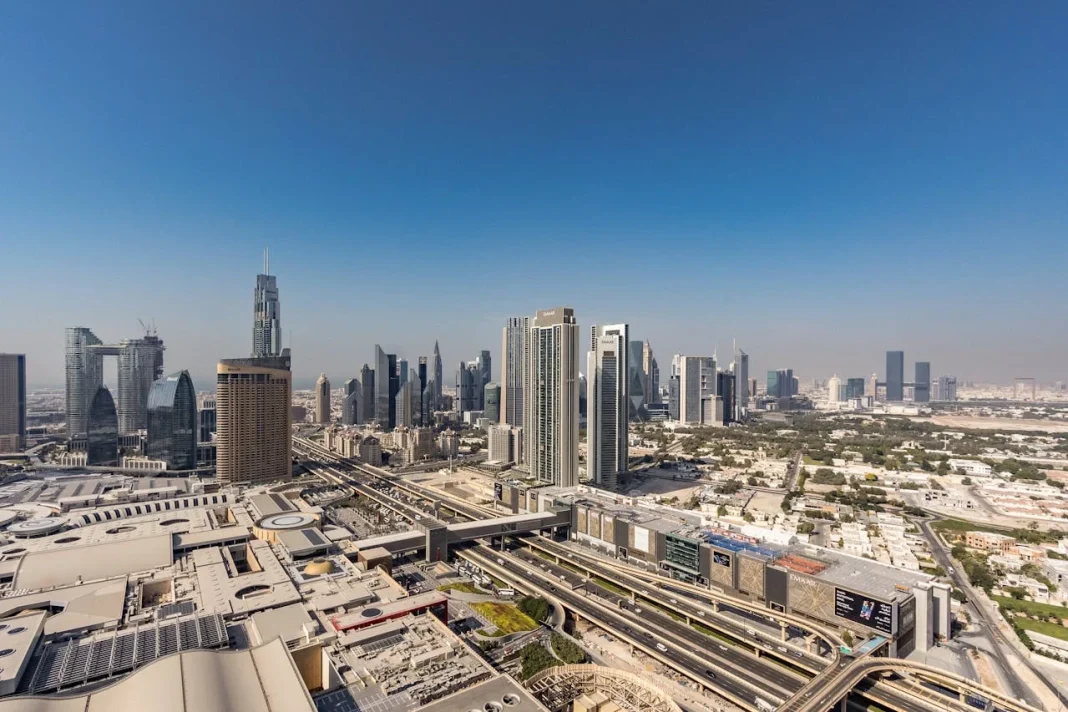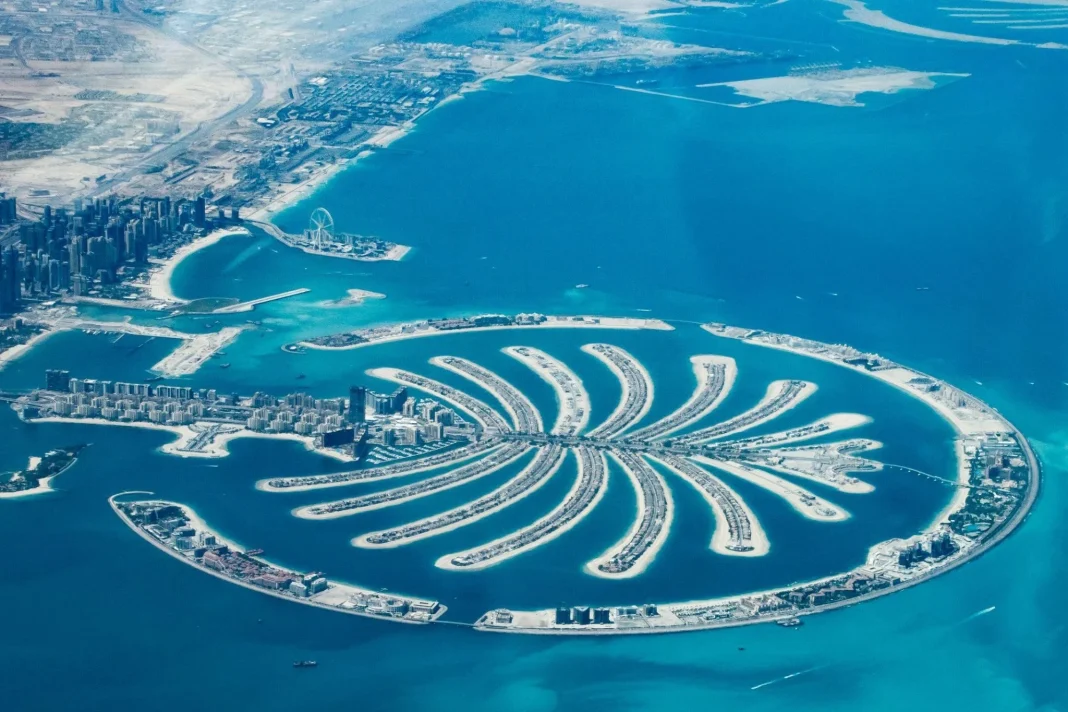


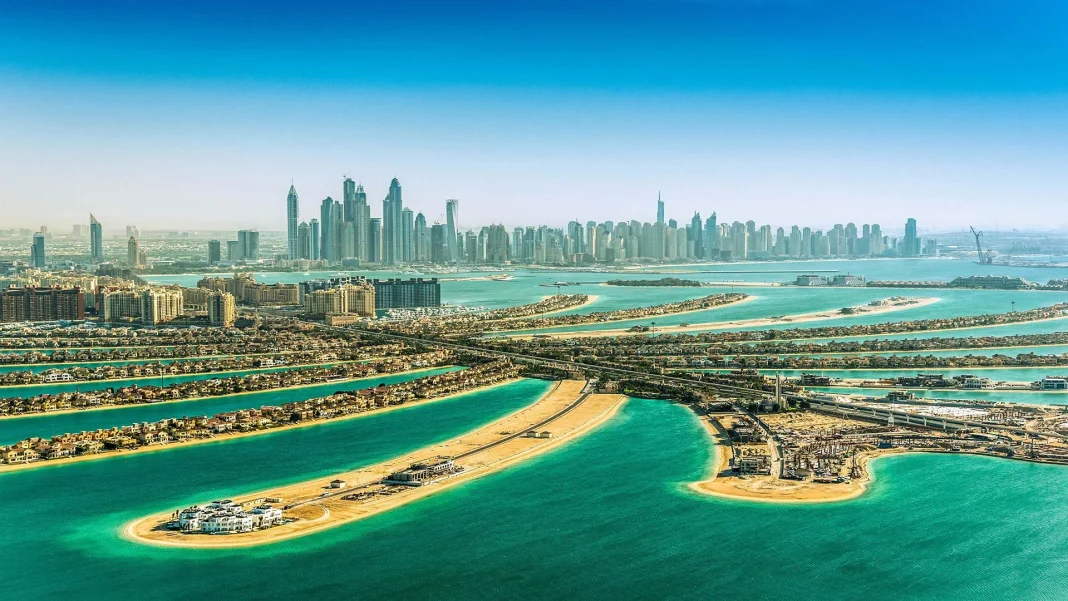
When was the last time an artificial island forever changed the rules of the global real estate market? Palm Jumeirah did it in Dubai two decades ago, and in 2026 it is doing it again: new ultra-luxury complexes are hitting the market with waiting lists of up to eight months and resales 25% above the original price.
At the same time, just over an hour’s drive away, Saadiyat Island in Abu Dhabi offers an entry point into the Emirati luxury market starting from $350,000, with projects backed by brands like Louvre and Baccarat that turn culture into profitability. The time to look towards the United Arab Emirates is now.
Palm Jumeirah: why every square meter is worth more than yesterday
The available inventory in Palm Jumeirah is practically zero. At the beginning of 2026, the few units nearing delivery —such as those at Armani Beach Residences or Six Senses Residences— are being traded with active waiting lists and prices exceeding AED 14,600 per square meter, a record figure for the island.
What drives this scarcity is not just prestige: it is the concentration of a unique product. Palm Jumeirah brings together in a single enclave private beaches, Michelin-starred restaurants, and hotel-branded residences that cannot be replicated anywhere else in the world. Each delivery scheduled for 2026 automatically becomes a collector’s asset.
Palm Jumeirah and Saadiyat Island: two markets, the same value logic
Anyone analyzing Palm Jumeirah as an investment destination discovers that the model is replicated with nuances in Abu Dhabi: Saadiyat Island is a 2,700-hectare island located 500 meters from downtown Abu Dhabi, designed to become a world-class cultural and residential hub, with the Louvre Abu Dhabi already operational and the Guggenheim under construction.
The key difference lies in the entry price. While new developments in Palm Jumeirah start at several million dollars, projects in Saadiyat Island such as Manarat Living or Louvre Abu Dhabi Residences allow access to the Emirati luxury market from approximately $350,000, with 60/40 payment plans that lower the financial barrier for foreign investors.
Which projects are active in 2026 and what are their yields
In Palm Jumeirah, the Serenia Living complex —four towers with 226 residences delivered in February 2026— reached a market valuation of $1.82 billion at the time of delivery, compared to a development cost of $817 million. For early owners, that represents a capital appreciation of over 120% during the construction cycle.
In Saadiyat Island, the pace of launches is also accelerating: Saadiyat Lagoons Phase 2, Baccarat Residences, and The Source Terraces compete to capture foreign capital with estimated rental yields between 5% and 7% annually. The combination of cultural tourism, beach, and a financial district makes the island one of the most balanced markets in the UAE for the long-term investor.
Legal and tax keys for foreign investors in the UAE
The United Arab Emirates allows full ownership (freehold) for foreigners in designated zones, which include both Palm Jumeirah and Saadiyat Island. There is no personal income tax or capital gains tax, making the tax structure one of the biggest attractions for European or Latin American investors.
The buying process is straightforward: signing the reservation agreement, a down payment of 10-20%, and registration with the Land Department of Dubai or Abu Dhabi. The payment plans during construction —common on both islands— allow investors to leverage their investment and generate returns even before the keys are handed over.
| Indicator | Palm Jumeirah | Saadiyat Island |
|---|---|---|
| Entry price (new projects) | From AED 14M (~$3.8M) | From AED 1.1M (~$300K-$350K) |
| Estimated rental yield | 4%-7% annually | 5%-7% annually |
| Recent appreciation | +25% in resales (2025-2026) | High demand, expanding market |
| Ownership for foreigners | Yes (freehold) | Yes (freehold) |
| Target investor profile | Ultra-premium, equity-focused | Medium-high, diversification |
The outlook for 2027-2028: the luxury cycle is not over
Everything points to the luxury real estate market in Palm Jumeirah and Saadiyat Island remaining a priority destination for international capital over the next two years. The arrival of 6,500 millionaires annually in Dubai, combined with the structural scarcity of premium product on the island, guarantees sustained upward pressure on prices and yields.
For investors considering entry now, the recommendation from industry analysts is clear: in Palm Jumeirah, it is best to opt for pre-delivery units in hotel-branded projects, which historically generate the highest capital gains at the time of deed transfer. In Saadiyat Island, an early entry strategy in projects within the cultural district —where the Guggenheim will act as a value catalyst— could represent the opportunity of the decade for medium-high profile investors with a long-term vision.