

Who said that the great Arab destinations are only built facing the sea? Al Ain, the so-called “Garden City” of the United Arab Emirates, has just challenged that logic with an official appointment and an incentive plan that are moving serious money in the hospitality sector.
It is not just an honorary title. The Arab Ministerial Council for Tourism chose Al Ain as the Arab Tourism Capital 2026 during its session in Baghdad, and the Abu Dhabi government responded immediately with a real financial lever: direct rebates of up to 17% for those who invest in renovating hotels in the region. Market numbers already support the bet.
Al Ain, the city chosen by Arabia to lead Arab tourism in 2026
The designation of Al Ain was not a political whim. The Arab Ministerial Council for Tourism elected it at its 28th session held in Baghdad in December 2025, upon the recommendation of its Executive Directorate. The title is not decorative: it activates regional cooperation mechanisms, institutional promotion and, above all, coordinated public and private investment. In 2025, the region already recorded 473,077 hotel guests, 9% more than the previous year, with revenue per available room (RevPAR) growing by 17% year-on-year.
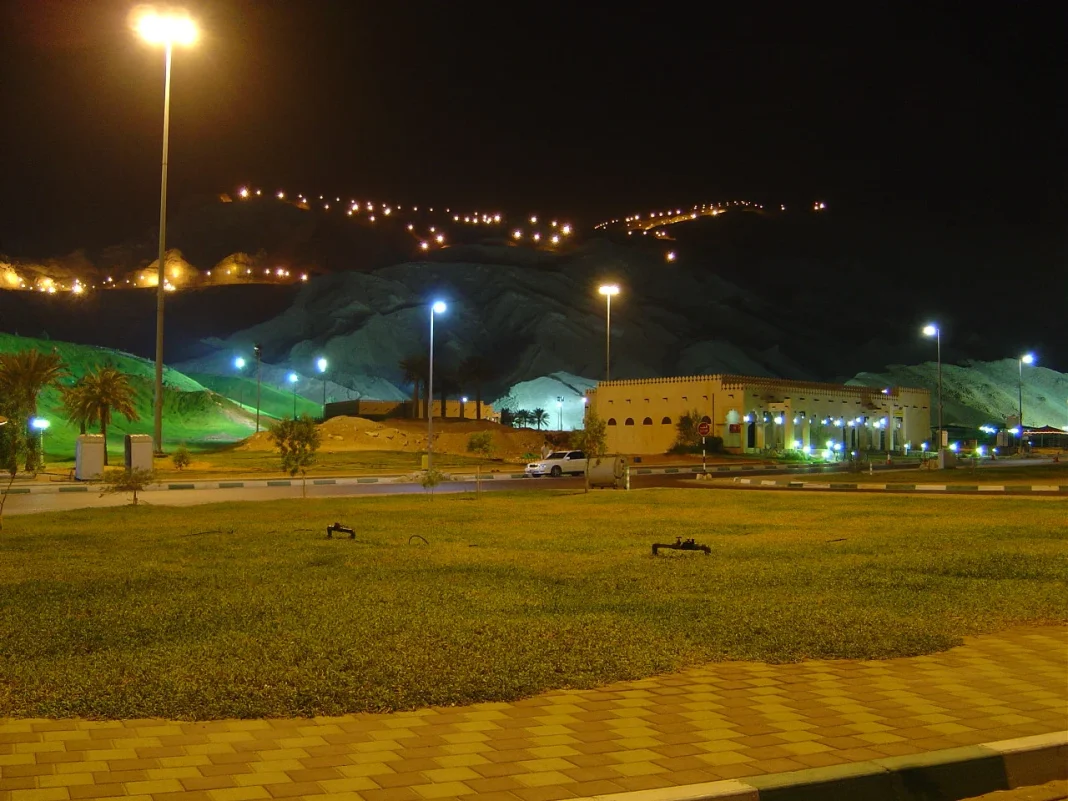
What makes Al Ain different within the Emirati map is its status as an inland city with exceptional historical and heritage weight. Its oases, forts, and underground water channels —the aflāj— are UNESCO World Heritage Sites. It does not compete with Dubai in skyscrapers: it competes in authenticity, cultural depth, and an experience that high-value travelers are increasingly seeking. That is exactly what Abu Dhabi’s tourism strategy wants to capitalize on.
The incentive plan that Al Ain offers to hotel investors
The rebate scheme launched by the Abu Dhabi Department of Culture and Tourism (DCT) is the centerpiece of this strategy. Hotel owners who access the program can recover up to 12% of the investment in certified renovations, a percentage that scales up to 17% if the project meets at least one of these three criteria: converting an unbranded hotel into one with a recognized brand, upgrading the star rating, or rehabilitating a property with heritage value. Al Ain concentrates the highest density of eligible historic buildings in the entire emirate, making this city the primary beneficiary of the program. The concept of inland Arab tourism promoted by Abu Dhabi finds its perfect showcase here.
The most relevant aspect of the program’s design is its payment structure: the rebate is disbursed after the works are completed and verified. It is not a loan or an advance tax break; it is public money that arrives once the result is credited. This reduces the risk of “ghost projects” and ensures that the investment effectively transforms Al Ain’s hotel offer with measurable quality criteria.
Why inland Arab tourism is the fastest-growing market
Inland Arab tourism has gone from being a residual category to becoming one of the fastest-growing segments in the region. The pandemic accelerated an existing trend: travelers from the Gulf and across the Arab world are looking for authentic experiences, away from coastal crowding, with powerful cultural narratives. Al Ain fits that profile perfectly: nature, millenary history, local gastronomy, and an urban scale that allows for exploration without exhaustion.
Abu Dhabi’s strategy is not improvised. Its UAE Tourism Strategy 2031 sets the goal of attracting 40 million annual hotel guests and raising the contribution of Arab tourism to GDP to 450 billion dirhams (about 122 billion dollars). Al Ain is the piece that completes the inland puzzle of that plan, and hotel incentives are the mechanism to raise the quality of the offer before the large flow of visitors arrives.
What kind of hotel projects does Abu Dhabi fund in Al Ain
The scheme is not designed for just any renovation. The DCT has precisely defined eligible projects, with special emphasis on those that transform the region’s hotel identity. The rehabilitation of historic buildings is the star category: it allows owners of properties with cultural value to receive public funding without bearing the profitability risk alone. It is a decisive bet on high-value tourism over low-spending mass tourism.
Projects that combine several improvement criteria—such as upgrading the category and adopting an international brand—can maximize the rebate up to that 17% that the market has received with enthusiasm. In Al Ain, where hotel occupancy already reached 66% in 2025 with an upward trend, the margin for growth is real and investors know it. The combination of Arab capital status, solid demand data, and public money on the table is a scenario that is rarely repeated.
| Indicator | 2025 Data | Year-on-year Change |
|---|---|---|
| Hotel guests in Al Ain | 473,077 | +9% |
| RevPAR (revenue per available room) | AED 204 | +17% |
| Hotel occupancy | 66% | +9% |
| Base rebate of the DCT scheme | 12% on investment | New in 2026 |
| Maximum rebate (with bonuses) | 17% on investment | Heritage/brand/stars |
Al Ain in 2026 and beyond: what’s next for Arab tourism in the Emirates
Al Ain’s status as capital is not a momentary flash: it is the starting signal for a hotel and cultural transformation that has a horizon in 2031. With 3 billion dollars projected in infrastructure and an incentive scheme active from now on, the city has the ingredients to establish itself as a benchmark for inland Arab tourism well beyond this year. Investors who enter now have the advantage of doing so with institutional winds in their favor and before the market corrects prices upward.
The advice from those who follow this market closely is clear: in Al Ain, it’s not about buying the destination that has already arrived, but the one that is arriving. The combination of UNESCO heritage, real incentive plans, and a long-term national strategy makes this city a hotel positioning opportunity that will hardly be repeated under the same conditions. 2026 is just the beginning.