

The transformation of Al Maryah Island is not an isolated urban planning whim, but a carefully designed piece within Abu Dhabi’s plan to diversify its economy beyond oil and to consolidate itself as a global destination for high‑level business and tourism. Emirati authorities have promoted the island as a financial and investment free zone, with competitive regulatory frameworks designed to attract banks, asset managers, tech firms and family offices operating on an international scale. At the same time, the presence of luxury hotels, premium residential towers and a major landmark mall, The Galleria, has created an ecosystem where work, shopping and leisure come together in a highly controlled and safe environment. That balance between intense professional life and a comfortable day‑to‑day rhythm is one of the main hooks that explains the district’s sustained demand, even in phases of global economic uncertainty, because it offers stability and future prospects to those who choose to enter now.
In parallel, what is happening on Al Maryah Island serves as an early barometer of where Abu Dhabi is heading as a city, both in its urban growth and in the type of residents and investors it aims to attract over the next decade, with an increasingly international and demanding profile. While other neighborhoods consolidate a more touristic or traditional vocation, this island is experimenting with new formats of flexible offices, serviced residences and high‑end gastronomic experiences, all connected by seafront promenades and an ever‑expanding retail offer. For readers considering diversifying their assets or simply trying to understand why this enclave is already being mentioned as the local “Manhattan”, it is worth carefully analyzing its location, its infrastructure, its specific regulations and the type of projects entering the radar of major funds. From there it becomes easier to see why prices hold, why occupancy is rising and why more and more European professionals look to this district when imagining a life change towards the Gulf.
AL MARYAH ISLAND TODAY
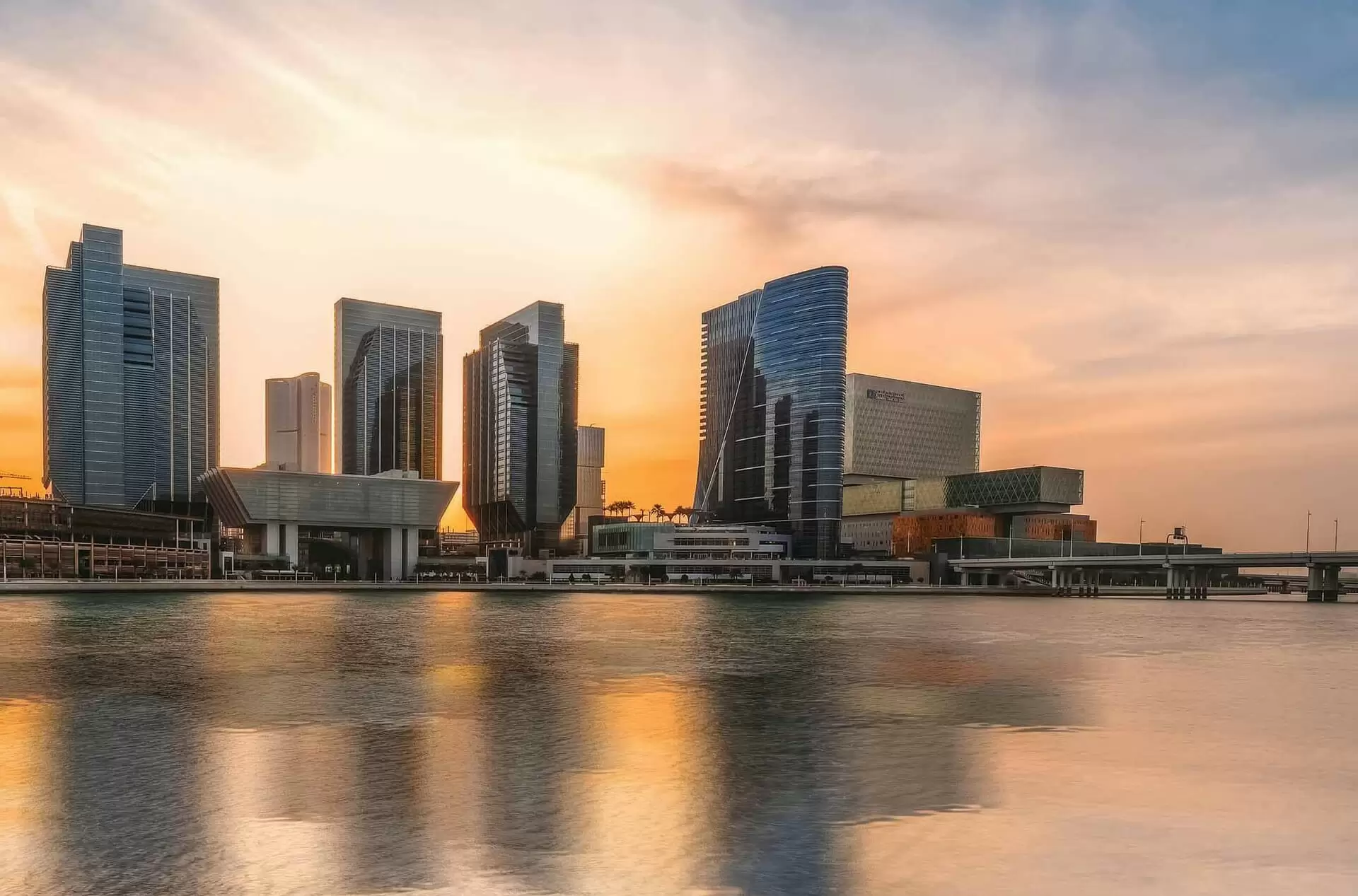
Al Maryah Island rises in a strategic position, connecting downtown Abu Dhabi with new expansion areas such as Reem Island, which makes it a key hub between the consolidated and the emerging parts of the emirate. Its planning has been meticulous, with wide avenues, waterfront pedestrian areas and a compact skyline where office towers, hotels and residences share a layout designed for pedestrians, busy executives and families seeking everyday convenience. In a small area, corporate headquarters, top‑tier clinics, international hotels and a luxury mall are concentrated, shaping an intense but highly organized urban life with an iconic image. Anyone walking along its waterfront promenades today senses a mix of futuristic city, shopping destination and residential neighborhood where almost everything is five minutes away on foot or a short drive.
Unlike other districts that grew more organically, almost nothing here has been left to chance: from the design of office towers, conceived to attract major firms, to the location of seafront hotels and restaurants, every piece reinforces its position as the modern face of the emirate. This urban coherence fosters a feeling of a “controlled bubble,” where security, cleanliness and service quality are part of the implicit contract the city offers residents, workers and corporate guests. For visitors coming from more chaotic European cities, the contrast between skyscraper density and calm traffic is striking, as are the very contained noise levels and the constant presence of maintenance staff keeping shared spaces immaculate. All this reinforces the perception of being in an enclave designed for a global elite that values efficiency, discretion and carefully curated aesthetics at every corner, directly influencing how available properties are perceived.
ABU DHABI, NEW HEART
Although Abu Dhabi was already the country’s political and economic capital, the consolidation of Al Maryah Island as the seat of Abu Dhabi Global Market has strengthened the idea of a “new financial heart” that looks head‑on at London, Singapore or Hong Kong. The presence of this international financial centre and free zone, with its own regulation and independent courts, has helped attract investment banks, asset managers, fintech companies and crypto‑asset platforms seeking a stable and competitive environment in the region. This institutional weight combines with the narrative of modernity the emirate projects to the world, reinforcing its reputation as a safe destination for capital looking to diversify geographically without giving up advanced legal frameworks. Each announcement of new licenses, new headquarters or strategic alliances adds credibility to the district, is reflected in office occupancy and bolsters sustained demand for high‑end housing and services in the area.
For residents, this reality translates into a neighborhood full of highly qualified professionals, with high salaries and cosmopolitan lifestyles, creating a very international community where banking executives, consultants, lawyers and tech entrepreneurs live side by side. The fact that the island is promoted simultaneously as a business and lifestyle destination allows many executives to cut commuting times, live close to the office and have easy access to healthcare facilities, international schools and a dining scene that rivals major capitals. This concentration of talent and disposable income directly impacts local retail, service rates and the area’s positioning as an attractive real‑estate product, because demand is not merely speculative but based on real, everyday use. To a foreign investor, the message is clear: this is a neighborhood fuelled by the actual economic activity of the capital, not by empty promises, which adds an extra layer of reassurance when assessing risk.
LIVING ON THE ISLAND
Residential life on Al Maryah Island revolves around modern towers with sea views, concierge services, fully equipped gyms and panoramic pools, all designed to justify rents and sale prices above the city average. Homes are clearly aimed at a demanding international audience, with spacious apartments, high‑end finishes and, in many cases, direct access to shopping areas, clinics and restaurants without needing to use a car, something highly valued in extreme climates. The feeling is that of living in a permanent “urban resort,” where the line between weekdays and weekends blurs because the waterfront promenade, cafés and terraces are always just a few minutes away. It is no coincidence that many expatriates moving from other emirates or from Europe describe the island as a place that makes healthy routines easier, from walking along the water to working out early before heading up to the office.
At the same time, the basic service offer has also adapted to this profile of global residents who need to manage their daily lives quickly: well‑stocked supermarkets, late‑opening pharmacies, efficient laundries and mobility options linking the island to the rest of Abu Dhabi. This accessibility reduces friction and means that the perceived value of a home depends not only on floor space but on the quality of the urban ecosystem surrounding the building and the effective time gained each day. For families, the appeal also lies in the proximity to international schools and in the high level of security, with constant surveillance and strict access protocols, which brings peace of mind when raising children in an urban environment. All these factors explain why occupancy rates remain high and why tenant turnover is often accompanied by new arrivals of professionals with similar purchasing power, thus supporting demand and rental income.
OFFICES AND BUSINESS
On the corporate front, Al Maryah Island’s offices have positioned themselves as some of the most coveted products in the local market, combining international‑grade buildings, advanced technological infrastructure and a regulatory environment designed to facilitate multinational operations. The office complexes integrated into Abu Dhabi Global Market, with their own legal and tax frameworks, allow companies to operate from a free zone that offers access both to the Gulf region and to African and Asian markets, which further increases their appeal. The physical proximity of banks, law firms, consultancies and tech companies also encourages intense networking, with spontaneous meetings taking place in cafés, restaurants or in the lobbies of the buildings themselves. All this generates a business microclimate where information circulates quickly, projects find partners and talent feels at the centre of the emirate’s economic action.
For SMEs and entrepreneurs, the island also offers flexible spaces, coworking areas and smaller offices that make it possible to establish a presence at the most prestigious address without assuming the cost of a full floor in an iconic tower, which partly democratizes access to the district. This mix of large corporations and smaller firms creates a dynamic economic fabric, where providers of professional, technological and creative services find a highly concentrated client base willing to pay for top‑tier solutions. In addition, the agenda of events, forums and conferences linked to finance, innovation and sustainability turns the neighborhood into a recurring stage for product launches and sector gatherings. From a real‑estate investor’s perspective, the stability of this corporate demand translates into long‑term leases and tenants with a low risk of default, both of which are key when calculating returns.
LUXURY AND LIFESTYLE
Beyond offices, the island’s main showcase is The Galleria, a luxury mall that brings together international brands, signature restaurants and leisure spaces designed for a public that combines high‑spending tourists with residents who have sophisticated consumption habits. This complex has become one of Abu Dhabi’s main shopping hubs, reinforcing the island’s image as a place where exclusive experiences are concentrated, from dinners with sea views to boutiques that only appear in a handful of world capitals. The presence of five‑star hotels, spas, specialist clinics and lively sunset terraces rounds out a menu of activities that draws many residents from other neighborhoods here at weekends. This constant flow of visitors adds extra vitality to the district and creates additional opportunities for food, entertainment and premium service businesses.
For anyone considering living or investing in the area, this luxury ecosystem has direct implications: it attracts a steady stream of shopping tourism, reinforces the neighborhood’s place in rankings of aspirational destinations and puts upward pressure on prices for the best‑located retail units and homes with the best views. The result is a virtuous circle in which the perception of exclusivity fuels new brand openings, which in turn reinforce the enclave’s prestige and consolidate its status as a “desired address” within the city. Even those who do not consume ostentatiously value this curated environment, because it translates into higher standards of urban maintenance, enhanced security and a cultural and gastronomic agenda that boosts quality of life. In terms of international reputation, the island’s image as a luxury destination helps position Abu Dhabi as a city offering far more than oil or business, adding layers of leisure, shopping and memorable experiences.
KEYS TO INVESTING
When Al Maryah Island is analysed from an investment perspective, the first striking factor is the combination of a favourable regulatory framework, real demand for offices and housing, and a narrative of a growing city seeking to consolidate its role as a regional financial hub. This mix translates into assets that, while starting from high prices, offer stable occupancy prospects, robust corporate leases and an urban environment that tends to appreciate as new projects and infrastructure are completed. For those entering with a medium‑ to long‑term horizon, the main risk usually does not lie in a lack of demand but in choosing the right specific asset, developer, building quality and depth of surrounding services. In such a segmented market, buying on the seafront promenade is not the same as buying on an interior street, nor is signing with a consolidated operator the same as betting on an overly experimental project.
Another key aspect is understanding the target tenant profile: for offices, large corporations and financial and tech firms with long contracts; for residential, executives, relocated managers and families who value comprehensive services and nearby schools. Aligning the investment with this profile and with realistic time horizons helps avoid frustration, because this is not a market for quick windfalls but for relatively predictable income flows in a stable macro environment. It is also worth closely tracking the evolution of other emerging districts in the emirate, in order to compare yields, absorption rates and potential competitive effects on the island, while always maintaining a diversified view within the city itself. Overall, the signals sent by the data, institutional decisions and market sentiment suggest that Al Maryah Island will remain, for many years, the key laboratory where Abu Dhabi’s financial and residential future is defined.