

Can a real estate market break its own records five years in a row without showing signs of exhaustion? Dubai is not only achieving it, but in 2026 it has raised the stakes again with data that defies any conventional economic cycle logic. In the first quarter of the year, sales reached 176.7 billion dirhams, 23.4% more than in the same period of 2025.
The most striking thing is not just the volume: the average price of properties in Dubai reached 1,840 AED per square foot in April 2026, the highest level ever recorded, with a year-on-year increase of 16.1%. This is not a typical speculative bubble; it is the combination of structural, fiscal, and geopolitical factors that makes this emirate a unique case in the world.
Dubai 2026: The numbers no one expected
The year 2025 closed with 682 billion AED in real estate sales, according to the Dubai Land Department, marking the fifth consecutive record. Transaction volume exceeded 214,000 operations, an indicator that reflects not only large fortunes but also a very active retail demand in the mid and premium segments.
What surprises analysts is that Dubai has not needed to lower prices to sustain demand. On the contrary: the off-plan segment—properties sold before construction—accounts for 76% of the market, a figure that speaks to the confidence international investors place in the delivery capacity of local developers.
Why investors choose Dubai over London or New York
The emirate offers a combination that is difficult to replicate: zero personal income tax, rental yields that in areas like Dubai Silicon Oasis exceed 9%, and a Golden Visa that allows residency in the country starting from a real estate investment of 2 million AED. This cocktail makes Dubai compete in a different league compared to other major global metropolises.
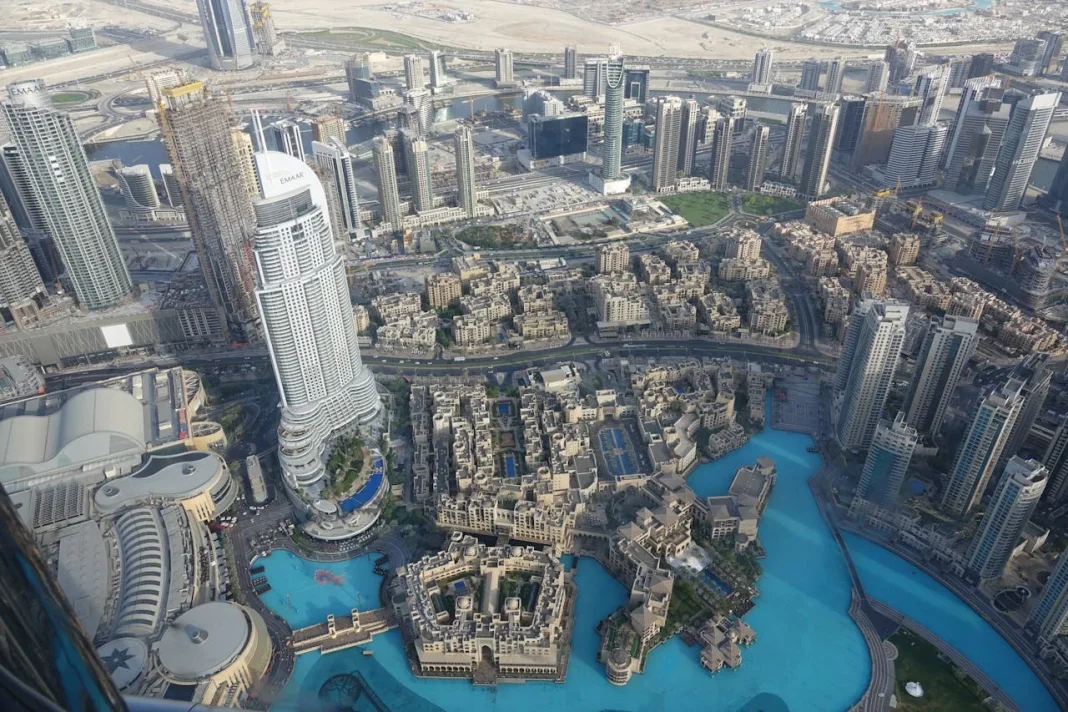
The role of Emaar in this ecosystem is central. The developer responsible for the Burj Khalifa and the Dubai Mall is scheduled to deliver between 6,000 and 7,000 homes annually until the 2026-2027 peak, and its premium projects generate waiting lists that open and close in hours. Emaar is not just a company; it is the thermometer of the sector’s health in Dubai.
The profile of the new investor arriving in Dubai
It is no longer just about Gulf billionaires or Russian tycoons. The typical investor arriving in Dubai today is a European professional between 35 and 55 years old looking to diversify their assets outside of Europe, attracted by legal security, the RERA regulatory framework, and gross yields that double those of Madrid or Barcelona. Spain, in particular, is one of the most active investment source markets.
The average entry ticket is around 200,000 euros in areas like Jumeirah Village Circle or Dubai Sports City, which has democratized access to the market. This openness to the average investor has been one of the keys to the sustained growth that Dubai records year after year, without relying exclusively on the ultra-luxury segment.
Dubai’s hot zones leading the appreciation
Not all areas of Dubai behave the same. Downtown Dubai and Dubai Marina remain the emblems of consolidated luxury, with prices above 3,000 AED per square foot, while emerging areas like Dubai South—linked to the new Al Maktoum airport—offer the greatest potential for medium-term appreciation. Emaar has strategic projects in almost all of these growth corridors.
The Dubai Government’s 2040 Master Plan projects an increase in urban area by 134%, creating five new metropolitan centers with transport infrastructure, green zones, and special economic areas. This long-term planning framework is an additional guarantee for investors, who see Dubai not as a speculative bet but as an investment backed by state vision.
| Dubai Area | Gross Yield 2026 | Average Price (AED/sq ft) |
|---|---|---|
| Dubai Silicon Oasis | 9.29% | 950 |
| Jumeirah Village Circle | 8.00% | 1,100 |
| Dubai Sports City | 7.80% | 1,050 |
| Downtown Dubai | 5.50% | 3,200 |
| Dubai Marina | 5.80% | 2,800 |
Dubai in 2027: Will the rally continue or is a correction coming?
Analysts from Savills and Knight Frank agree that Dubai will enter a phase of more moderate growth in the second half of 2026 and in 2027, with price increases hovering around 5-8% annually compared to the 16% recorded in the last year. The signal is not of a ceiling, but of maturity: the strongest markets do not grow at 20% indefinitely, but rather consolidate and attract a more conservative and long-term investor profile.
The advice from experts in this context is clear: if investing in Dubai seeking short-term speculative appreciation, the optimal moment has already passed. But if the goal is to build wealth with rental yields exceeding 7%, without tax pressure and in a city that continues to grow demographically and economically, Dubai remains, in 2026, one of the best options in the world for international investors.