


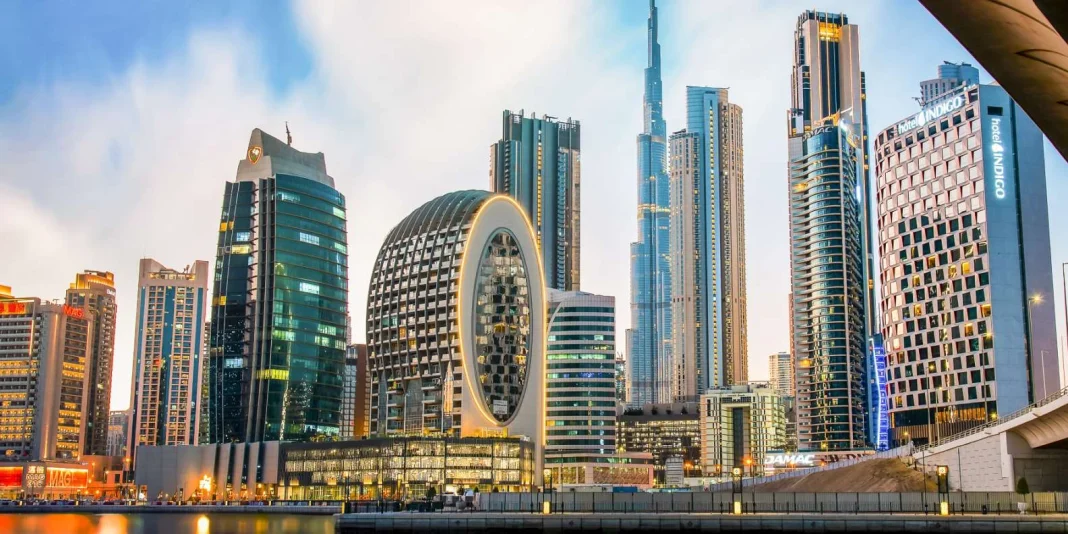
Can a market that has lost 80% of its tourists remain a solid bet for investors? In Business Bay, the answer surprises even the most skeptical: the district’s fundamentals do not depend on any visitor’s suitcase.
What has changed in 2026 is not the value of Business Bay, but the type of guest inhabiting it. Following the geopolitical conflict in February, demand for long stays of 29 days or more tripled compared to the same period in 2025, and the corporate and expat profile has taken control of the market.
Business Bay Resists Where Other Dubai Districts Falter
Business Bay’s infrastructure has been completed and operating at full capacity for years, giving it a structural advantage over younger residential areas. While districts more exposed to pure tourism saw revenue drops of 80% in April 2026, Business Bay maintained corporate occupancy thanks to its positioning as a financial and executive hub.
The average housing price in Business Bay climbed 43% year-on-year in 2026, consolidating capital appreciation as a second driver of profitability alongside rent. For the long-term investor, this revaluation is as relevant as the monthly yield.
Real Yields in Business Bay in the New Cycle
The segment of Business Bay that withstands the storm best is executive-profile apartments managed as serviced apartments, which generate net returns exceeding 7% even in the current context. It’s not the 14% of the holiday boom, but it is a figure that no European market can match without equivalent tax risk.
The holiday rental market in Business Bay hasn’t disappeared: it has professionalized. Surviving operators are those who have migrated to corporate mid-term stay contracts, capturing expats and regional managers who avoid committing to annual leases in an environment of job uncertainty.
Why Spanish Investors Are Now Targeting Business Bay
The appeal for the Spanish investor is twofold: zero income tax and zero capital gains tax in the Emirates, combined with a gross yield in Business Bay that exceeds 8% in the premium segment. This is what they cannot find in Madrid, Barcelona, or any European capital with tightened rental regulations.
Business Bay also offers an advantage few areas in the world can replicate: its proximity to the Burj Khalifa guarantees that any property maintains a resale value higher than the Dubai average, functioning as an implicit insurance for the investment.
The Tenant Profile Has Changed: Here Is What You Need to Know
The weekend tourist has stepped aside for the regional executive seeking temporary stability without contractual ties. This profile pays more per night, takes better care of the property, and generates less turnover, significantly reducing the owner’s operating costs in Business Bay.
Data from April 2026 confirms that long stays have gone from being anecdotal to representing the bulk of active demand in Business Bay. This cycle shift rewards owners who adapt their management over those waiting for the return of mass tourism.
| Indicator | April 2025 | April 2026 |
|---|---|---|
| Average Revenue/Listing (Dubai) | $3,633/month | $616/month |
| Demand for 29+ day stays | Base level | +300% year-on-year |
| Avg. Property Price Business Bay | Reference | +43% year-on-year |
| Gross Yield Business Bay | ~7–8% | +8% premium segment |
| Tourist Occupancy (early April) | 85% | 17% |
Business Bay on the Horizon: What Comes After the Storm
The Business Bay real estate market is in a phase of adjustment, not collapse. Analysts suggest that the third and fourth quarters of 2026 will regain traction once geopolitical uncertainty stabilizes, with the corporate holiday rental segment leading the recovery over traditional tourism.
Expert advice for this moment is clear: those entering Business Bay now with a medium-term vision (18 to 36 months) will purchase high-appreciation assets with a rental market already adapted to the new cycle. Disruption has not weakened the district: it has filtered out opportunistic investors and left the field open for those who understand the long game.