

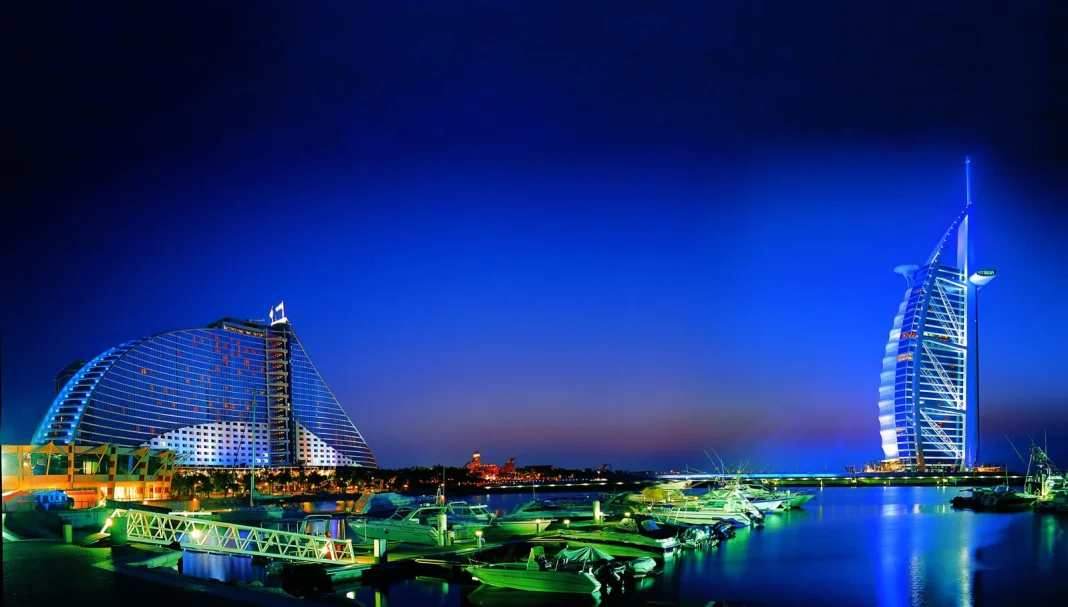
How many times have we taken for granted that Dubai had already reached the limit of possible luxury? That the Burj Al Arab, with its sail silhouette and suites from €2,000 a night, was the absolute ceiling of world hospitality. Well, that ceiling has just become too small.
Developer Azizi Developments has just launched the largest hotel investment program in Dubai’s history: AED 75 billion — around $20 billion — to build 151 hotels and add 60,000 new rooms to the emirate. And at the pinnacle of that plan is a 725-meter skyscraper housing a 7-star hotel that will redefine what we understand by extreme luxury.
Dubai reinvents itself: the bet no one expected
While the global real estate market was trembling at the start of 2026, Dubai decided to do exactly the opposite of what any conservative analyst would have recommended. Azizi Developments broke ground on its first five-star hotel in the Azizi Riviera community, within Mohammed Bin Rashid City, firing the starting gun on a program that will transform the emirate’s urban landscape over the next decade.
The plan is as ambitious in numbers as it is in variety: 100 four-star hotels, 50 five-star hotels, and at the crown of the project, a single seven-star hotel to be located inside Burj Azizi, the future flagship tower on Sheikh Zayed Road. More than 90% of the entire portfolio will be concentrated in Dubai, cementing the emirate as the world’s leading hotel destination.
Dubai and the AED 75 billion that will change the rules of the game
Dubai doesn’t build hotels to meet demand; it builds them to create it. That philosophy is clear in the scale of the investment announced by Azizi: AED 75 billion to be deployed in stages through projects already in design, development, and simultaneous construction. The company’s founder and chairman, Mirwais Azizi, puts it plainly: “Dubai has proven to be one of the most stable and opportunity-rich destinations in the world.”
The project also envisions the creation of more than 75,000 direct jobs in the hotel sector and the launch of the Azizi Hospitality Academy, a training institution designed to supply qualified talent to the entire ecosystem. Burj Azizi, the portfolio’s star skyscraper, aims to break records for the world’s highest hotel lobby, the highest nightclub, and the most extreme observation deck ever built in the emirate.
Burj Azizi: record-breaking architecture for a one-of-a-kind hotel
Standing 725 meters tall with more than 131 floors, Burj Azizi will become the second tallest building in the world, behind only the Burj Khalifa and surpassing Kuala Lumpur’s Merdeka 118. Its construction, valued at AED 6 billion, is moving forward with foundation work already underway in the heart of Dubai’s World Trade Center District, with an estimated completion date of 2029.
The 7-star hotel that Burj Azizi will house won’t be a conventional luxury space: its facilities draw inspiration from seven world cultures — including Iranian, Turkish, French, and Chinese — and will spread its hospitality services across floors 91 through 122. The check-in lobby will be located on the 111th floor, turning the hotel arrival itself into an experience, high above the clouds.
What 60,000 rooms mean for Dubai’s tourism
Dubai’s current hotel inventory stands at around 140,000 rooms, according to industry data. Adding 60,000 new keys at once is equivalent to expanding the emirate’s capacity by nearly 43% in one move — an unprecedented step in any city in the world. And all of this in a context where Dubai closed 2025 with a record 19.6 million international visitors.
The strategy isn’t just about accumulating beds: it’s about diversifying the offering. With 100 four-star hotels in the pipeline, Azizi Developments is targeting a segment of high-spending but non-ultra-wealthy travelers, broadening Dubai’s appeal well beyond the extreme luxury niche the emirate has historically been associated with. Burj Azizi will be the flagship, but the bulk of the business will be built on volume.
| Indicator | Current data | With the Azizi plan |
|---|---|---|
| Rooms in Dubai | ~140,000 | ~200,000 (+43%) |
| 7-star luxury hotels | 1 (Burj Al Arab) | 2 (+Burj Azizi) |
| Announced hotel investment | — | AED 75 billion |
| Jobs created | — | +75,000 direct |
| International visitors (2025) | 19.6 million | Target: surpass 25M by 2030 |
The future of Dubai: when luxury becomes an industry
All signs point to Dubai not only maintaining its position as the world’s leading luxury destination, but reinforcing it with an industrial-scale hotel infrastructure. Burj Azizi is the most visible symbol of that ambition, but the real structural change will come when all 151 hotels in the portfolio are operational and the emirate can simultaneously absorb tens of thousands of travelers across different price points and experiences.
For investors and travelers who have Dubai on their radar, the message is clear: the next three years will be the most intense in terms of hotel construction and openings in the emirate’s history. Getting in now — whether as a real estate investor or simply by booking early at Burj Azizi properties when sales open — could make all the difference between riding the first wave of this new luxury or arriving once everyone already knows about it.