

If you thought luxury in the emirate was measured only by the height of its skyscrapers or the price of its cocktails, Love Lake Al Qudra has arrived to shatter that myth with 550,000 square meters of water and sand. This artificial oasis is not just a feat of hydraulic engineering in the middle of nowhere, but clear proof that the silence of the desert is valued more highly than any VIP table in the Marina.
Getting here means leaving behind the city’s frantic asphalt to enter a setting that seems designed by an algorithm obsessed with visual romance, where everything is meticulously calculated to create impact. From the winding paths to the arrangement of the trees that spell out “Love” and are visible from satellite, this spot has positioned itself as the worst kept secret for residents and travelers seeking a real experience without maxing out their credit card.
ENGINEERING OF LOVE VISIBLE FROM SPACE
The first thing that hits visitors is not the heat, but the monumental scale of a project that defies geographical logic by placing two gigantic hearts where there were once only dunes and emptiness. This is not just a simple recreational pond, but a manufactured ecosystem that hosts more than 16,000 trees and thousands of shrubs, all irrigated by a sustainable system that recycles water to keep things green in one of the driest areas on the planet.
Walking along its shores makes it clear that in Dubai aesthetics work as a form of soft power, able to transform inert land into a viral attraction that floods Instagram every sunset without spending a single euro on traditional advertising. The precision of the design is such that even the benches and rest areas are oriented to frame the perfect sunset, ensuring that every photo taken here looks like a professional postcard.
The visual impact is so powerful that it has overshadowed other natural landmarks in the region, becoming a must-stop for those who want to understand the limitless ambition of local urban planners. In the end, these lakes are a reminder that with enough budget and vision it is possible to bend nature so that it adopts whatever shape tourism marketing needs at any given time.
NO 4X4 OR VIP PASSES: DEMOCRATIC ACCESS
Unlike deep desert excursions that require hiring an expert driver or renting a powerful 4×4, getting to this spot is surprisingly easy and suitable for any standard city car. The paved road takes you practically to the shore, removing that economic and logistical barrier that usually comes attached to adventures in the dunes of the United Arab Emirates.
The fact that shocks most first-time visitors is the absolute free entry to the site, an anomaly in a city where almost any premium experience starts at the ticket office before you can enjoy it. This free access has democratized the desert, allowing local families and budget-conscious tourists to share the same space for leisure with no class distinctions or priority passes.
However, this ease of access should not be mistaken for a lack of exclusivity, because the real luxury here lies in the disconnecting power of an environment just thirty minutes’ drive from the bustle of the financial district. That accessibility is what has turned the area into the favorite weekend plan for those who need to escape the air conditioning and reconnect with a horizon not blocked by glass and steel.
FLAMINGOS, BARBECUES AND DESERT RULES
The local fauna has wasted no time in taking over this new habitat, turning the calm waters into the seasonal home of more than 170 bird species, including elegant flamingos that add a pink note to the ocher landscape. Watching these animals in the wild while you prepare your meal adds a layer of raw authenticity that contrasts sharply with the controlled artificiality of zoos or aquariums located inside shopping malls.
For barbecue lovers, the site offers areas specifically set up for grilling, although the rules are strict and surveillance is constant to ensure that the waste generated leaves with you back to the city and does not stay in the sand. Environmental authorities do not joke about preserving this space, and the fines for leaving trash or damaging vegetation are high enough to discourage any careless visitor from breaking the rules of coexistence.
It is vital to remember that, despite the infrastructure and comfort, you are still in a natural environment where the climate makes the rules and constant hydration is more a survival need than a health tip. There are no shops or kiosks inside the immediate grounds, so the logistical planning of your cooler will determine the success or failure of your countryside day under the relentless sun.
THE MASTER STRATEGY BEHIND THE SAND
Love Lake is not a happy accident, but a key piece in the diversification machinery that aims to position the emirate as a nature destination and not just a shopping hub, as explained in reports on Dubai’s tourism strategy. By creating these peripheral points of interest, the authorities manage to ease congestion in traditional areas and increase the average length of stay of visitors by giving them reasons to stay one more day beyond the obligatory visit to the Burj Khalifa.
The best time to visit is undoubtedly during the winter months, from November to March, when temperatures allow you to walk without risk of heatstroke and the golden light of sunset wraps the Arabian Desert in an almost magical atmosphere. Avoid the summer months at all costs unless your idea of romance includes enduring forty-five degrees in the shade and humidity that makes any outdoor physical activity impossible.
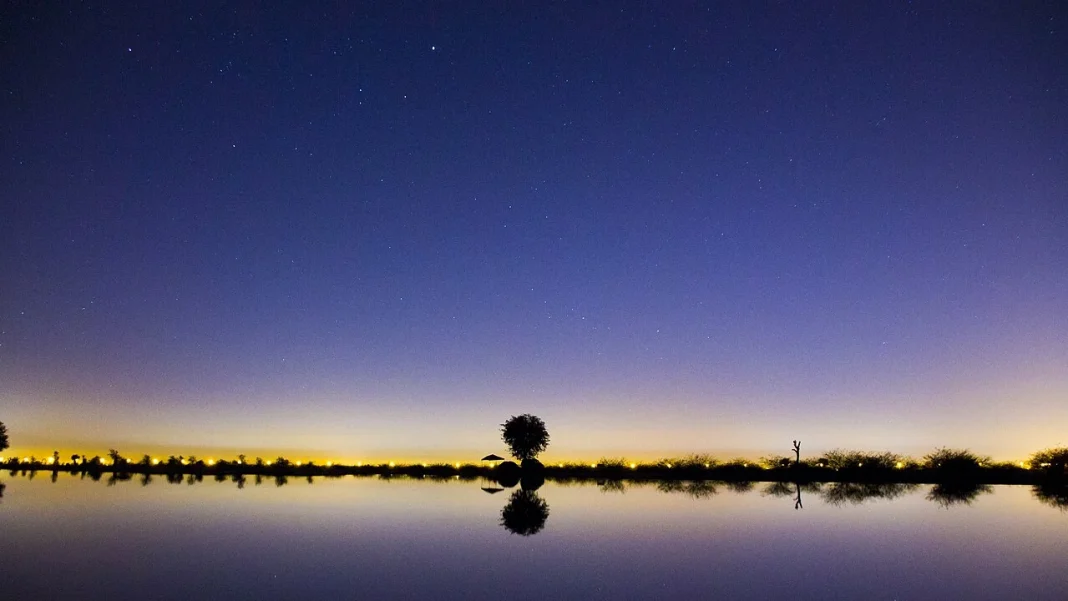
If you decide to go, take a light jacket for the evening, because as soon as the sun drops behind the dunes the temperature falls sharply, reminding you that you are in an extreme environment that does not forgive carelessness. It is at that exact moment, under a starry sky impossible to see from the city, that you understand that Dubai’s real wealth is not gold, but the ability to create life and beauty where geography once said it was impossible.