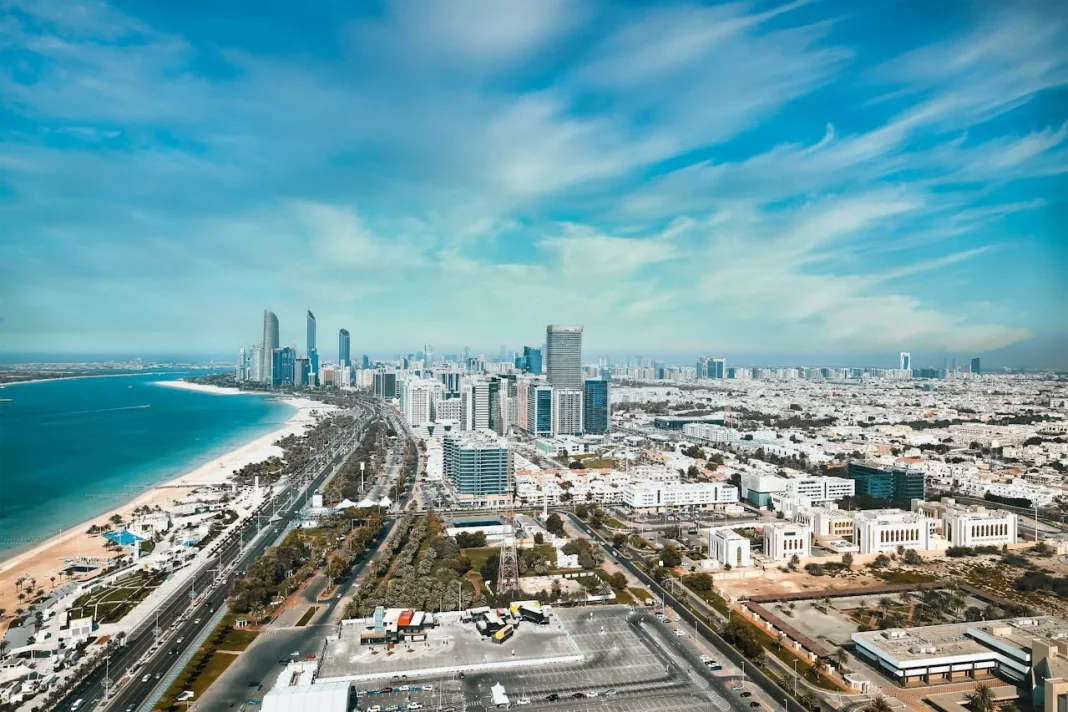



Do we really still think that London, Paris, or New York airports maintain absolute control over the world’s skies? The reality of global aviation infrastructure forces us to look in a fixed direction toward the Persian Gulf, where an aggressive connectivity strategy has definitively overthrown traditional Western leadership. The consolidation of local airlines has shifted the planet’s center of gravity eastward, making it clear that traditional European dominance is a thing of the past.
The latest financial reports have just shaken the offices of global transport authorities by recording an unprecedented historical milestone. More than 23 million travelers crossed Emirati terminals in a single quarter, a vertical growth that shatters any optimistic forecast and redefines international passenger logistics. This constant flow of users is not a seasonal coincidence, but proof of a transit machinery designed to never stop.
The Brutal Logistic Takeoff That Consecrates Dubai
The spectacular operational performance of Dubai International Airport (DXB) responds to a smart diversification of its key markets and a massive increase in direct flights. Far from relying solely on traditional long-haul connections, the infrastructure has successfully capitalized on the dynamism of emerging markets to keep its terminals full twenty-four hours a day. Agility in internal baggage management and minimal layover times have turned this point on the map into the preferred option for millions of users.
The explosion of passenger transit coincides with a golden season for transcontinental trade and premium tourism. January positioned itself as the month of highest logistical activity, nearing eight million users in a display of technical coordination that has surprised industry analysts. With these figures on the table, annual projections point to comfortably exceeding ninety million travelers, consolidating an unstoppable trend of economic expansion.
The Keys to Commercial Aviation in the Middle East
The extraordinary growth of logistical hubs in Dubai marks a structural transformation in the way we understand passenger transport globally. The sustained development of flag carriers has allowed commercial aviation to evolve from old models based on mandatory layovers toward highly efficient direct connections. This reconfiguration of the aviation map takes center stage away from historic Central European aerodromes, which suffer from serious space limitations and restrictive environmental regulations to expand.
Leadership in the region is not limited to offering functional runways, but implies designing authentic integrated airport cities. Flows from South Asia and Western Europe cross daily in optimized terminals where passengers consume leisure and luxury services without leaving the premises. The capacity to process hundreds of wide-body aircraft simultaneously provides an insurmountable competitive advantage over the collapsed terminals of Old Continent capitals.
The Rise of Asian Markets and the European Engine
Detailed analysis of the nationalities driving this historic record places India as the main source market, contributing more than three million travelers during the quarter. The strength of the Asian middle class and the multiplication of bilateral agreements have definitively tightened ties with the subcontinent. Added to this is the constant drive of Gulf markets, led by Saudi Arabia, contributing a vital volume of corporate and religious traffic.
For their part, Western European passengers consolidate their preference for Gulf routes for their travel to tourist destinations in Southeast Asia and Oceania. Cities like London or Frankfurt record thousands of weekly departures that end up feeding the emirate’s commercial corridors. Onboard comfort in modern fleets and attractive corporate loyalty programs end up tipping the scale against traditional Western alternatives.
Infrastructure to the Limit and the Leap to the Desert
The constant increase in flight operations has tested the maximum capacity of the urban airfield’s current location. Despite advanced digital ground guidance systems and optimized check-in counters, physical space limitations pose structural challenges in the medium term. Local engineers have managed to stretch current resources thanks to millionaire investments in automation, but exponential aircraft growth demands more ambitious responses.
For this reason, the emirate’s authorities are accelerating development plans for their second major megaproject on the outskirts of the city. The master plan contemplates the progressive migration of large fleets to facilities capable of tripling the space limits of the traditional center. This long-term vision ensures that the region maintains global logistical control over the coming decades, anticipating the bottlenecks that already choke Western competitors.
| Traffic Variable | First Quarter Data | Year-on-Year Variation |
|---|---|---|
| Total Passengers | 23,052,060 users | + 8.4% |
| Aircraft Movements | 109,238 operations | + 8.3% |
| Baggage Processed | 26.8 million bags | Optimal performance |
The Future of Global Transport and Dubai’s Vision
The consolidation of these record figures confirms that sovereignty over international skies has shifted hands irreversibly. The region’s economic weight will only increase as its strategic airlines incorporate new wide-body units ready for massive transcontinental routes. The firm commitment to maintaining open-skies airport policies and zero night-time restrictions ensures operational flexibility unattainable for Western airports.
The advice for European transport corporations is clear: survival in the major aviation business requires forging deep alliances with the new centers of power in the Middle East. Those who choose to ignore the emirate’s distribution potential and financial capacity will be relegated to operating secondary routes of a regional nature. The world map is no longer drawn from the North Atlantic, and the first-quarter figures are the definitive testimony of this new aeronautical era.