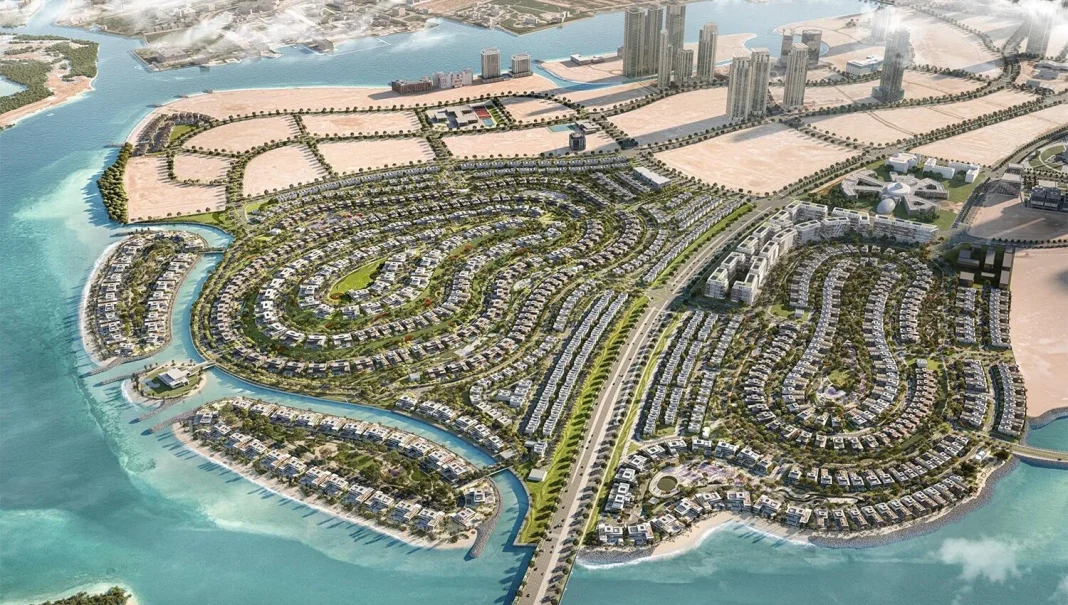


Ras Al Khaimah was the emirate nobody looked at. While Dubai exploded in skyscrapers and Abu Dhabi filled up with museums, this corner 45 minutes from luxury seemed condemned to anonymity. Until news arrived that changed everything: the first legal casino in the Emirates would be built here, on an artificial island facing the sea.
The announcement of the Wynn Resort in January 2024 unleashed unprecedented fever. Between January 2025 and January 2026, prices in Al Marjan Island rose 21% year-over-year. February 2026 marks the high point: investors are buying apartments without seeing finished renders, betting that the 2027 opening will multiply their capital.
The $5.1 Billion Magnet Rewriting the Map
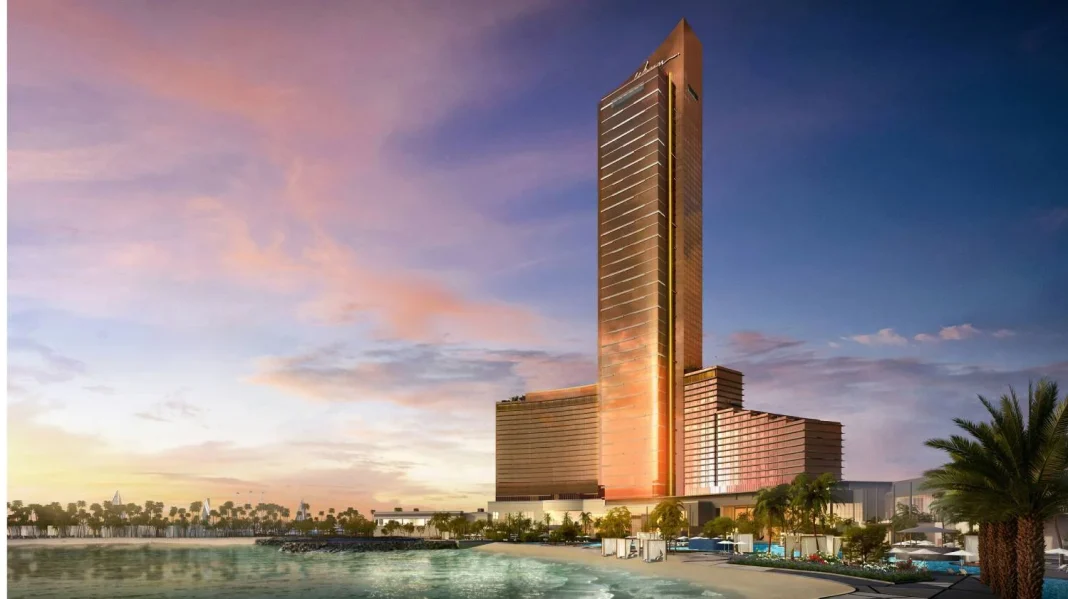
The Wynn Al Marjan Island complex is not just another hotel. We’re talking about $5.1 billion that includes 1,542 luxury rooms, 22 restaurants, a five-star spa, and what really matters: the first regulated casino in the Persian Gulf. This project turns Ras Al Khaimah into something unique: legal gaming in the Middle East.
Construction is advancing at 55% completion in February 2026, with the main tower surpassing the 26th floor. Villas facing the casino are reaching valuations that double equivalent zones in other parts of the emirate. This is not organic growth: it’s the gravitational effect of a megaproject that promises 4 million annual visitors after its opening.
Why It’s Exploding Now: The Speculative Countdown
The explosion of Al Marjan Island responds to a known pattern: the pure expectation phase. Between November 2025 and January 2026, prices per square meter on the waterfront rose 28%. This movement doesn’t reflect housing demand: it’s institutional speculation betting on the opening of the Wynn Resort in the first quarter of 2027.
Key figures of the current momentum:
- Residential presales: 70% occupancy in projects adjacent to the Wynn
- Construction licenses: multiplied within 3 km radius of the resort
- Private transactions: villas with 60% premiums over official appraisal
- Projected revenue: AED 5 billion annually generated by the complex
| Metric | Verified Data | Period |
|---|---|---|
| Price increase | +21% | Jan 2025 – Jan 2026 |
| Waterfront increase | +28% | Nov 2025 – Jan 2026 |
| Presales occupancy | 70% | Jan 2026 |
| Wynn Resort investment | $5.1B | Total project |
| Annual visitors | 4M projected | From 2027 |
The early entry strategy seeks to capture the expectation premium paid by less informed buyers. European and Asian funds identified the pattern: the peak occurs 6 to 9 months before the official opening, not after.
The Hit to the Wallet of Those Who Arrive Late
Those who wait to see the Wynn operating assume another risk: buying in the operational reality adjustment phase. The history of megaprojects in the Emirates demonstrates that when infrastructure opens, values recalibrate according to real occupancy and effective revenues. During 2026, prices respond to the transformation narrative; in 2027, they will respond to cash flow numbers.
Apartments with casino views are registering valuations that double equivalent zones in other areas. Beachfront villas reach premiums of 60% over official appraisal. This distortion is temporary: it exists because demand comes from speculators, not residents. When the market demands real rental profitability, these values will face corrective pressure.
Experienced investors are planning exits for the third quarter of 2026. The goal is to capture the expectation premium before operational reality forces adjustments. September 2026 emerges as the deadline: from then on, buyers prefer to wait to see the project functioning.
Beyond the Casino: What Few Are Analyzing
The true impact of Al Marjan Island transcends the Wynn Resort. This represents a regional positioning shift: Ras Al Khaimah goes from “the forgotten emirate” to a luxury entertainment destination for the entire Gulf. Neighboring countries with strict gaming regulations will send their pent-up demand here, creating constant capital flow from Saudi Arabia, Kuwait, and Bahrain.
The current market is registering accelerated movements among European and Asian institutional funds. Buyer psychology responds exclusively to projections and renders, while operational reality remains a promise. This phenomenon allows margins above 40% for those who sell before the official opening.
The entire ecosystem is experiencing accelerated transformations. Restaurants, shops, and luxury services are multiplying their presence betting on the visitor flow projected for 2027-2028. This anticipation generates an infrastructure bubble where supply gets ahead of real demand, with unpredictable consequences if tourist traffic doesn’t meet projections.
Dispelling Doubts We All Have
Q: Is the casino legal in the United Arab Emirates?
A: Yes, Ras Al Khaimah granted the country’s first regulated casino license in October 2024.
Q: Will prices keep rising until 2027?
A: Not necessarily. Historical patterns show peaks 6-9 months before opening, not after.
Q: Who can buy properties in Al Marjan Island?
A: International investors without restrictions, with full freehold ownership.
Q: What is the minimum entry ticket?
A: Apartments from $350,000 USD in second-line projects in February 2026.
September 2026: When Promises Stop Being Worth Anything
Speculative capital that entered in 2024-2025 already has an exit date: summer 2026. This synchronization generates temporary supply saturation that anticipates the end of the bullish phase. Those who enter after September assume different risks: they no longer speculate with expectations, but bet on the real operation of a model without precedent in the region.
The government is multiplying construction licenses within a 3-kilometer radius of the resort, accelerating deliveries to capitalize on the moment. Institutional speculation is progressively displacing individual buyers in premium segments. When the first real images replace the renders, the market will enter its maturity phase: less spectacular, more predictable.
Meanwhile, Al Marjan Island remains the most aggressive bet in the Emirati market in 2026. An island that went from stalled project to epicenter of regional speculation. The question is no longer whether it’s worth investing here, but whether there’s still time to get on the train before it reaches its final destination.