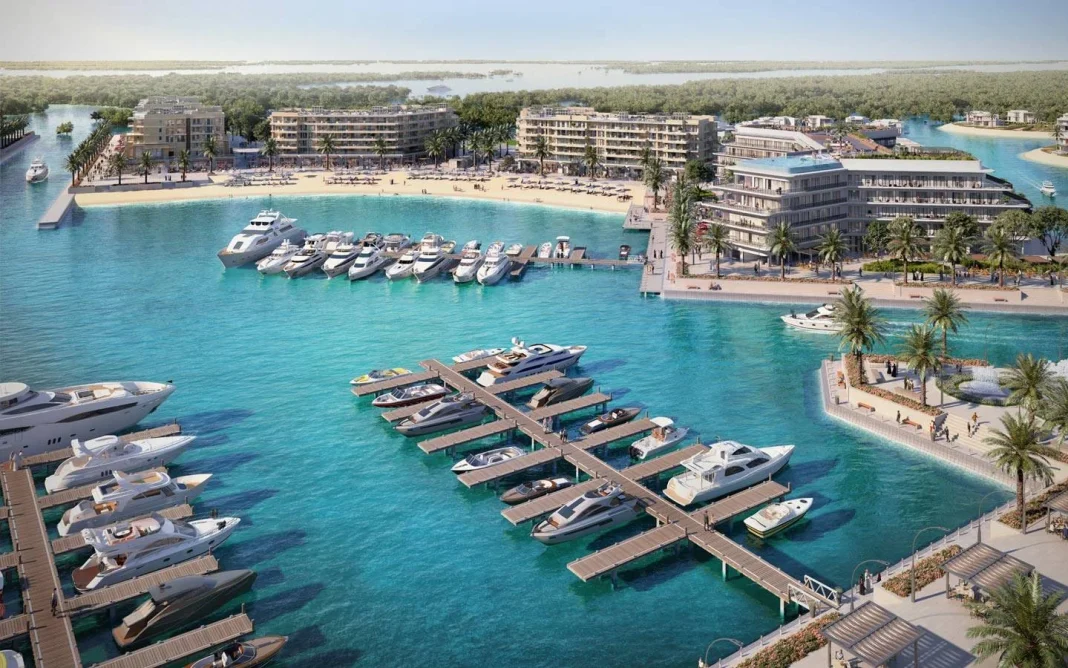


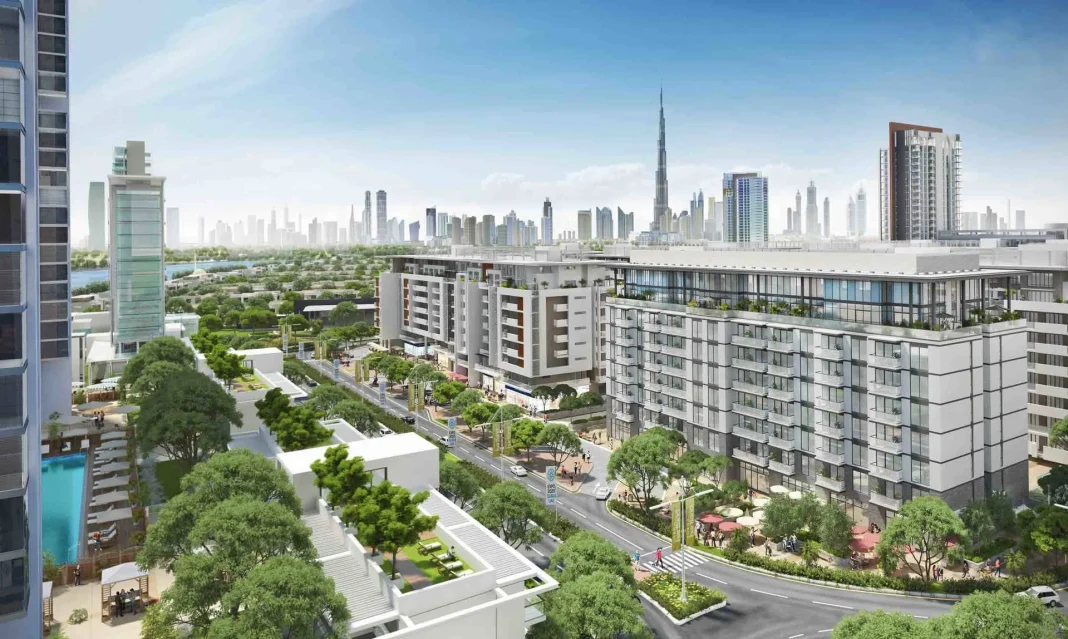
Sobha Hartland II has turned artificial lagoons into financial assets that radically transform the profitability equation for foreign investors. This development in Mohammed Bin Rashid City does not present these water features as mere aesthetic whim, but as infrastructure that drives demand for premium rentals in a market saturated with conventional properties.
The figures demonstrate an unequivocal pattern: villas with direct access to crystal lagoons generate rents of AED 8,000-10,000 monthly, while comparable properties without this amenity range between AED 6,000-7,000. This gap of up to AED 4,000 monthly does not reflect subjective perception of luxury, but market response to a tangible differentiator that reduces vacancy and accelerates leasing cycles.
CAP rate mechanics in lagoon properties
Sobha Hartland II generates a gross CAP rate that systematically exceeds 6% annually, a threshold considered healthy in high-growth emerging markets. A villa of AED 2.5 million that produces AED 9,000 monthly in rent yields an annualized return of 4.32% in cash flow alone, without considering capital appreciation.
However, the true differential appears when comparing with non-lagoon units in the same development. Properties of similar value generate rents of AED 6,500 monthly, reducing the gross CAP rate to 3.12%. This difference of 120 basis points represents the quantifiable premium that water amenities contribute to performance, transforming a mediocre investment into a competitive asset.
Occupancy also benefits: villas with lagoon access maintain annual occupancy rates of 95% versus 78% in standard properties. Fewer vacant days equals more predictable cash flow, reducing investment risk and improving asset valuation in secondary markets.
Tenant demand for water amenities
Artificial lagoons function as a natural filter attracting specific tenant profiles: international executives with families, long-stay expatriates, and professionals from technology or financial sectors. These segments prioritize quality of life over savings, justifying higher rents for access to spaces that replicate permanent resorts.
Dubai’s rental market presents marked seasonality, with demand peaks between September and January. Properties with lagoons maintain consistent inquiries throughout the year, diluting seasonal volatility that affects conventional developments. This stability allows investors to project flows with greater certainty and reduce vacancy discounts.
Additionally, families with children represent 62% of tenants in Sobha Hartland II, compared to 41% in towers without recreational amenities. This data is not trivial: family leases last an average of 28 months versus 14 months for individual contracts, reducing turnover costs and periods without rent between occupants.
Hidden costs and net CAP rate maintenance
The 6% gross CAP rate does not reflect the complete operational reality. Community maintenance fees at Sobha Hartland II range between AED 18-25 per square foot annually, allocated to lagoon conservation, filtration systems, and aquatic landscaping. A 3,500 square foot villa generates expenses of AED 63,000-87,500 annually.
When deducting these costs from cash flow, the net CAP rate compresses to 4.1-4.8%, depending on the owner’s operational efficiency. However, this net yield still exceeds non-lagoon properties by 90-140 basis points, which after deducting their own fees (lower but existing) generate net CAP rates of 2.7-3.4%.
Municipal taxes and insurance should not be ignored either. Dubai does not apply rental income tax for individuals, but registration fees and contract renewal add AED 5,000-8,000 annually. These fixed costs proportionally affect lower-rent properties more, amplifying the relative advantage of premium lagoon units.
Capital appreciation and compound effect
Villas with lagoon access in Sobha Hartland II have shown annual appreciation of 7-9% in the last 24 months, exceeding the 4-6% of standard units in Mohammed Bin Rashid City. This difference of 200-300 basis points in capital gain, added to the CAP rate delta, generates a total return that justifies the initial purchase premium.
An investor who acquired a villa for AED 2.5 million two years ago now owns an asset valued at AED 2.725-2.875 million, while accumulating AED 216,000 in gross rents. Total return hovers around 24-30% in 24 months, equivalent to 12-15% annualized, far superior to traditional financial instruments in developed economies.
Liquidity also improves. Average sale time for lagoon properties is 47 days, versus 89 days for units without this amenity. Less time on market reduces opportunity costs and allows investors to rotate capital more efficiently, maximizing risk-adjusted return of the real estate portfolio.
Five-year profitability projection
Models project that the rental differential between villas with and without lagoons will widen as Sobha Hartland II reaches full occupancy and the district matures. Saturation of standard properties in Dubai will pressure rents downward, while unique amenities like crystal lagoons will maintain pricing power.
Real estate analysts estimate that by 2030, rents in lagoon properties will reach AED 11,000-13,500 monthly, driven by scarcity of comparable developments and population growth of high-income expatriates. Simultaneously, the supply of standard villas will increase 18-22%, compressing rents to AED 5,500-6,800 monthly.
This projected scenario would expand the rent delta to AED 5,000-6,700 monthly, representing a 50-67% increase over the current differential. Investors entering now will capture both present cash flow and future premium expansion, optimizing total return adjusted for inflation and regional geopolitical risk.