

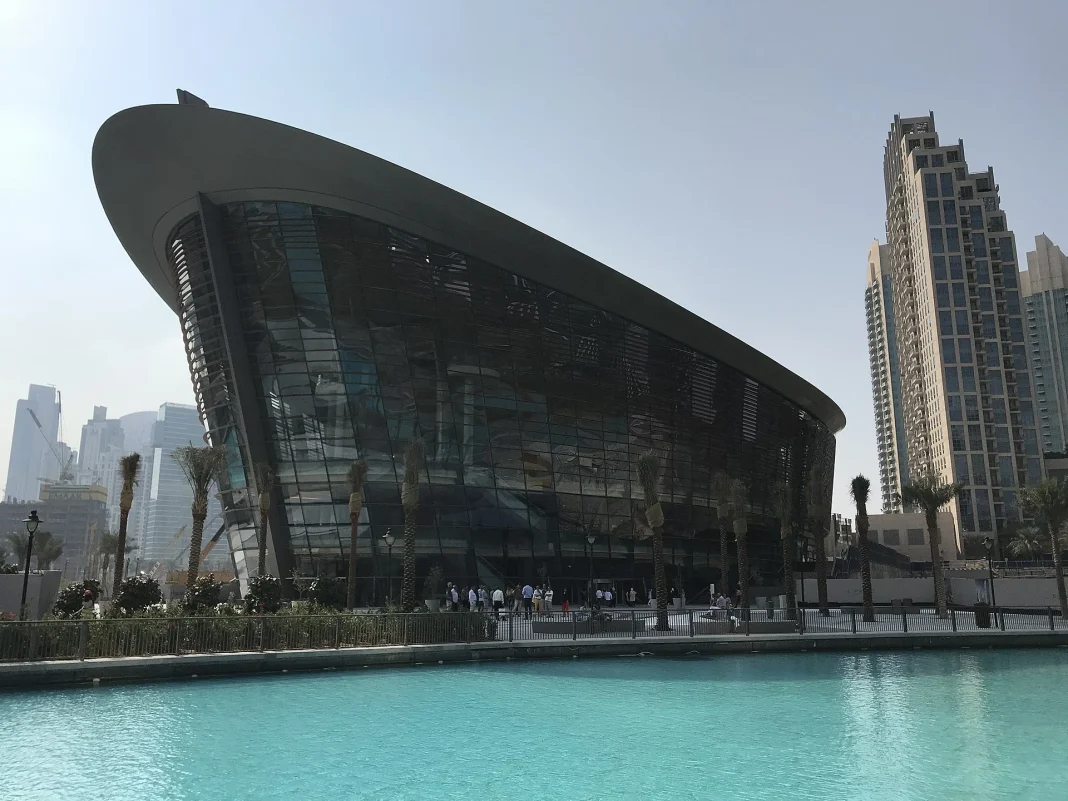
Dubai Opera District has established itself as one of the most exclusive areas in Downtown, where property prices reach levels that far exceed the emirate’s average. The main attraction that justifies this premium lies in the direct views of the dancing fountain and the iconic Burj Khalifa, features that turn every window into a postcard frame. However, investors who do not plan to live in these properties face a crucial question: is it really worth paying between 20% and 40% more just for this privileged perspective?
The reality of the short-term rental market shows that panoramic views do increase the nightly rate, but they also restrict the target audience to a specific segment of high-net-worth guests. On the other hand, properties without these views in the same district offer more balanced returns with lower entry costs, allowing for greater financial flexibility. The final decision must consider not only the immediate return on investment, but also the ability to maintain consistent occupancy rates throughout the year.
Property premium for prime views
The real estate market in Dubai Opera District establishes a clear price gap between units with direct views of the fountain and those facing inner streets or the building itself. One-bedroom apartments with a front-row perspective of the water show can exceed 2.5 million dirhams, while comparable units without this view are around 1.8 million. This differential not only impacts the initial purchase, it also increases maintenance expenses and service charges, as these units are often located on floors considered VIP.
Industry data reveals that this premium does not always translate into a proportional rental yield. While prime views may generate 15% higher income during peak season, outside of those periods the difference shrinks dramatically. Owners must calculate whether the additional return compensates for the higher initial investment and the time needed to amortize that gap. In many cases, the equation works out better for those who choose well-located units without the view factor as their main differentiator.
Tenant profile and occupancy expectations
The type of tenant who specifically seeks fountain views is usually an occasional tourist willing to pay high daily rates for short stays of three to five nights. This segment demands additional concierge services, professional cleaning and luxury amenities that raise the owner’s operating costs. By contrast, medium- and long-term tenants prioritise practical aspects such as proximity to the metro, supermarkets and coworking spaces, relegating views to a secondary role.
Short-term rental platforms confirm that the annual occupancy of premium properties in Dubai Opera District ranges between 60% and 75%, while standard units reach 80% occupancy thanks to more competitive pricing. This 10 to 20 percentage-point gap can erode the advantages of a higher nightly rate. In addition, managing luxury properties requires greater investment in marketing, professional photography and presence across multiple channels, factors that must be included in the net yield calculation.
Investment alternatives within the district
Choosing properties located on streets adjacent to the heart of the district allows investors to access the area’s prestige without assuming the cost of direct views. These properties maintain proximity to Dubai Opera and other cultural amenities, ensuring a similar lifestyle with a lower initial outlay. For investors focused purely on returns, this strategy offers wider margins and faster capital recovery.
Another option is to purchase studios or one-bedroom apartments in less iconic towers within the same district, where the price per square metre drops by 25% to 30%. These units attract expat professionals who value the central location to shorten commuting times. The steady demand from this profile ensures predictable cash flows, lower tenant turnover and shorter vacancy periods, all of which are key elements for a sustainable real estate investment in Dubai.
Tax factors and hidden costs
Beyond the purchase price, owners in Dubai Opera District must factor in registration fees that represent 4% of the transaction value, plus agency costs and mandatory valuations. Prime-view properties also face higher annual service charges, which can reach between 25 and 35 dirhams per square foot, compared with 15–20 for standard units. These recurring expenses directly impact net returns and must be built into any serious financial projection.
The absence of income tax or capital gains tax in Dubai remains a major fiscal draw for international investors. However, regulations on holiday rentals have tightened, requiring specific permits and compliance with quality standards that involve periodic inspections. Properties with prime views come under greater scrutiny when advertised on global platforms, which can lead to financial penalties if all legal requirements are not met. These administrative aspects represent indirect costs that many first-time investors underestimate when assessing the viability of a real estate project.