

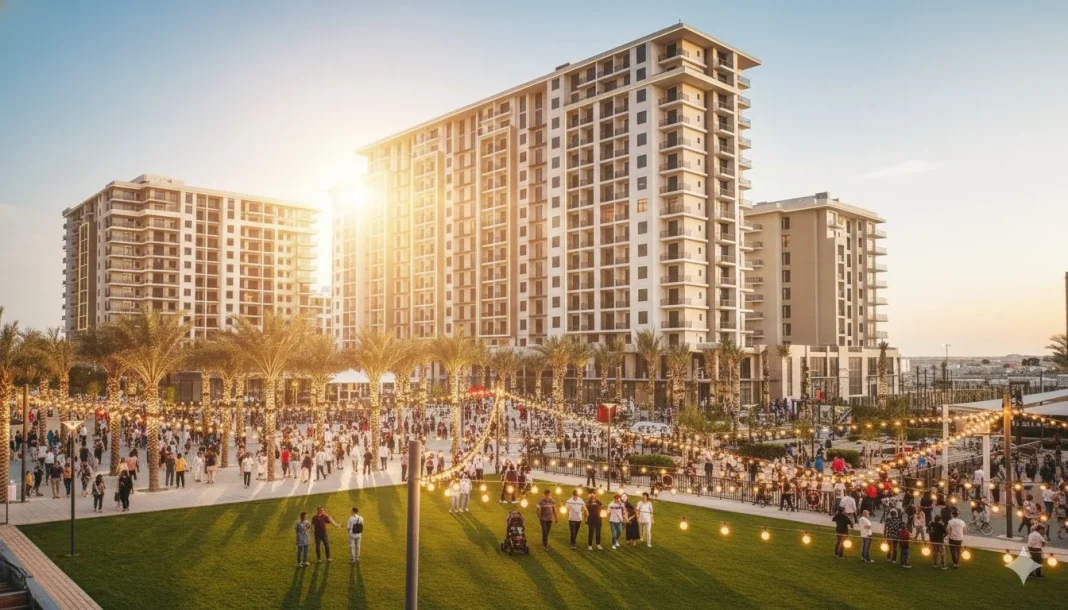
Dubai’s financial scene has left behind the classic image of hermetic skyscrapers to embrace a more open, experiential, and urban model. At the heart of the Dubai International Financial Centre stands Gate Village, a collection of mid-rise buildings connected by walkways, plazas, and terraces where the dress code may be dark suits, but the setting feels more like a creative campus than a typical office district. Moreover, this space has been designed so professionals don’t have to choose between meeting schedules, social life, and culinary enjoyment, as everything is concentrated within a few meters and extends from morning until late into the night.
Therefore, it’s no surprise that many define it as Dubai’s “open-air business club,” a label that fits its mix of cult restaurants, international galleries, and offices of major firms. Here deals are prepared over mid-morning coffee, refined over artisan sushi, and sealed on a terrace at dusk, taking advantage of an environment that encourages relaxed conversation without sacrificing discretion. In this way, the urban design itself becomes another negotiation tool, reducing logistical friction and creating a climate of trust difficult to replicate in a conventional boardroom.
An outdoor financial ecosystem
This enclave cannot be understood without the weight of DIFC, Dubai’s major regulated financial center serving markets in Europe, Africa, and Asia. Within its just over one hundred hectares are concentrated investment banks, wealth management firms, sovereign funds, and professional service firms that use the district’s common law legal framework and tax incentives to structure complex operations. Thus, Gate Village’s physical proximity to these offices turns its restaurants and plazas into a natural extension of the offices, where details are polished that are later formalized in adjacent buildings.
The key is that everything is part of the same ecosystem: anyone working in a DIFC tower takes only minutes to walk to a reserved table for a business lunch, without needing a car or major commutes. Additionally, the gastronomic and cultural offerings are designed for a demanding international audience, with Asian, Mediterranean, and signature cuisines that allow adapting the tone of the meeting, from a very formal lunch to a relaxed after-work gathering. This encourages constant, more organic networking, where the line between work time and social time blurs, but always in service of business.
Another differentiating element is the architectural atmosphere, which breaks with the image of a cold financial district. Gate Village’s buildings surround courtyards and pedestrian walkways, with public art and landscaped areas that reduce the typical tension of financial environments and facilitate more relaxed conversations. Therefore, many executives choose it for sensitive meetings with clients or partners, convinced that a pleasant environment can help unlock positions and close complex deals.
Restaurants, art, and offices on the same street
Behind the “business club” label is a highly calculated combination of uses: fine dining, art galleries, select boutiques, and specialized offices. Within a few meters coexist reference names like Zuma or La Petite Maison, consultancies, international law firms, and exhibition spaces showcasing works by emerging and established artists, giving meetings a cultural context that many international clients appreciate. For those traveling on business, it’s particularly useful to be able to concentrate gastronomic agenda, business, and leisure in a single point on the map.
- Dining at an iconic restaurant allows impressing a client without losing sight of conversation confidentiality.
- Closing a lunch with a gallery visit adds relational value and reinforces the host’s sophisticated image.
- Having a quick coffee on an intermediate terrace facilitates brief but decisive meetings between longer appointments.
In parallel, a community of professionals has consolidated that uses the area almost as an extended office. It’s not uncommon to see bankers reviewing presentations at a high table, lawyers fine-tuning clauses before going up to the office, or wealth managers receiving high-net-worth families in an environment less intimidating than a traditional boardroom. This mix of formal substance and relaxed atmosphere is one of the enclave’s great attractions for Middle East actors seeking neutral, comfortable, and discreet settings to address sensitive topics.