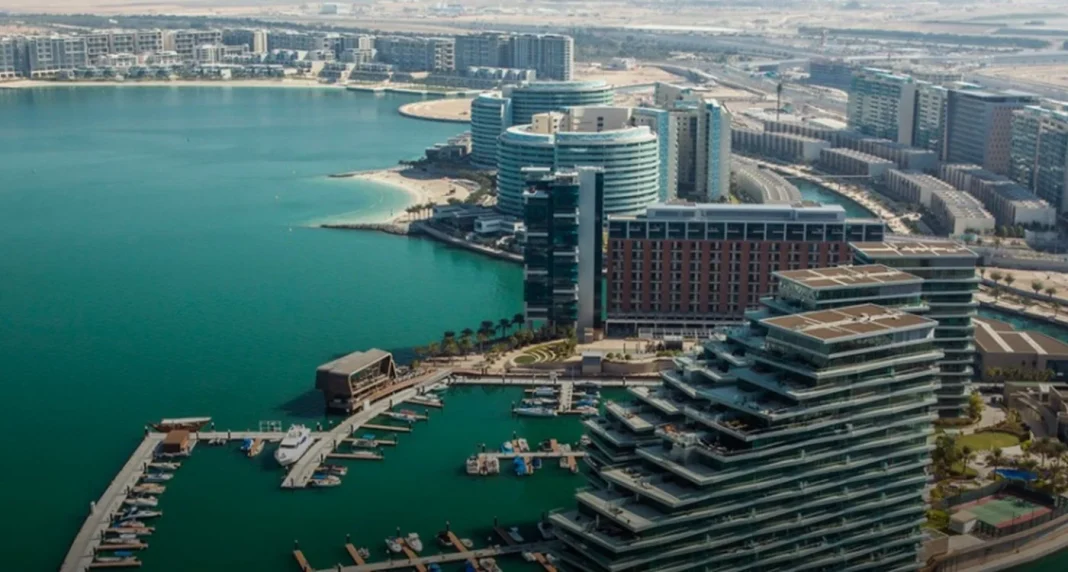


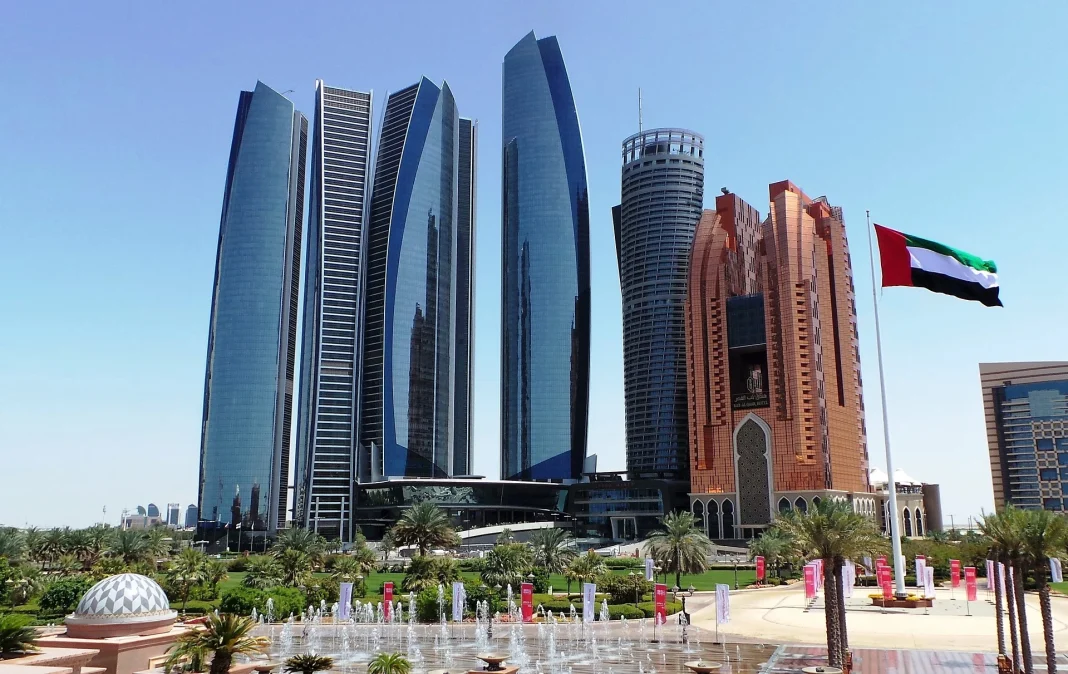
If you are looking for the next big real estate boom in the Emirates, you need to turn your head towards Zayed City before prices soar. The reality is that it represents a unique investment opportunity for those who understand property cycles. Forget for a moment the consolidated shine of the Corniche or the already mature prices of Yas Island; here we are talking about land under development with an upward trajectory that is technically impeccable.
This district, formerly known as Khalifa City C, is quietly taking shape as the new backbone of the capital. What is interesting is that it will transform the way of living in the capital by merging federal ministries with low-density residential areas. It is not just another neighbourhood; it is the missing piece in the Abu Dhabi 2030 Plan puzzle to decongest the island and create a self-sufficient, modern core.
THE ADMINISTRATIVE HEART DRIVING DEMAND
The strategic location of this massive urban development is not the result of chance, but of meticulous planning that places it between the international airport and the industrial area of Mussafah. The key fact is that it will host the headquarters of embassies and ministries, which guarantees a constant flow of high-level professionals looking for nearby housing. By moving the gravitational center of the administration away from the northern coast, an organic demand for rentals and purchases is created that does not depend on seasonal tourism, but on state bureaucracy and diplomatic life.
What we are witnessing is the birth of a “capital within the capital”, designed to be the operational brain of the United Arab Emirates. Note that this shields the investment from tourism volatility, offering a much more stable and long-term tenant profile. Surrounded by fast roads and connected to the future metro, access is unbeatable, making it the logical place for those working on the city’s expansion inland.
WHY ENTERING NOW IS A MASTER MOVE
Getting in at early stages of a master development like this has always been the winning strategy in the Gulf real estate market. The numbers show that the price per square meter is still attractive compared to consolidated areas, leaving a huge appreciation margin for the next five years. While others look at already finished luxury skyscrapers, smart money is positioning itself in the villas and plots of this new administrative district.
Revaluation here will not come only from market momentum, but from the completion of critical infrastructure that will change the perceived value of the area. Keep in mind that capturing capital gains requires anticipation and patience, but Abu Dhabi’s economic fundamentals support this bet with enviable strength. We are talking about buying the future at today’s prices, an equation that in cities with this pace of growth usually ends with double-digit returns.
TOP-TIER INFRASTRUCTURE ALREADY UNDERWAY
We are not talking about renders or empty promises, but about cranes at work and roads being paved as you read these lines. It is clear that the government is pouring massive resources into equipping the area with international schools, hospitals and shopping centers before the bulk of residents arrive. The vision is to create an environment where there is no need to leave the district for anything, replicating the success of neighboring communities but with more modern and sustainable urban planning.
The quality of public facilities in this new residential hub is designed to surpass the current standards of the region. In fact, sustainability is the central pillar of the design, with green spaces and energy-efficient systems that will reduce maintenance costs for owners. This is crucial, because in a desert climate, intelligent resource management is not just a luxury, but a decisive factor for long-term viability and comfort.
MARKET DATA CONFIRMS THE TREND
If recent transactions are analyzed, it becomes clear that the volume of sales in peripheral and developing areas has begun to rebound significantly. Analysts agree that there is a shift in demand towards inland areas, seeking more space and better quality for the same price as a small apartment on the coast. According to recent data from local property portals, rental yields in these emerging areas can easily exceed 7%, a figure that appeals to any investment portfolio.
Moreover, the political and economic stability of Abu Dhabi acts as a safe haven for international capital, and this project is its flagship. It should not be forgotten that legal certainty drives these operations, allowing foreigners to acquire properties in designated investment zones with complete peace of mind. This legal framework, together with the projected population growth, creates the perfect breeding ground for rapid and steady absorption of new units.
A LIFESTYLE DESIGNED FOR THE FUTURE
Living here will not just mean residing close to work, but enjoying an urban environment that has learned from past mistakes to offer a human scale. The promise is that you will be able to walk along lively boulevards, something that is lacking in other parts of the city due to car-centric planning. Families will find parks, leisure areas and a vibrant community that blends local tradition with the cosmopolitan openness typical of the Emirates.
To close the circle, this development aligns perfectly with the future vision in which Zayed City sets the trend as the new standard of livability in the region. The truth is that this is the awakening of a giant that will redefine the real estate map of the capital over the next decade. Those who have the vision to bet on this land now will probably look back in a few years with the satisfaction of having arrived before the crowd.