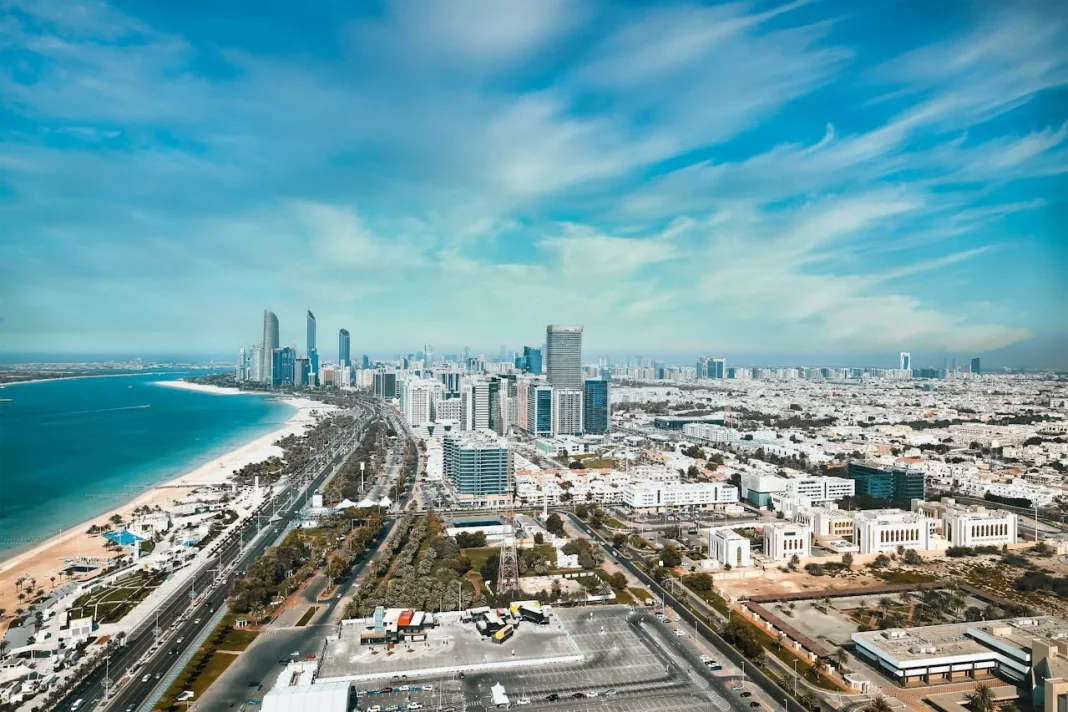


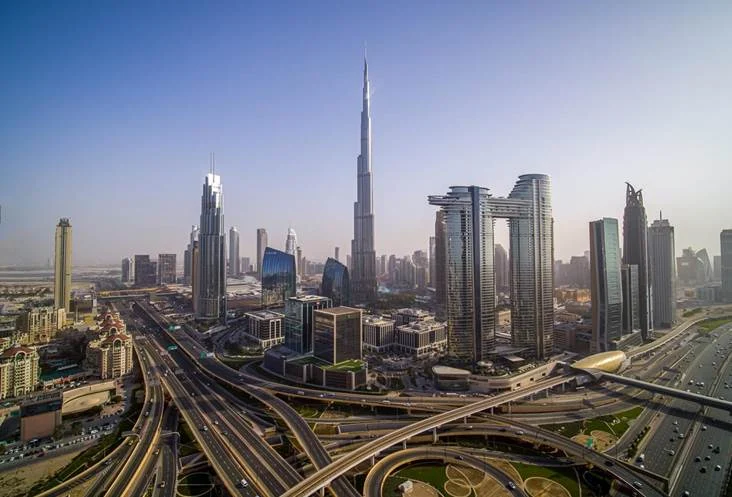
Do you still think the Middle East only breathes when the price of a crude oil barrel rises in international markets? The financial landscape of the UAE has just shattered that old Western paradigm in a definitive way this year. The streets of Dubai and the offices of Abu Dhabi no longer vibrate solely to the rhythm of oil wells, but to the beat of digital innovation, global logistics, and an unprecedented historical commercial openness.
The Central Bank has just published its latest official balance sheet, and the figures are simply undeniable for the most skeptical analysts on the planet. The country is experiencing an outstanding macroeconomic expansion, consolidating a diversification strategy that places the region in a position of absolute leadership compared to traditional Western economies.
The financial engine driving the UAE toward a historic year
Consolidated data for this fiscal year reveal that the Gross Domestic Product has experienced an acceleration equivalent to 5.6% year-on-year. This progress places the UAE well above the average for advanced nations, whose general development barely manages to touch the modest threshold of 1.5% according to international organizations.
The solidity of this financial boom is based on a predictable political environment and fiscal regulations that are highly attractive to foreign capital. Global money seeks a safe haven in a turbulent international context, finding in the Arabian Gulf the institutional guarantees necessary to expand large-scale technological corporate operations.
The structural transformation of an economy without oil dependence
The truly revolutionary data shaking up geopolitics manuals is that the non-hydrocarbon sector now accounts for 78% of the national GDP. This milestone crowns the success of an integrated, flexible, and modern economy, where financial services, high-impact tourism, and the cutting-edge real estate sector set the growth guidelines across all the Emirates. The resilience demonstrated by this private productive fabric proves that the transition to the post-oil era is not a promise for the future, but a palpable reality in this robust sovereign economy.
Behind this historic percentage lies a hyperactive business ecosystem exceeding 1.45 million legally registered companies. Legal reforms implemented in recent years have democratized access to the local market, allowing multinational corporations and startups to coexist under a framework of legal certainty that is the envy of traditional financial centers.
Global alliances and foreign trade at all-time highs
The country’s foreign trade arm has reached colossal dimensions, recording a transactional volume of 6 trillion dirhams in the latest revised annual balance sheet. This colossal figure represents a net 15% increase compared to the previous year, consolidating the UAE‘s position as the great commercial hub connecting markets in Asia, Africa, and the European continent.
The key to this strategic positioning lies in the massive signing of Comprehensive Economic Partnership Agreements (CEPA). Bilateral pacts sealed with key nations such as the Philippines, Nigeria, Congo, and Gabon have removed obsolete tariff barriers, skyrocketing the flow of non-oil exports toward emerging markets with high manufacturing demand.
Foreign investment and the corporate magnet of the Arabian Gulf
The attraction of foreign direct investment has reached unprecedented levels in the Middle East region, placing the country in second place in the global corporate competitiveness rankings. Multinationals look not only for tax optimization, but also for an aeronautical and maritime logistical infrastructure that allows connecting any world capital with the UAE in a matter of hours.
The domestic liquidity of the local banking system has reached the superb figure of 5.4 trillion dirhams in total liquid assets. This financial muscle guarantees that established companies have direct access to expansive credit lines to fund industrial projects, artificial intelligence initiatives, and next-generation clean energy plants.
| Economic Indicator 2026 | Recorded Value | Market Impact |
|---|---|---|
| Annual GDP Growth | 5.6% | Absolute regional leadership |
| Non-Oil Share | 78% of GDP | Consolidated structural diversification |
| Registered Companies | 1.45 Million | Highly competitive private ecosystem |
| Foreign Trade Volume | 6 Trillion AED | Intercontinental logistical connectivity |
The UAE horizon and the keys for the global investor
The immediate future points toward a consolidation of this expansive trend, backed by sovereign fiscal buffers that rank among the largest and most stable on the planet. The macroeconomic stability of the UAE will continue to act as a beacon of attraction for global investment funds fleeing the high inflationary volatility punishing traditional Western markets.
For Spanish and global entrepreneurs, the lesson is direct and powerful: real growth requires diversifying the geographical focus and betting on hubs where government proactivity walks hand in hand with technological development. This vigorous economy has proven it knows how to reinvent itself with mastery, transforming the old black gold into an ecosystem of knowledge and business that is barely showing its true global potential.