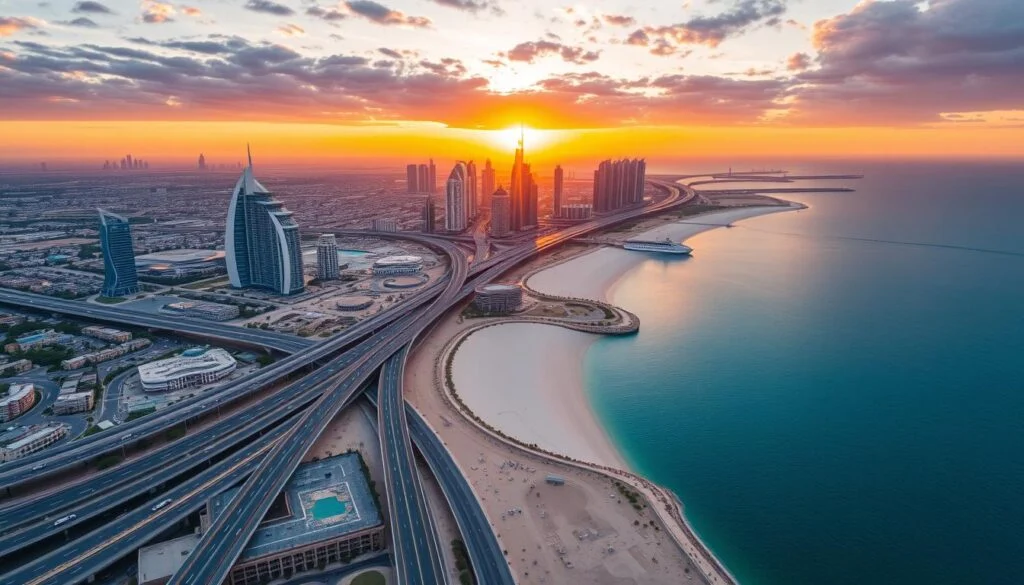


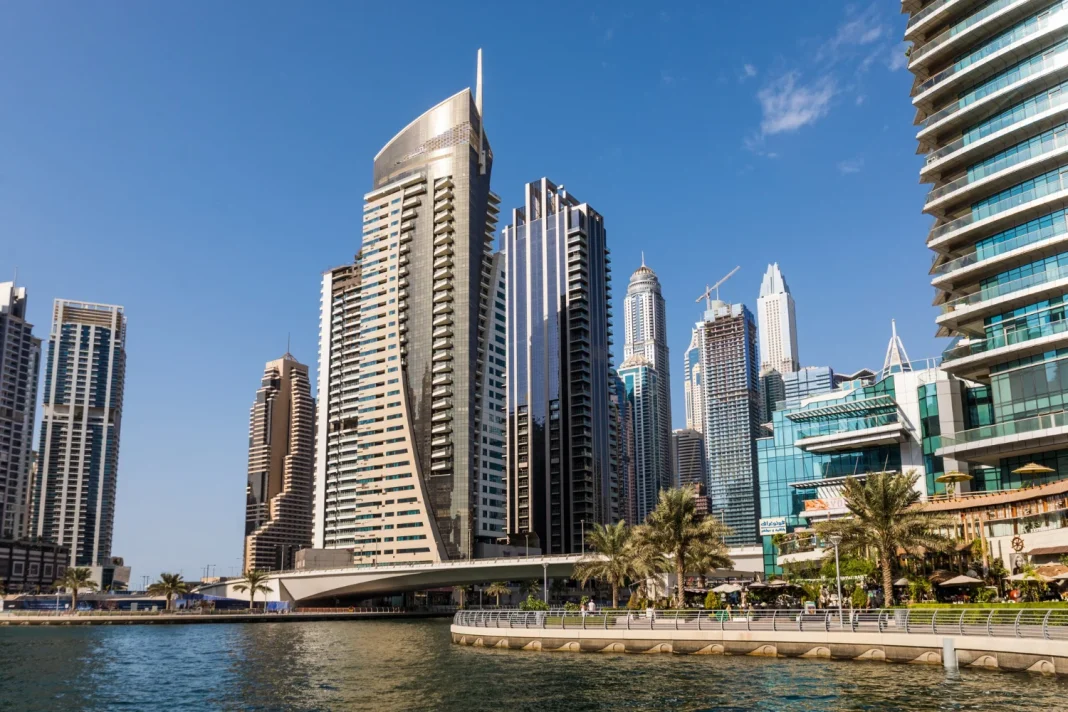
Is it really necessary to process six different visas to explore the Gulf? The UAE has been asking this out loud for years, and in 2026, the answer is starting to change. What for decades seemed like a bureaucracy impossible to simplify now has a name, a calendar, and a pilot test: the GCC Unified Visa, also known as the GCC Grand Tours Visa.
The scenario is concrete: starting in the fourth quarter of 2026, a traveler will be able to apply for a single digital permit to move between the UAE, Saudi Arabia, Qatar, Kuwait, Bahrain, and Oman for up to 30 days. The Emirati tourism sector already calculates the impact: $50 billion in additional cross-border spending during the first years of the system’s operation.
The UAE, the engine behind the visa changing the Gulf
The political momentum came from the Emirates. Abdullah bin Touq Al Marri, UAE Minister of Economy and Tourism and Chairman of the Emirates Tourism Council, was the first to formally announce the unified visa framework at the seventh GCC ministers’ meeting held in Oman. His argument was direct: a single visa for the entire Gulf would raise regional competitiveness to the level of Europe or Southeast Asia.
The UAE did not just propose the idea; they provided the infrastructure. Dubai already operates 122 smart biometric control gates at its international airport, making the emirate the natural technological hub for the QR code validation system that the initial pilot between Dubai and Bahrain will use.
What the unified visa means for the UAE and its economy
The tourism sector in the UAE already recorded more than 1.4 million passengers at national airports in the first twelve days of March 2026 alone, according to the General Civil Aviation Authority. However, the consolidation of the GCC as a unified travel zone opens a completely new dimension: that of the multi-destination tourist who currently does not travel due to the friction of paperwork.
Destination management companies based in the UAE are the primary beneficiaries. A traveler landing in Dubai can add a stopover at the museums in Doha or the historical heritage of Riyadh without duplicating applications or paying extra fees per country. Airlines are already reviewing their codeshare agreements to capture this flow of open itineraries.
How the pilot works and how much the process will cost
The technical plan is defined. The Q4 2026 pilot will connect Dubai International Airport with Bahrain International Airport, where eligible travelers will complete immigration once and move between both countries using QR code validation at smart gates. Data will flow in real-time between the UAE’s ICP platform and Bahrain’s passport system.
Regarding pricing, provisional guidelines point to approximately $100 for entry into a single GCC country, while the “Grand Tour” multi-destination permit—valid for 60 to 90 days—would be around $120-$130. Final fees will be set by the GCC Ministers of Interior before the end of the year.
Dubai breaks records while awaiting the big leap
The bet does not arrive in a vacuum. The UAE surpassed 19.5 million tourists in 2025 and broke the barrier of 2 million visitors in a single month. The GCC outbound tourism market is projected to reach $138 billion by 2033, with the Gulf already generating $50 billion in tourism in 2025. The UAE started as the dominant destination within that figure.
The Emirati strategy is clear: capture the first leg of the itinerary and then retain the traveler for more days thanks to the combined offer with Gulf neighbors. Michelin-starred culinary tourism, hotel luxury in Ras Al Khaimah, and culture in Abu Dhabi are the lures the UAE is refining in parallel with the visa.
| Indicator | Current Data | Projection with Single Visa |
|---|---|---|
| Tourists received in UAE (2025) | 19.5 million | +30% estimated in 3 years |
| GCC tourism revenue (2025) | ~$50,000 M | $138,000 M in 2033 |
| Countries covered by the visa | 1 (individual) | 6 (full GCC) |
| Duration of Grand Tour permit | — | 60-90 days |
| Planned pilot phase | — | Q4 2026 (Dubai-Bahrain) |
UAE in 2027: The Gulf as a single destination for the world
If the Dubai-Bahrain pilot works as the UAE expects, Oman, Saudi Arabia, Qatar, and Kuwait would join the system in the first quarter of 2027. This would turn the Gulf into the third-largest free travel zone on the planet, behind only the Schengen Area and the ASEAN Plus zone. For the UAE, the strategic benefit is not just economic: it is about global positioning as an irreplaceable regional hub.
The advice from sector analysts is unanimous: tour operators, booking platforms, and hospitality businesses that prepare now for multi-GCC itineraries will have an advantage when the system officially opens. The UAE is already doing so, and the Q4 2026 clock is ticking.