


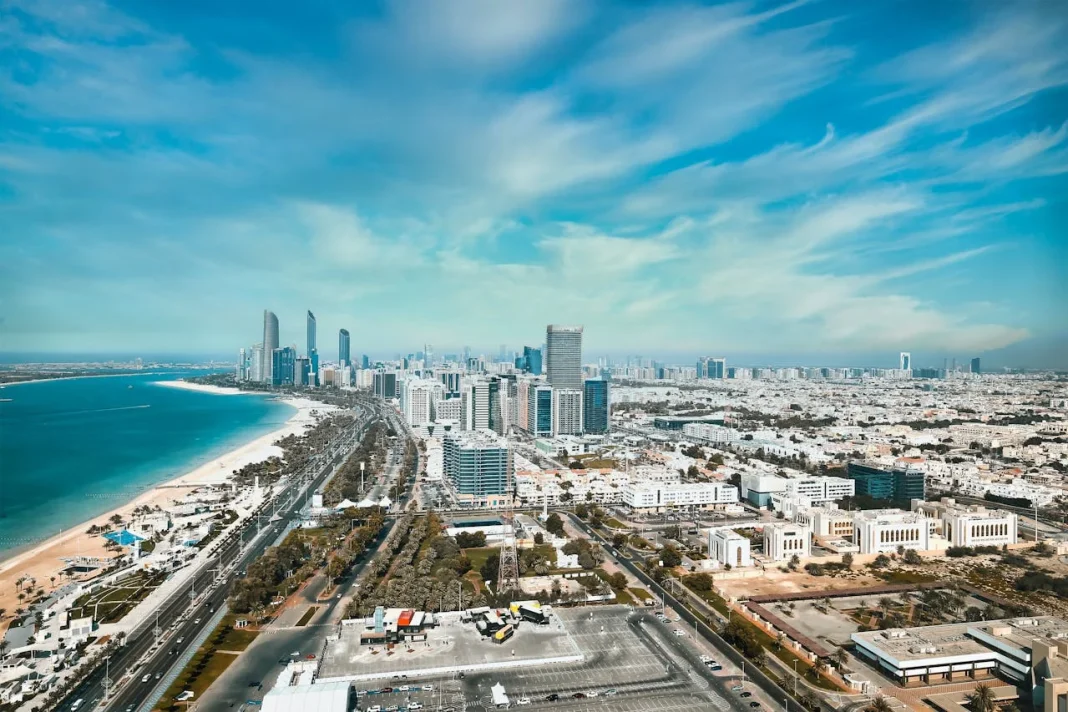
When was the last time you thought an Abu Dhabi beach could have snakes? What for years seemed an impossible scenario at one of the world’s most exclusive tourist destinations has become a documented reality. Abu Dhabi is recording a significant increase in sea snake strandings on its shores, especially on beaches like Saadiyat Beach.
The phenomenon is not an isolated accident or a sign of extreme danger for tourists: it is the result of ecological dynamics in the Persian Gulf that scientists have been studying for years. And now, for the first time, Abu Dhabi has a coordinated response system to manage it.
Abu Dhabi Activates the Gulf’s Largest Sea Snake Rescue Program
SeaWorld Yas Island, through its Yas SeaWorld Research & Rescue (YSWRR) center, has launched training workshops so that citizens and lifeguards know how to act when a stranded sea snake appears on the beach. Since 2024, the program has managed nearly 100 documented rescues, establishing Abu Dhabi as a regional reference in marine conservation.
The protocol is clear: do not touch, maintain distance, and call the specialized team. SeaWorld Abu Dhabi has distributed visual guides at the main entrances to Saadiyat Beach and at points along the Corniche, and local lifeguards have received specific training on how to handle these reptiles without risk to the animal or the rescuer.
What Are the Sea Snakes Reaching Abu Dhabi and Why Are They Appearing Now
Abu Dhabi‘s coastlines are not new territory for these reptiles: sea snakes have inhabited the Persian Gulf for millennia, but their presence on shore had gone unnoticed until mass tourism and scientific monitoring put them on the map. These are animals of the subfamily Hydrophiinae, highly venomous but naturally elusive in their behavior toward humans.
The increase in strandings is linked to changes in water temperature in the Gulf, seasonal spring currents, and pressure on their natural habitat. Experts note that these animals do not seek contact with swimmers: they become trapped on shore in a disoriented state, and if they are not returned to the sea quickly, they die from dehydration.
Saadiyat Beach: The Epicenter of Sightings in Abu Dhabi
Saadiyat Beach has become the area with the highest concentration of incidents, which is no coincidence: it is one of the beaches with the greatest marine biodiversity in Abu Dhabi, flanked by mangrove areas and bottoms rich in small fish, the usual prey of sea snakes. Its proximity to non-urbanized natural habitats makes it a natural corridor between the open sea and the coast.
The Emirati authorities have reinforced signage on the beach and have installed direct communication points with the rescue team. Abu Dhabi has not issued any swimming ban: the official message is one of informed caution, not alarm. Swimming at Saadiyat remains safe as long as the guidelines are respected.
What You Should Know Before Swimming at Abu Dhabi Beaches This Summer
The peak season for sea snake activity in the Gulf coincides with the spring and early summer months, between March and June, when water temperatures rise and the animals move in search of food. In Abu Dhabi, this period coincides with the final stretch of the tourist season before the extreme summer heat, which increases the risk of encounters with swimmers.
The advice from rescue teams is simple but firm: if you see a sea snake on the shore, do not approach it, do not photograph it from less than two meters away, and immediately alert the nearest lifeguard. These species can bite if they feel cornered, although their small fangs rarely penetrate human skin easily.
| Aspect | Key Data | Relevance for Swimmers |
|---|---|---|
| Venom | 10 times more potent than the black mamba | High, but rarely injected in defense |
| Behavior | Elusive and non-aggressive toward humans | Low risk if not handled |
| Rescues in Abu Dhabi | ~100 cases since 2024 | Active and professionalized program |
| Highest-incidence beach | Saadiyat Beach | Reinforced signage in 2026 |
| Risk season | March to June | Coincides with tourist peak |
Abu Dhabi as a Global Model for Tourism and Marine Conservation in 2026
What could have become a tourism image crisis is turning into the opposite: Abu Dhabi is using this phenomenon to position itself as a responsible nature tourism destination, a globally booming segment. SeaWorld’s program not only rescues animals but also raises awareness, attracts positive media coverage, and reinforces the sustainable emirate narrative that the government has been building for years.
The trend points to sea snake sightings on the coast continuing to increase as monitoring systems improve and the public learns to identify and report them. For the traveler planning to visit Abu Dhabi in 2026, this phenomenon should not be a deterrent, but an incentive: few cities in the world offer the possibility of seeing wild marine life meters away from a five-star resort.