

Dubai Creek Harbour has gone in just a few years from being a drawing on the table to becoming one of the most closely watched waterfronts for international investors. While the price per square metre is skyrocketing in prime areas, here prices remain more contained without giving up skyline views and the future Creek Tower.
In an emirate where there is no personal income tax, the equation is clear: lower tax burden, rents in strong dollars and a tourist market that keeps growing. The focus now is who arrives in time to position themselves in this new urban hub before prices get closer to those of the more established neighbourhoods.
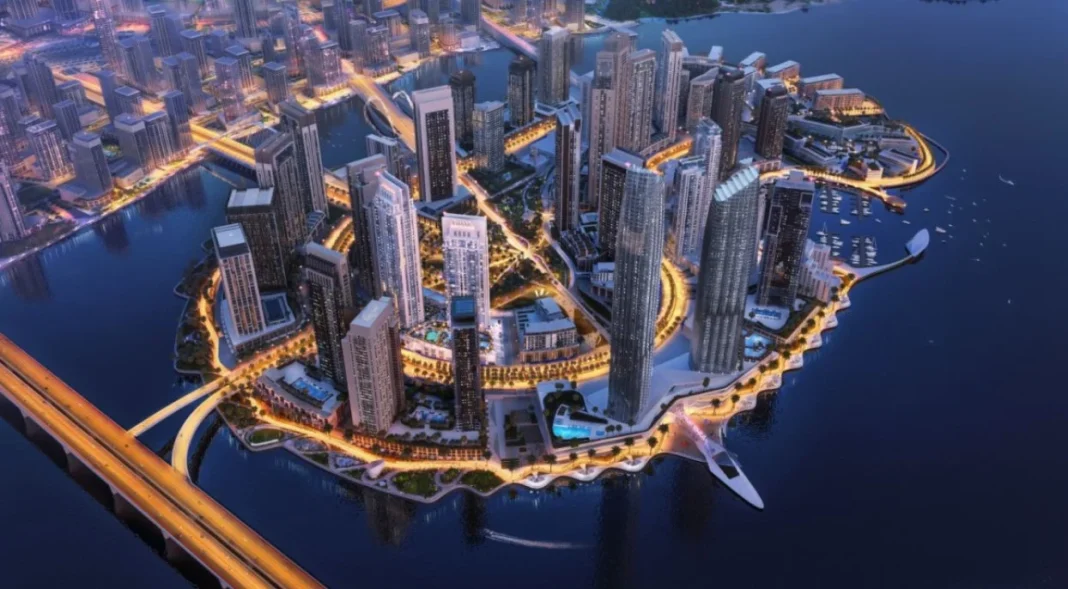
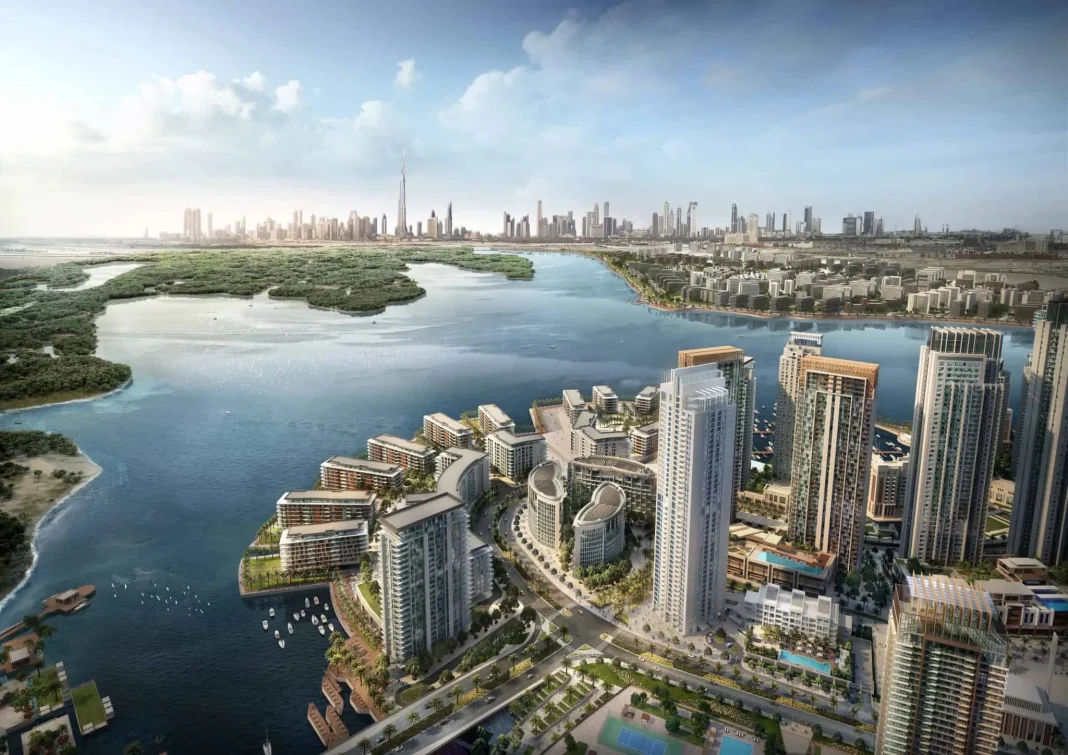
Dubai Creek Harbour on screen: this is what the new waterfront looks like
The best way to understand what is happening in this new district is to see it built, lit up and in motion. Aerial videos and walking tours allow you to appreciate the mix of marina, pedestrian promenades and residential towers surrounding the canal.
Those who have already walked around the area highlight the feeling of a project still in expansion, with active cranes but also cafés, restaurants and leisure areas already fully operational. This contrast between what is already working and what is yet to come is precisely what is feeding the narrative of a “neighbourhood with potential”.
Competitive prices compared to the heart of Dubai
The key question any buyer asks is simple: how much do I really save compared to the most iconic areas? Recent market reports show that the average ticket per square metre in Dubai Creek Harbour is still below that recorded in hyper-established areas such as Downtown.
This difference is explained by several factors:
- Neighbourhood still in the consolidation phase, with urban development ahead.
- Slightly greater land supply and more open planning than in the historic skyscraper core.
- Perception of a “new hub” versus the already global brand of other established districts.
- Higher presence of off-plan developments with staggered payment terms.
- Specific commercial incentives from developers to gain market share in the area.
- Focus on upper mid-range residential product instead of pure ultra-luxury on every plot.
For the cautious investor, this price gap translates into more room for future appreciation, as long as they choose the right asset, developer and project phase. Here the fine work of selection weighs more than simply “buying anything near the Burj”.
Taxation and advantages for foreign capital
Beyond the purchase price, one of the emirate’s major attractions is the absence of personal income tax for residents, a key aspect for profiles that combine own use and long-term rentals. Added to this are the freehold ownership regimes that allow non-residents to purchase homes with full rights in many designated areas.
In the case of Dubai Creek Harbour, there is a particularly interesting combination for foreign investors:
- Large-scale project backed by top-tier developers.
- Waterfront location, with marina and promenades, highly sought after by tourists and expats.
- Reasonable connectivity with the airport and the city’s main arteries.
- Growing supply of medium- and long-term rentals with competitive tickets.
- Stable tax framework, with no income tax and moderate VAT.
- Clear institutional narrative of attracting capital and real estate investment over a ten-year horizon.
For those coming from markets with high tax pressure and high mortgage rates, the combination of attractive gross yields, regulatory stability and a dollar-linked environment is especially enticing.
Dubai Creek Harbour as a new urban hub
Many analysts describe Dubai Creek Harbour as the contender to become the city’s “new centre”, with a more open urban layout and a more natural integration between water, green areas and residential towers. Compared with the extreme density of other districts, here the focus is on promenades, open views and a marina that serves as a connecting thread.
For day-to-day life, this translates into:
- Greater prominence of pedestrians and terraces over cars.
- Wide views of the city’s classic skyline from a distance.
- Growing presence of schools, nurseries and neighbourhood services.
- Diverse dining offer, from well-known chains to more local concepts.
- Play areas and family spaces that balance the nightlife component.
- Sensation of a “new neighbourhood” where everything has just been inaugurated.
For many European profiles, this mix of everyday life and postcard skyscrapers in the background is exactly what they were looking for when thinking about moving to or investing in Dubai.
Future scenario: what can we really expect?
Looking ahead to the next ten years, the most realistic scenario is that Dubai Creek Harbour will complete its first major development phase with a mature mix of residential, leisure and services, and with several architectural landmarks fully operational. It is not just about erecting towers, but about consolidating a living neighbourhood, with sufficient density and a stable community beyond tourism.
There are risks, and it is worth mentioning them without sugar-coating:
- Possible saturation of residential supply if the entire pipeline is delivered in very short windows.
- High dependence on Dubai’s global appeal as a business and tourism hub.
- Potential price adjustments during phases of international macroeconomic cooling.
- Direct competition from other waterfront developments that raise buyer expectations.
Even so, the overall picture is that of a district with its own narrative, prices still competitive compared with other iconic areas of the city and a tax context that continues to play clearly in favour of foreign investors. For those willing to study the map carefully, compare with Dubai Creek Harbour and time their entry and exit correctly, Dubai’s new waterfront can become much more than just a pretty postcard.