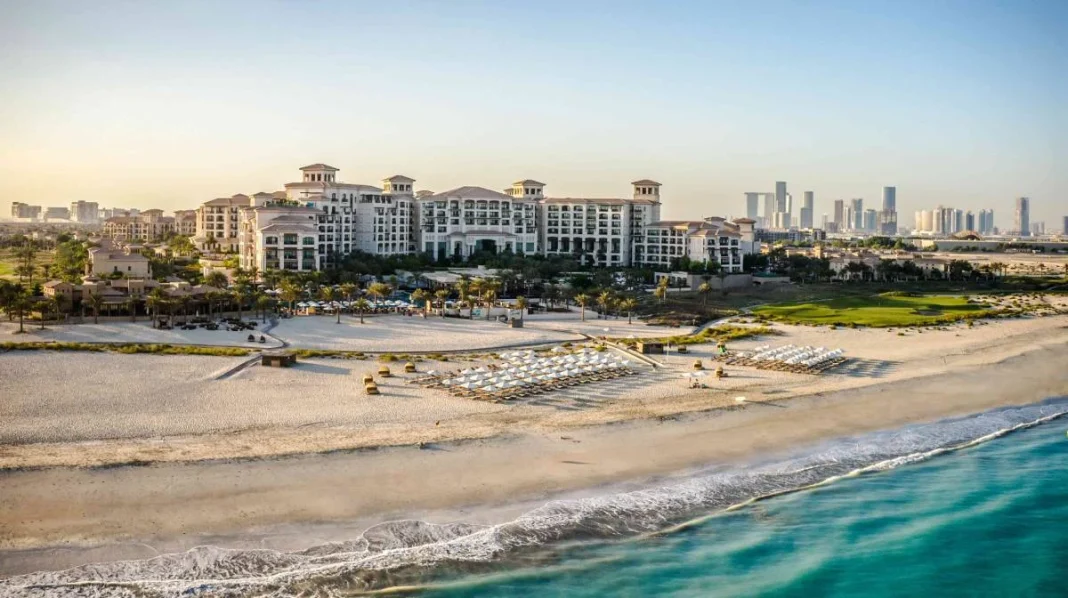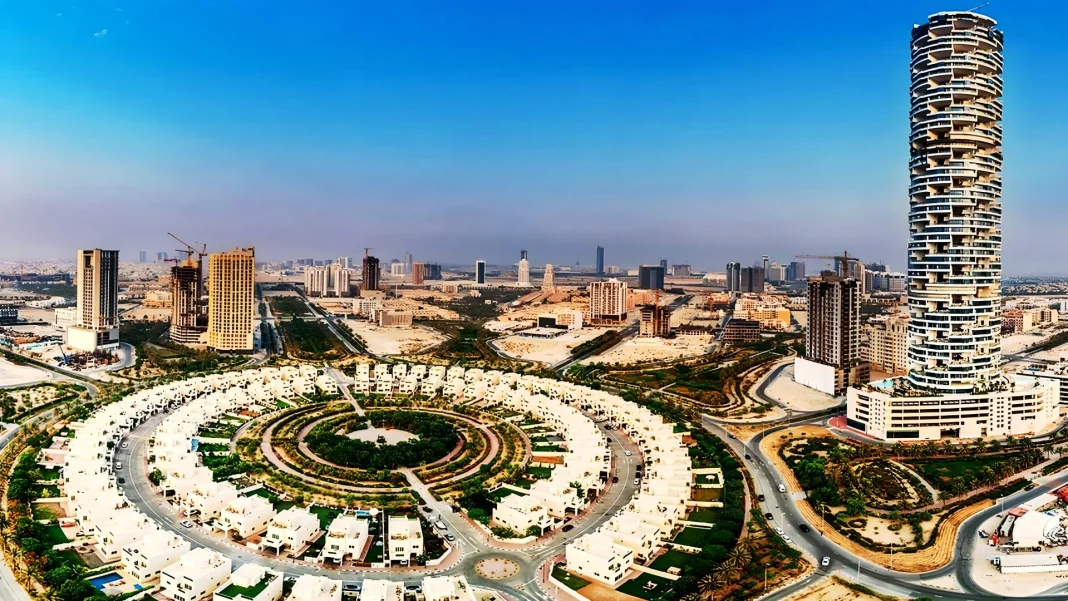


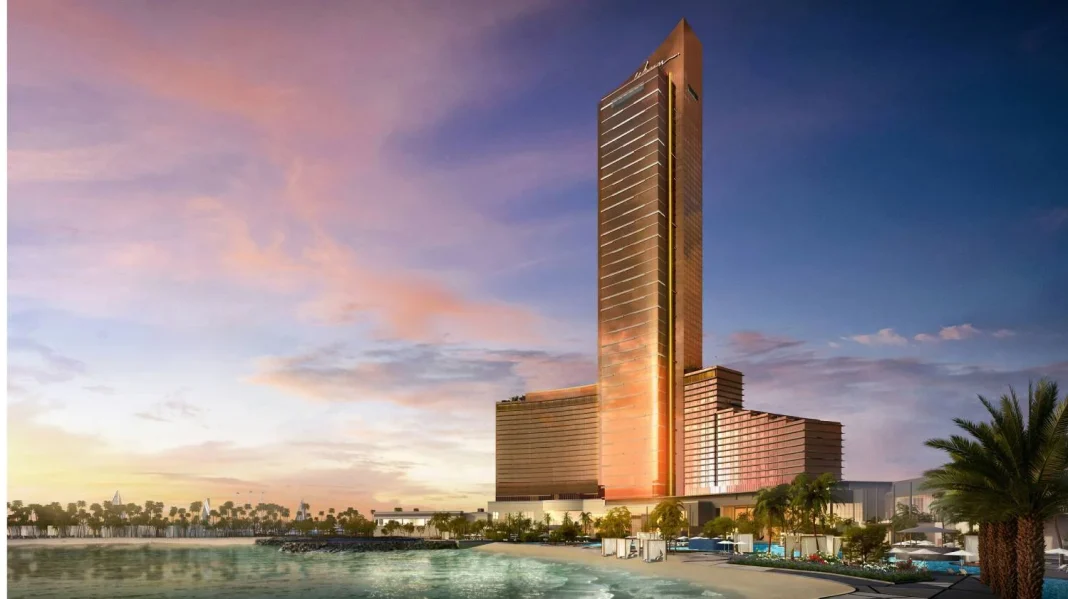
Al Marjan Island has gone from being “the other beach” of the Emirates in two years to becoming the most talked-about square on the Gulf real estate board. Those who arrive late feel like they’ve already lost Dubai Marina and Downtown and don’t want to repeat the mistake. Now they look at this artificial island with the feeling that here you can still enter before the big leap. The question is whether the clock is running in favor or against.
Since January 2026, the pace has accelerated. The latest launches of hotel units with delegated management have been placed in a matter of days, with phase price increases that already exceed 10% compared to 2025 in some frontline projects. The push comes from a clear factor: the countdown to the opening of the Wynn gaming complex in Al Marjan, scheduled for 2027, and the pull of vacation rentals that international operators are already signing in the area.
What Kind of Play is Being Made in Al Marjan
The star move right now is not the classic second-home apartment, but the hotel unit with delegated management integrated into four- and five-star resorts. The investor buys an asset that functions as a hotel room, with an operator that signs an exploitation contract and takes care of everything: occupancy, rates, maintenance, and staff. In return, it shares a percentage of the income or guarantees a minimum return.
This format is gaining traction because it allows exposure to the “casino effect” without needing to know about hospitality or dealing with individual bookings. The logic is simple: the operator fills the rooms, the island gains international visibility, and the owner receives an annual cash flow linked to tourist occupancy. In the East, this model has been working for years in destinations like Dubai Marina or Palm Jumeirah, but in Ras Al Khaimah it is still in the expansion phase, with lower entry prices and growth expectations tied to a very specific project.
The risk, of course, is that here you’re not just buying bricks, you’re buying a script: that Wynn opens on time, that Ras Al Khaimah maintains its bet on international tourism, and that airlines continue connecting the area as they have until now. Those who sign a hotel unit in Al Marjan today are betting that the flow of visitors will grow steadily over the next decade, driven by a gaming complex that aspires to attract hundreds of thousands of tourists a year.
In one of the recent videos circulating among Spanish-speaking investors, the same message is repeated: the interesting window is the one before the opening of the main resort. The argument is that, once the first major gaming complex in the Middle East is inaugurated, the international perception of Ras Al Khaimah will change and the island’s prices will converge with those of other mature areas of the country. For those who enter before, the hope is to capture that difference.
Why This is Exploding Now
In the face of this narrative shift, there are very specific triggers in recent weeks. On February 10, 2026, several frontline projects announced new phases with increases of between 8% and 12% over 2025 launch prices for comparable units. In addition, the latest reports from agencies specialized in Ras Al Khaimah point to double-digit annual value increases in Al Marjan, above other areas of the emirate.
The hard data driving the conversation is clear:
- January 2026 closed with year-over-year price increases in Al Marjan exceeding 15% in some segments compared to 2025.
- Several developers sold out inventory of certain hotel units in less than 30 days from launch.
- Ras Al Khaimah Tourism Development Authority maintains the goal of exceeding 3 million annual visitors when the complex is fully operational.
- The Wynn Al Marjan project remains on schedule for opening in 2027, reinforcing the countdown feeling.
This cocktail explains why so many investors are looking there and not at other more mature Gulf markets. The combination of prices still lower than Dubai, the label of “the first major gaming complex in the Middle East,” and a already public calendar have created the feeling that 2026 is the year to position oneself in Al Marjan Island before the leap becomes sharper.
How This Wave Affects Those Who Want to Enter Now
In the face of this scenario, the first consequence is obvious: the entry cost is no longer niche. Tickets for hotel units in consolidated projects are already moving in ranges that three years ago were associated with much more mature areas of the Emirates. The average investor who arrives with the idea of “discovering” a cheap market finds that the party has already started and aggressive discounts are disappearing.
The second derivative hits the pocket in the form of less margin for error. When prices rise double digits year after year, any bad decision on project, floor, or view is paid dearly. The choice of operator, the duration of the management contract, and the income distribution policy become as important as the square meter. Little good is a theoretical revaluation potential if your unit ends up in a poorly positioned complex, with occupancies below the island’s average.
Finally, the risk of inflated expectations increases. Many commercial materials talk about net annual returns of 8% to 10% from rents and double-digit capital gain scenarios, but everything is conditioned by external variables: actual number of visitors, competition from other resorts, gaming regulation, and exchange rates. For the small European investor entering in dollars or dirhams, movements in their home currency also matter.
A second video widely shared among Spanish-speaking advisors insists on the importance of reading the fine print of management contracts. Not all hotel units in the East work the same way, nor do all operators distribute income in the same way. Knowing whether the promised return is gross or net, what expenses are deducted, and what happens in low-occupancy years is almost as relevant as choosing the tower or the sea view.
What This Bet Implies Beyond the Island
Beyond the specific case of Al Marjan, what is being seen here is a phase change in the relationship of the small Spanish investor with Middle East markets. It’s no longer just about buying an apartment in Dubai and renting it out on your own, but entering more sophisticated structures where the asset is part of a global hotel machine. That opens doors, but also depersonalizes the investment: your unit is just another line in the inventory of a large operator.
The mechanism behind it is simple: large tourism groups need capital to build multi-billion-dollar projects, and they get it by slicing part of the asset among hundreds of owners who agree to leave management in professional hands. In return, they access a product they could hardly replicate on their own: a piece of a resort on an island that aspires to be the postcard of the first gaming complex in the Gulf.
This reveals something important about where the market is heading in 2026: there is less and less room for improvisation and more weight of packaged models, with expected returns, standard clauses, and defined exit cycles. The investor who limits themselves to looking at the render photo and the profitability percentage runs the risk of not understanding that they are signing a complex contract, often tied to 10 or 15 year terms and penalties if they want to exit early.