

International City is the name that few people mention out loud when talking about investing in Dubai. Everyone talks about Palm Jumeirah, Downtown, Marina. But while those areas have skyrocketed to the point of making rental yields irrelevant, this multicultural neighborhood keeps delivering returns that in Spain we would consider science fiction.
The data that changes everything arrived on February 10, 2026: the emirate’s real estate barometer confirmed that the net yield in Dubai has stabilized at 8% net in strategic areas, while Málaga closed January at €3,632/m² with yields of 3%. International City is, right now, the cheapest way to enter that differential.
What exactly is International City
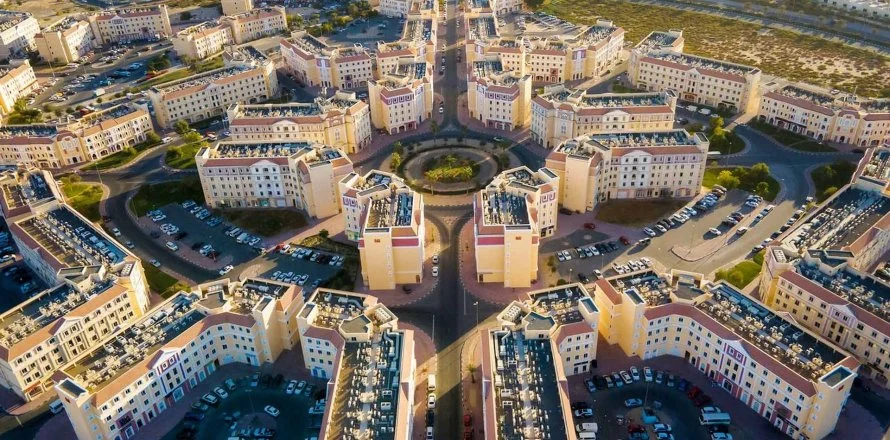
International City is not a housing development: it is 800 hectares organized into themed clusters —China, Spain, Italy, Persia, Greece, Morocco— where each neighborhood mimics the architecture of its country. The idea was to create affordable housing for the middle-class workers that Dubai needed but could not accommodate in premium areas.
The video explains how real estate investment in Dubai works for Spanish investors, with a yield comparison against Spain. Studios start from 339,000 dirhams (around €85,000), and one-bedroom apartments range between €130,000 and €175,000. A studio in the center of Málaga today costs around €200,000 with yields that don’t reach 3%.
Why demand in this neighborhood is exploding now
Against the boom in premium areas, International City has gained traction among mid-budget investors because the major markets have become too expensive. This has accelerated in the last 30 days:
- The February 10, 2026 barometer places average yield at 8% net after operating costs
- Studios generate annual rents of between 25,000 and 30,000 dirhams (€6,800–€8,170)
- Average price per m² in the area: €2,310–€2,460, compared to €3,632/m² in Málaga
- International City, Discovery Gardens and JVC lead returns with 7–9% gross annual yield
- In Málaga, gross yield rarely exceeds 3% at current prices
The tenant profile is not tourists: they are workers with stable contracts in logistics and technology sectors. That demand does not depend on seasons.
How this affects the Spanish investor’s wallet
Contrary to what many imagine, investing here does not require residency in the Emirates. A Spanish national can buy a studio for €85,000, rent it out for around €7,000 per year and collect that amount in one lump sum: in Dubai, tenants pay the full year upfront via bank cheque.
This video analyzes the three best investments in Dubai for 2026, with details on taxation for Spanish residents. The key is that Dubai does not apply income tax on rental income. A Spanish property owner pays taxes in Spain, but the gross yield —between 7 and 9%— absorbs that burden and still outperforms any alternative on the Iberian Peninsula.
What this reveals about the 2026 real estate market
Beyond International City, this phenomenon connects to a clear macro trend: middle-class capital is looking for assets that yield returns when inflation has eroded deposits and European markets have pushed out small investors.
Dubai operates with clear rules: freehold ownership for foreigners, zero income tax and sustained demand driven by the emirate’s own economic structure. Dubai’s population grew 8.5% in 2024 and infrastructure projects through 2030 guarantee that demand will not evaporate. With a 75% cumulative price increase since 2021, International City remains the cheapest entry point.
Frequently asked questions from interested buyers
The questions about International City are always the same:
Q: Can a Spanish national buy without being a resident in Dubai?
A: Yes, foreigners can buy freehold in freehold zones without needing residency.
Q: What costs are there beyond the purchase price?
A: The DLD charges 4% of the price; agency and notary fees apply, but there is no transfer tax comparable to Spain’s.
Q: Is rent collection safe?
A: The post-dated cheque system guarantees advance annual payment; non-payment is a criminal offence in the Emirates.
Q: What happens if I need to sell?
A: The secondary market is active; liquidity is lower than in premium areas but with real demand from local and foreign buyers.
What will happen to this market in the coming months
Looking ahead, pressure on International City will increase because premium areas no longer offer attractive yields. Palm Jumeirah and Downtown trade at 2.5–4.5% gross, pushing cashflow-seeking investors toward this area.
New developments in Phase 2 and Phase 3 —with prices already exceeding €170,000— indicate that the entry window below €130,000 will not last forever. The February 2026 barometer anticipates a moderation to 4–6% annually when new units arrive. Those who enter now lock in a high yield before new supply rebalances the equation.