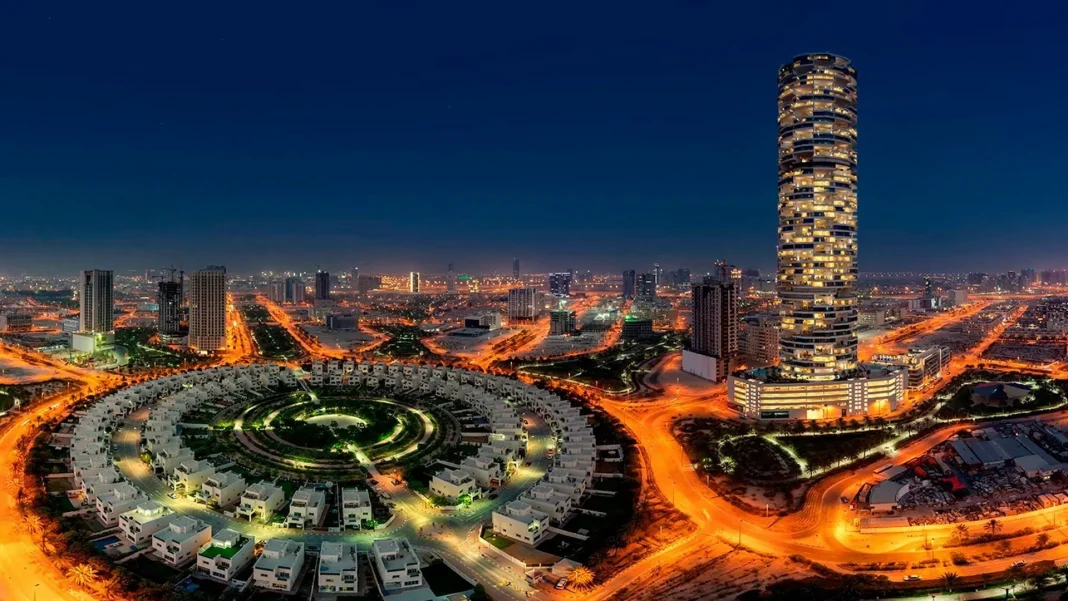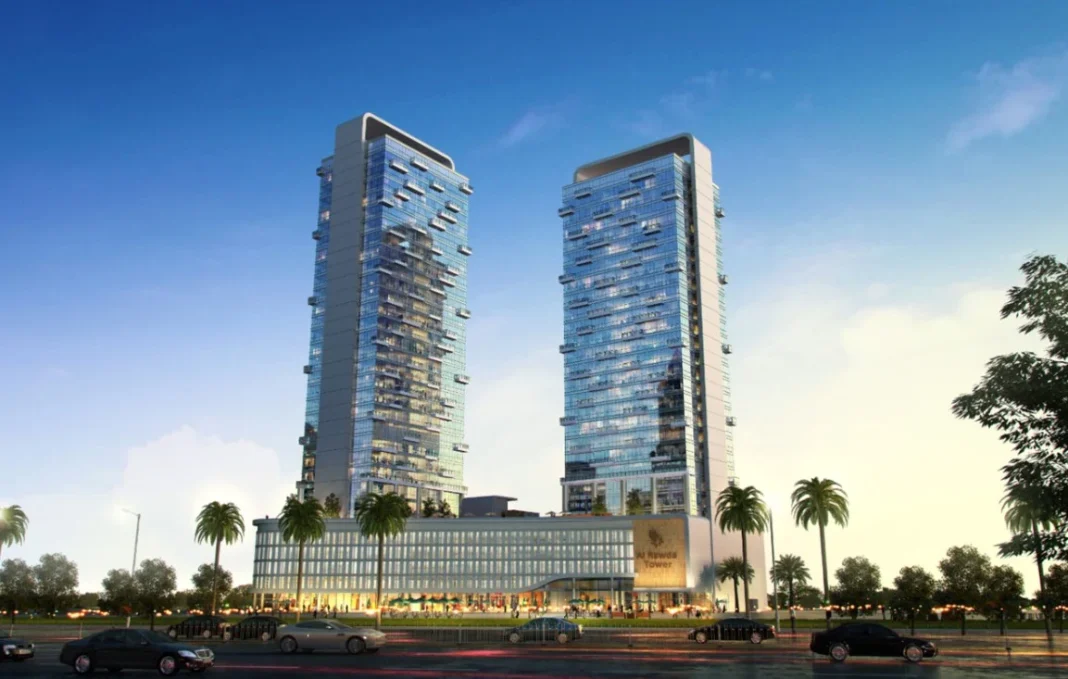


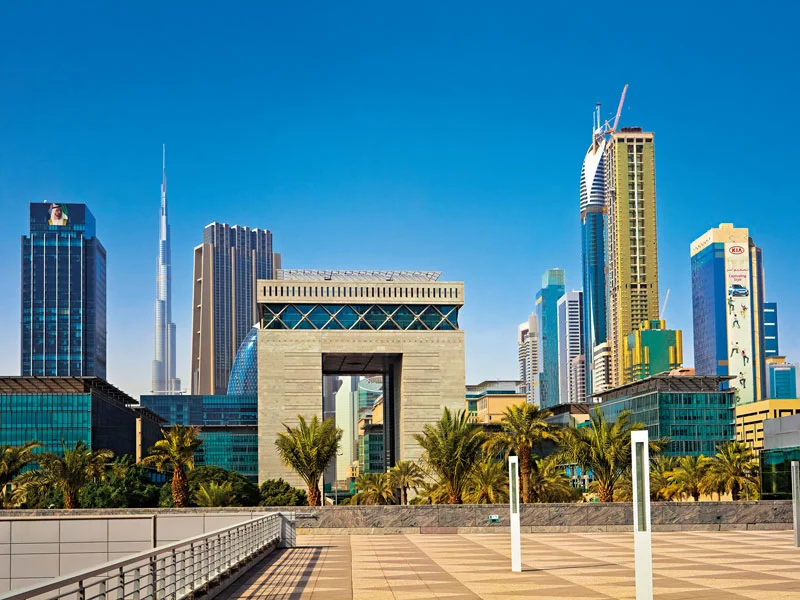
DIFC (Dubai International Financial Centre) has just confirmed what many investors suspected: corporate offices in the free zone yield more than double a residential flat. 3 to 5-year contracts with tenants like Goldman Sachs or Nasdaq Dubai guarantee stable cash flows. The problem: the minimum entry starts at €740,000.
This is exploding now because on January 27, 2026, the Emirati government announced a $27 billion expansion to enlarge Dubai with new corporate buildings. Current occupancy exceeds 95.5% and the waiting list for Grade A spaces is measured in months. Compared to flats yielding 5-6% annually, these offices pay between 10% and 12%.
The asset that large fortunes are buying
Corporate offices in DIFC operate under a different model than residential. Tenants are multinationals with 3 to 5-year contracts that include automatic renewal clauses. The owner buys the space, delivers it furnished according to corporate standards, and collects monthly rents indexed to inflation.
The minimum investment is around $800,000 (≈€740,000) for 80-100 m² offices in Grade A towers. Returns range between 10% and 12% net annually, doubling the yield of a flat in Madrid or Barcelona.
The key differential is in the tenant: publicly traded companies, investment funds, international banks. Delinquency is virtually non-existent because they operate under British jurisdiction within DIFC, with courts that process claims in weeks.
The expansion driving demand now
The Emirati government confirmed on January 27, 2026 an investment of $27 billion to expand DIFC with new corporate towers. This occurs when occupancy already exceeds 95.5% and demand exceeds supply by 40%.
The data explaining the boom:
- Current occupancy: 95.5% in Grade A spaces (January 2026)
- Waiting list: 3-6 months for offices of 100+ m²
- Average price: $1,100-1,300 per m² (vs $800-900 in 2024)
- New registered companies: +4,200 in 2025 (historical record)
- Corporate contracts: average duration of 4.2 years
| District | Occupancy | Yield | Minimum investment |
|---|---|---|---|
| DIFC (Dubai) | 95.5% | 10-12% | $800,000 |
| Canary Wharf (London) | 88% | 6-8% | £1,200,000 |
| La Défense (Paris) | 91% | 5-7% | €950,000 |
The tax advantage changes everything: 0% corporate tax for companies registered in DIFC, compared to 19% in the United Kingdom or 25% in Spain. This turns the district into a magnet for multinationals relocating headquarters from Europe.
Why this hits the traditional investor
Faced with this scenario, the investor who bet on residential flats faces a dilemma: continue with 5-6% annual yields or jump to a model that doubles the return but requires a €740,000 entry. The change is not just economic, but mental: moving from renting homes to managing corporate spaces.
The consequences are direct. Spanish funds are liquidating residential portfolios in Madrid to enter DIFC. The difference in cash flows is brutal: a €300,000 flat generates €1,250/month (5% annually), while a €740,000 office produces €6,200/month (10% annually).
The next obstacle arises when the investor discovers they need local companies to administer the space and manage contracts. Management costs are around 2-3% annually, but eliminate residential headaches.
The mechanism behind the yield
Beyond the immediate boom, this reveals the structural change in the corporate market post-2025. London is losing traction as a financial hub since Brexit, and Dubai capitalizes on that migration with tax advantages impossible to match in Europe.
The mechanism is simple: a company paying 19% tax in the UK can redomicile to DIFC and pay 0%. Those savings finance more expensive rental contracts, sustaining 10-12% yields for owners. It’s a self-reinforcing cycle.
Compared to 2024, when yields ranged between 8-9%, the jump to 10-12% reflects supply scarcity. The $27 billion expansion could dilute this premium in 2027-2028, but those who entered early capture historical margins. This explains why European funds are buying entire floors before the new supply arrives.
Dispelling doubts we all have
Q: Can I buy if I’m not a resident in the Emirates?
A: Yes, DIFC allows 100% foreign ownership without restrictions.
Q: What happens if the corporate tenant leaves?
A: Contracts include penalties for early departure, and the current waiting list guarantees replacement within weeks.
Q: How do I collect rents from Spain?
A: Monthly international bank transfers; the local manager handles everything.
Q: Does the 0% tax also apply to my personal gains?
A: No, you declare income in your country of tax residence. The tax advantage is for companies established in DIFC.
The next steps that will shape the market
Looking ahead, the key is in timing. The $27 billion expansion will deliver first buildings in 2027, cooling yields from the current 12% toward 9-10%. Investors entering now capture 18-24 months of premium margins before competition increases.
Simultaneously, European institutional funds are negotiating purchases of entire floors to diversify away from overheated markets like Madrid. This pressures prices: the square meter rose 22% between January 2025 and January 2026, and analysts project another 15-18% appreciation.
Meanwhile, the Spanish investor faces a decision: flats at 5-6% annually, or a model that doubles returns but requires €740,000. The window of opportunity is measured in quarters. When the first buildings of the expansion open, the market will be different.