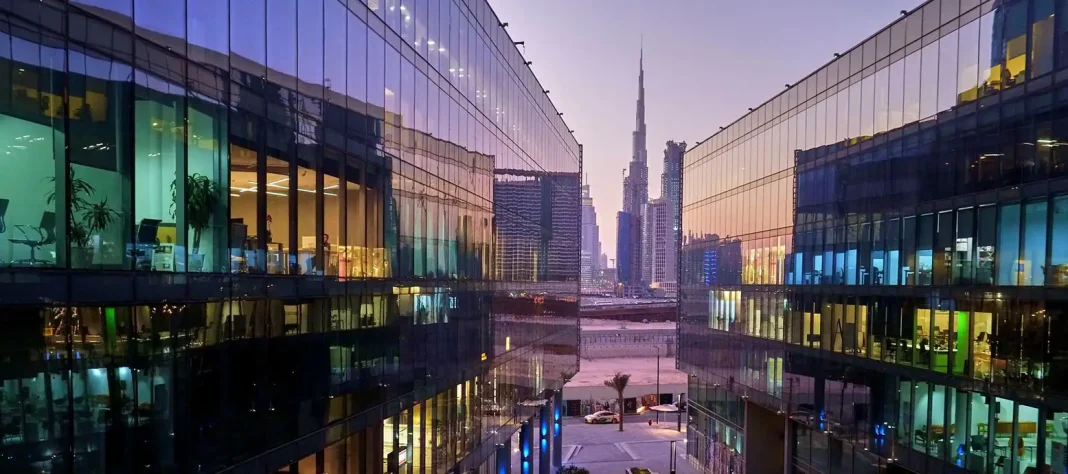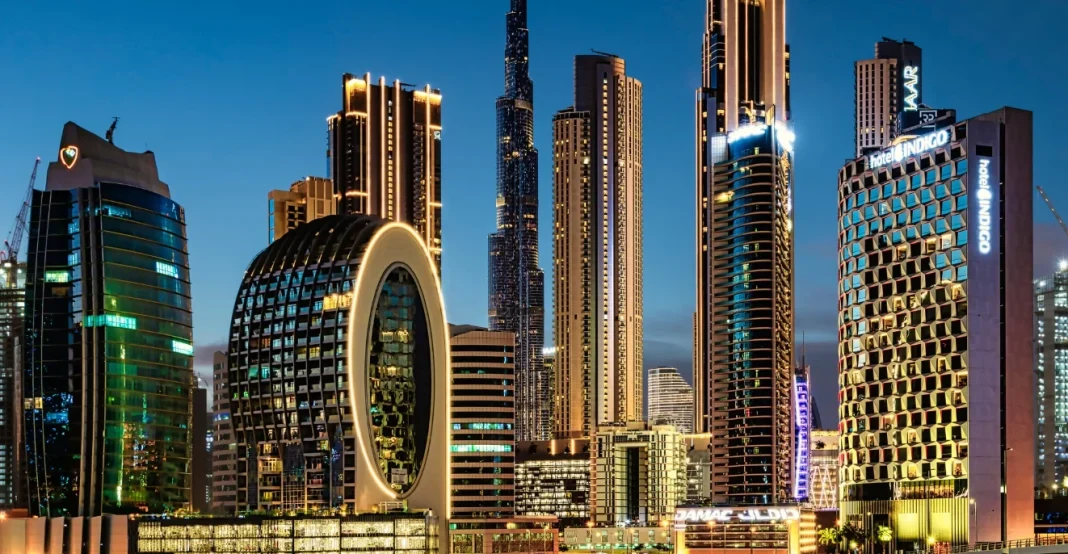


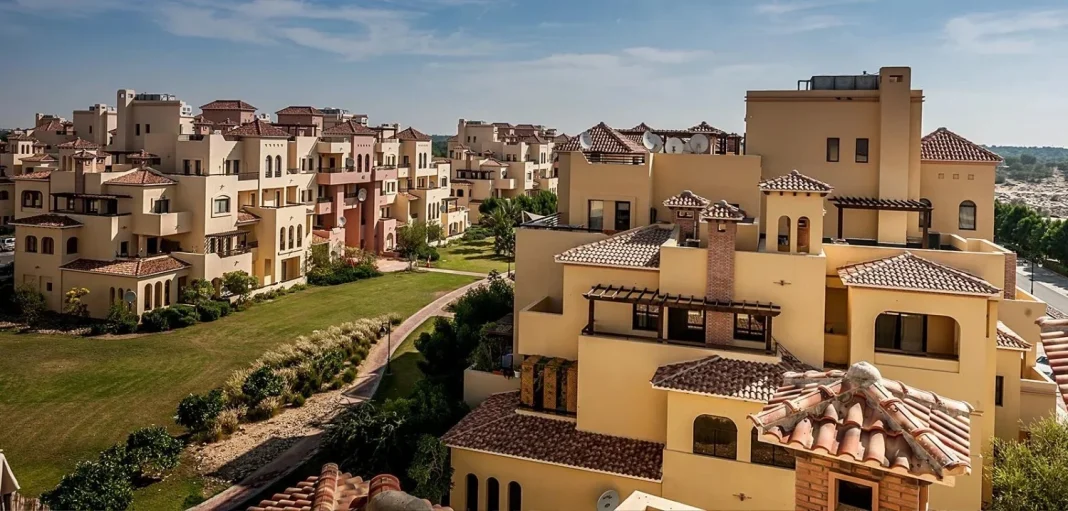
International City is a labyrinth of themed buildings where 160,000 residents live far from Dubai’s center, depending on taxis and buses that take an hour to reach Dubai Mall. The problem: zero metro, zero flexibility, lots of traffic. In 2029, the Blue Line will reduce that journey to 20 minutes.
The RTA confirmed in November 2025 that the project reached 10% physical progress, with inauguration set for September 9, 2029. The line will connect Dubai International Airport with nine key areas, including International City 1 and 2, Silicon Oasis and Academic City. Prices still reflect their isolation, but that window is closing.
The three areas nobody is looking at (yet)
International City offers apartments from 450,000 AED (122,000 USD). This multicultural area houses middle-class workers in complexes that imitate Chinese, Persian and French architecture. 92% occupancy and constant demand. The metro will install two stations here, reducing airport travel times to 20 minutes.
Silicon Oasis represents the second target. This 7.2 km² technology hub functions as a free zone, attracting startups and multinationals. Housing from 550,000 AED offers 8% net profitability according to January 2026 data. The metro station will transform this enclave into a direct connection with Dubai Creek Harbour in 15 minutes.
Academic City closes the trio. Home to 25 universities and 30,000 students, it lacks its own mass transit. Parents and students face high mobility costs. The Blue Line will install a direct station, multiplying demand for student apartments.
- International City: 160,000 residents, 2 metro stations, 66% downtown travel time reduction
- Silicon Oasis: 7.2 km² tech hub, 8% net rental profitability January 2026
- Academic City: 30,000 students, 25 universities, zero current mass transit
- Airport connection: Times reduced from 55-70 min (car with traffic) to 20 min (direct metro)
| Area | Current entry price | Occupancy/Demand | Metro stations |
|---|---|---|---|
| International City | 450,000 AED | 92% occupancy | 2 stations |
| Silicon Oasis | 550,000 AED | 8% net profitability | 1 station |
| Academic City | 580,000 AED | 30,000 students | 1 station |
| Dubai Marina (comparison) | 1,200,000 AED | Saturated | Already connected Red Line |
The blow nobody sees coming
Current owners face a critical decision: sell now or hold until 2029 betting on post-metro appreciation. When the RTA confirmed Red Line extension to Dubai Hills Estate in January 2026, prices rose 18% in 90 days.
Tenants will see rents increase from 2027. Owners will adjust contracts anticipating future demand, pushing residents toward peripheral areas. This gentrification by infrastructure already occurred in Jumeirah Lake Towers after connecting in 2011: rents rose 41% in three years.
Asian private equity funds bought 340 units in Silicon Oasis during January 2026. Goal: secure inventory before international media covers the 2029 inauguration, shooting up final prices.
Why these neighborhoods matter beyond the metro
The Blue Line reveals a deep government strategy. The Dubai Urban Plan 2040 projects accommodating 1 million additional residents in underutilized areas. International City, Silicon Oasis and Academic City were designed with excess capacity, waiting for connectivity to justify densification.
Dubai Silicon Oasis Authority invested 2.1 billion AED between 2023-2025 in digital and energy infrastructure upgrades. That prior public investment signals institutional confidence in future appreciation, reducing speculative risk.
The Red Line was inaugurated in 2009 during the global financial crisis, limiting initial impact. The Blue Line will arrive in 2029, a projected moment of regional economic expansion (UAE GDP +4.2% annually). That combination maximizes accelerated appreciation potential.
Dispelling doubts we all have
Q: Why are prices still low if the metro has already been announced?
R: The market discounts infrastructure only when construction exceeds 40% physical progress; we’re still at 10%.
Q: What happens if they delay the inauguration like in previous projects?
R: RTA has a contract with penalties; the date 9/9/2029 (09:09:09) is symbolic and contractually firm.
Q: Is it better to buy now or wait until 2027-2028?
R: History shows that prices rise 15-20% when construction progress reaches 50%, projected for mid-2027.
Q: Are these areas safe for families or just speculative investment?
R: 92% occupancy and presence of international schools confirm real residential viability, not just speculative.
What will happen in the next 36 months
Three milestones mark the calendar. Mid-2027 will bring completion of 50% of construction, the moment when developers will launch premium projects near stations, raising reference prices. Early 2028 will see partial inauguration of three pilot stations, generating the first international media wave.
September 2029 closes the cycle. Analysts project that properties in International City and Silicon Oasis will reach parity with Dubai Sports City and Jumeirah Village Circle, connected “tier 2” areas. Those who bought between 2026-2027 will see returns of 45-60% in capital, plus rents of 7-8% annually. The window closes when the cranes reach halfway.