

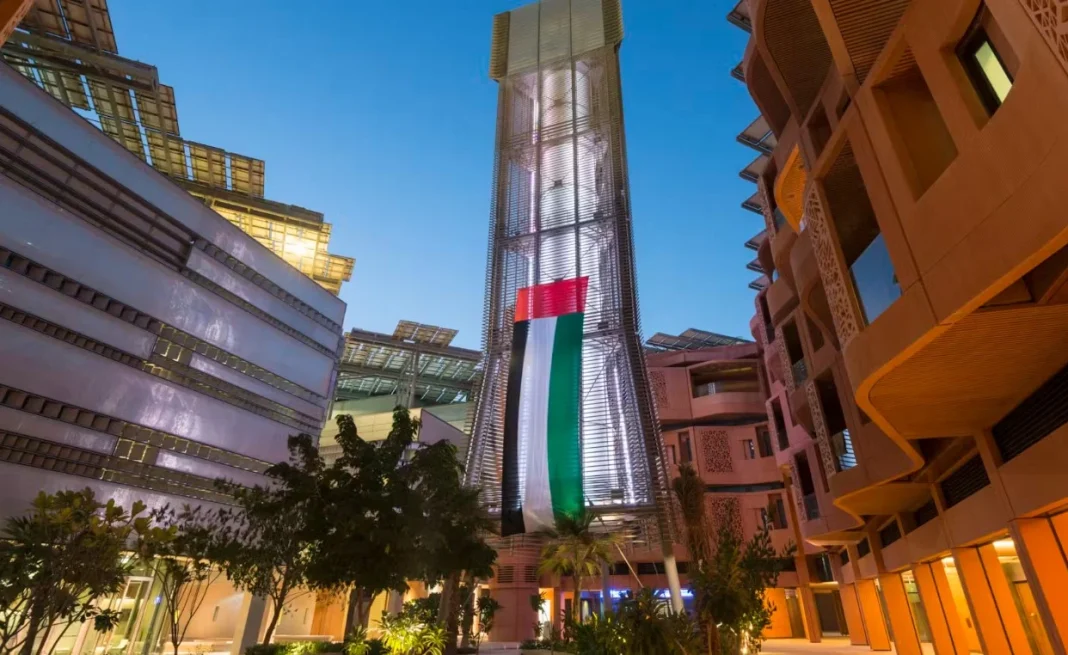
Masdar City is not your typical luxury complex with infinity pools. It’s a magnet for corporate expatriates seeking utility bills that don’t scare. Professionals from companies like Siemens, Mitsubishi, and clean energy startups fill the LEED Platinum-certified apartments because the 40% savings on electricity and water hit directly in the pocket every month.
February 2026 marks the definitive takeoff. Following the inauguration in January of the first eco-friendly mosque and projects worth 30 billion dirhams in March 2025, residential occupancy reached record levels. Sustainable housing demand in Masdar City grew 40% in the last 24 months, driven by the boom in artificial intelligence and renewable energy.
The oasis that saves more than any traditional apartment
Apartments here compete in certified energy efficiency that reduces consumption by 40% compared to conventional towers in Abu Dhabi. Each building generates part of its energy through integrated solar panels, while water recycling systems maintain common services without wasting a drop. The design of narrow streets and wind towers channels natural breezes, lowering temperature without massive external air conditioning.
For a corporate expatriate earning in euros or dollars, paying 60% less in monthly utilities than in Dubai Marina changes the personal profitability equation. The proximity to Abu Dhabi International Airport (18 minutes) and the financial district makes technology executives prioritize functionality over coastal glamour.
Why demand exploded in the last 24 months
Three factors converged between 2024 and February 2026 to skyrocket occupancy. The expansion of Mohamed bin Zayed University of Artificial Intelligence brought 1,200 additional professionals seeking nearby housing. Renewable multinationals consolidated permanent headquarters after investments in March 2025. The 87% retention rate among tenants demonstrates that those who arrive stay.
Verified figures paint a boiling market:
- 92% occupancy in free zone offices with waiting lists for spaces over 500 m²
- 12-18% annual appreciation in LEED-certified properties since 2024, outperforming Abu Dhabi’s general market
- 40% growth in sustainable housing demand in 24 months, led by AI and cleantech professionals
- 87% retention rate, key indicator of stability for rental investors
This momentum doesn’t arise from marketing. It arises from real companies operating with commercial licenses that anchor long-term structural demand.
How it affects the traditional expatriate profile in the Emirates
Faced with this scenario, the typical expatriate seeking aspirational luxury in Dubai skyscrapers faces an uncomfortable reality. Masdar City doesn’t offer Persian Gulf views or private beach clubs. It offers assets that align corporate ESG objectives with verifiable savings in monthly operating costs.
The change hits hardest on expatriates from impact funds, European family offices, and technology executives whose companies prioritize carbon footprint. Living in a LEED Platinum-certified apartment is not luxury: it’s professional coherence. The average 8% vacancy in Masdar City contrasts with Dubai Marina’s 22%, revealing where real sustained demand is.
The mechanism behind sustainable profitability
Beyond specific figures, the differentiator lies in the circular model. The city functions as a self-contained technology cluster where suppliers and clients share infrastructure, reducing operating costs up to 30% versus conventional locations. Buildings with maximum certification consume 40% less energy, translating into direct savings in utilities for owners and tenants.
Macro analysis reveals something crucial about 2026: green investment stopped being niche to become an institutional standard. European pension funds and managers like BlackRock established portfolio decarbonization mandates, creating structural demand for assets like these. The Abu Dhabi government doubled its bet on economic diversification beyond oil, guaranteeing flows toward cleantech infrastructure for the next five years. This changes the nature of risk: from speculative to investment-grade institutional.
What will happen in the next 36 months
Looking ahead, three catalysts will define the trajectory until 2029. The completion of Phase 3 will expand residential capacity from 15,000 to 40,000 inhabitants, multiplying service demand by 2.6x. Metro integration with central Abu Dhabi (planned for 2027) will reduce commute times from 45 to 18 minutes. MBZUAI announced expansion to 3,000 students by 2028, consolidating the campus as a global AI talent magnet.
The early entry window historically closes when prices reach their ceiling. Early investors in similar projects multiplied capital; those who entered late bought at the peak. Frictions exist: full completion was rescheduled from 2025 to 2030, reflecting the complexity of building a carbon-neutral city. The bet is not just about square meters: it’s positioning yourself at the physical epicenter of the energy transition before the world competes for the same space.
Key questions to understand everything
Q: What is the minimum entry ticket for renting?
A: Studios from 6,500 AED/month and two-bedroom apartments from 9,800 AED/month in LEED properties.
Q: Are the 40% savings in utilities verified?
A: Yes, LEED Platinum certifications document consumption 40% lower than conventional Abu Dhabi constructions.
Q: Can I obtain a residence visa by renting?
A: Not directly through rent, but working for a company in the free zone qualifies for a 2-3 year corporate visa.
Q: How long does the commute to the airport take?
A: 18 minutes to Abu Dhabi International Airport, a significant reduction after transport integration in 2025.