

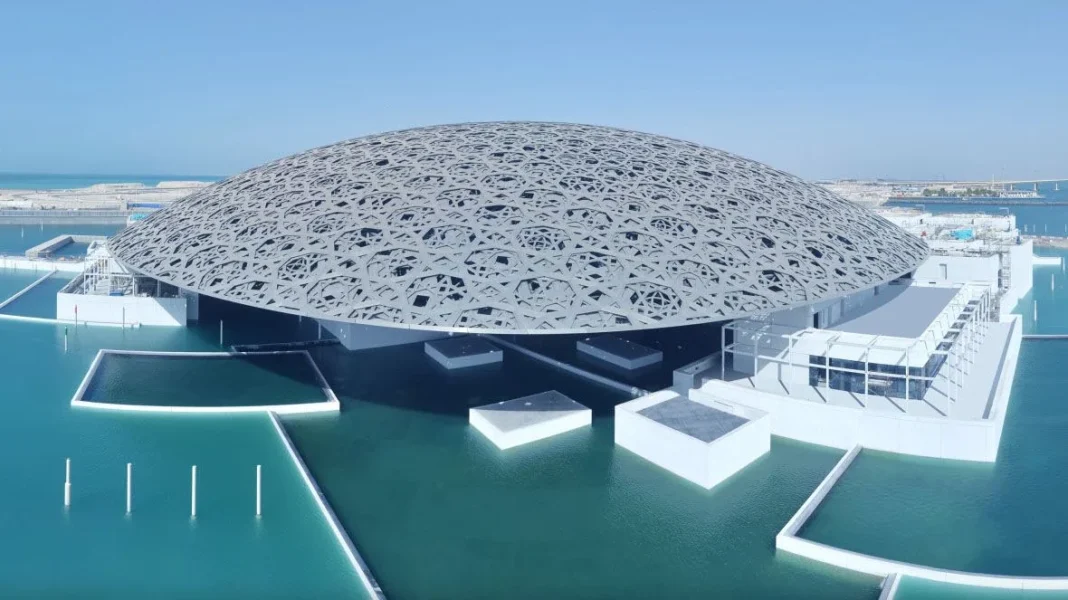
Louvre Residences changes the rules of luxury real estate: for the first time in history, the name of the Parisian museum signs a residential project. This is not cultural decoration or empty marketing. We’re talking about apartments where you open the window and have direct access to the collections of the Louvre Abu Dhabi, designed by Jean Nouvel with his iconic perforated dome that filters light like a rain of stars. Investors from 52 countries were already fighting for reservations before the official launch.
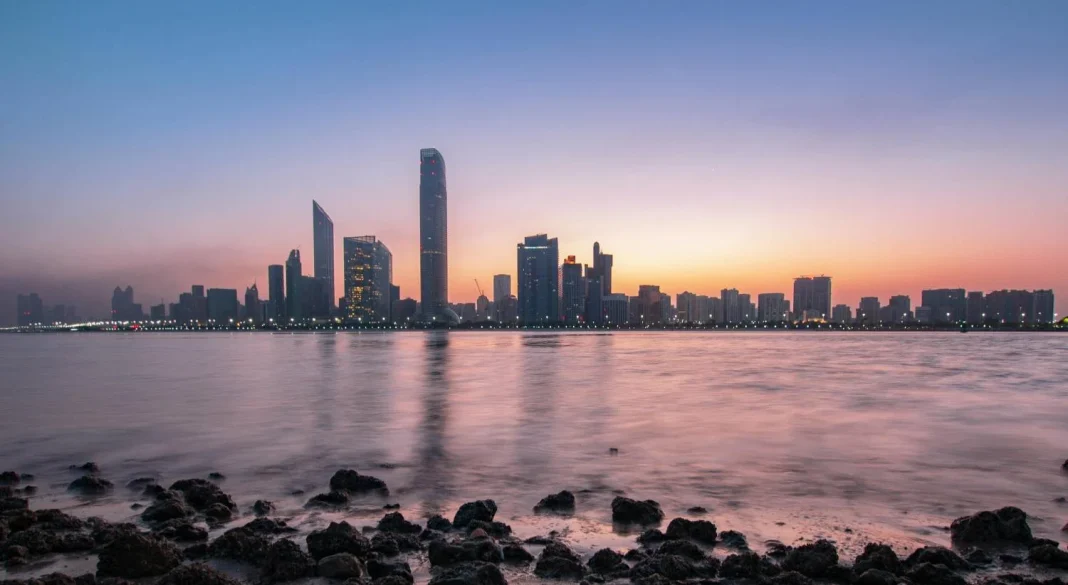
This project landed in December 2025 on Saadiyat Island, the epicenter of the most ambitious cultural district on the planet. Why now? Because Abu Dhabi closed 2023 with 866,000 visitors to the Louvre Abu Dhabi and projects 1.2 million annually when growth stabilizes. That tourist traction drives demand for Premium properties within a 10-minute walk from the museum, turning every square meter into a quoted cultural asset.
The world’s first residential project with a museum signature
Louvre Residences is not just another building with a nice name. It is the first branded residence under the umbrella of the world’s most visited museum, a habitable extension of the Louvre Abu Dhabi inaugurated in 2017 after a $1.3 billion agreement between France and the Emirates to use the brand for 40 years. Architecturally, it replicates Jean Nouvel’s philosophy: floating white volumes, courtyards with water channels that emulate traditional Arab ports, design that dialogues with the 55 structures of the adjacent museum.
The apartments start from 240 square meters, with 3.2-meter ceilings, floor-to-ceiling windows and terraces that look directly at the dome of the Louvre. Each unit includes priority access to temporary exhibitions, exclusive invitations to private openings and a personalized curation program with museum experts. The amenities replicate Five-Star standards: gym with certified trainers, 25-meter infinity pool, kids club with Reggio Emilia methodology, coworking with soundproof rooms.
Why the market responds with historic demand
Faced with this scenario, the market responded with unusual force. Louvre Gardens, a parallel project also under the Louvre brand, registered rental demand 40% higher than the Saadiyat Island average in the first 90 days after announcement. Institutional investors from Singapore, Hong Kong and London have already committed entire blocks before excavations are completed. The numbers don’t lie:
- Projected appreciation of 28% in three years according to Knight Frank analysis for properties within 500 meters of the Louvre Abu Dhabi
- Estimated rental profitability at 7.2% annually, well above Abu Dhabi city’s 4.5% average
- Hotel occupancy in the cultural district at 89% during high season (October-April), a sign of sustained tourist demand
- 52 nationalities represented among initial buyers, with a predominance of Europeans (34%) and Asians (41%) seeking geographical diversification
How Saadiyat Cultural District redefines real estate investment
The problem worsens when you understand that you’re not just buying an apartment: you’re buying position in the only district in the world where the Louvre, Guggenheim (opening 2025), Zayed National Museum and Performing Arts Centre coexist within a 2-kilometer radius. This museum concentration has no global parallel. Neither New York’s Museum Mile nor South Kensington in London offer this cultural density integrated with luxury residences.
Mamsha Al Saadiyat, another neighboring residential development, has already demonstrated the model: 461 properties with direct access to Soul Beach, a 1-kilometer boardwalk and gourmet retail. Residents walk 10 minutes to the Louvre, 15 to the future Guggenheim. Expatriate families pay a Premium for an ecosystem where culture, British education and beach coexist without friction. The consequences hit directly: properties in Mamsha that started at 2.9 million AED ($790,000) in 2022 today are quoted at 3.7 million AED ($1 million). That 28% jump in less than four years is not a bubble: it’s revaluation through scarcity.
Investment in cultural capital as a tangible asset
Beyond square meters and ROI, a phenomenon emerges that few analysts capture: buying in Louvre Residences is cultural capital arbitrage. You’re not just betting on traditional real estate appreciation. You’re buying verifiable proximity to a cultural institution backed by the French and Emirati governments, a permanent collection valued at billions, and an exhibition program coordinated with the Louvre Paris, Musée d’Orsay and Centre Pompidou.
| Metric | Louvre Abu Dhabi 2023 | 2026 Projection |
|---|---|---|
| Annual visitors | 866,000 | 1.2 million |
| Temporary exhibitions | 4 | 6-7 |
| Museum partnerships | 13 French institutions | 18+ global |
This reveals something important about how the UHNWI investor profile evolves: they no longer seek just houses, they seek narratives. Being able to say “I live next to the Louvre” in Abu Dhabi carries symbolic weight equivalent to having an address on the Upper East Side facing the Met. It is aspirational geography converted into transferable family wealth, where value lies not only in brick but in implicit membership to an elite cultural ecosystem. The underlying asset has changed: from infrastructure to identity.
What to expect from the market in 2026-2028
Looking ahead, the calendar marks concrete milestones that will trigger a new wave of interest: opening of the Guggenheim Abu Dhabi in 2025 and the Zayed National Museum in 2028 (Foster + Partners design with five wing-shaped towers). Each opening amplifies the cultural district’s network effect. Smart investors are already positioning: buying today is betting that in three years the district will complete its transformation with four museums operating simultaneously.
| Actor | Expected action | Timeline |
|---|---|---|
| Institutional investors | Purchase of complete blocks for corporate rental | Q1-Q2 2026 |
| European family offices | Geographic diversification post-Brexit | 2026-2027 |
| Aldar Properties | Launch of Louvre Residences phase 2 | Q4 2026 |
In parallel, Abu Dhabi government accelerates connectivity: new metro line with station at Saadiyat Cultural District (operational 2027), expansion of international airport with terminal dedicated to European flights, investment of $4.5 billion in road infrastructure that reduces time from Abu Dhabi center to Saadiyat from 25 to 12 minutes. The question is not whether Saadiyat will consolidate as a Premium real estate hub. The question is how many investors will understand in time that Louvre Residences doesn’t sell apartments: it sells belonging to a unique experiment where global artistic heritage is anchored in specific geography, creating artificial scarcity that only benefits those who arrived first.
Key questions to understand everything
Q: How much does an apartment in Louvre Residences cost?
A: From 3.7 million AED (approx. $1 million) for one-bedroom units, with an initial payment plan of 5%.
Q: What differentiates Louvre Residences from Mamsha Al Saadiyat?
A: Louvre Residences has official museum branding, priority access to exhibitions and is 300 meters closer to the museum; Mamsha focuses on beach lifestyle.
Q: Can I rent out my property in Louvre Residences?
A: Yes, without restrictions. Estimated profitability of 7.2% annually exceeds Abu Dhabi’s average.
Q: When are the first units delivered?
A: Phase 1 has projected delivery for Q1 2030; some units in Mamsha Al Saadiyat are already available from Q1 2026.