

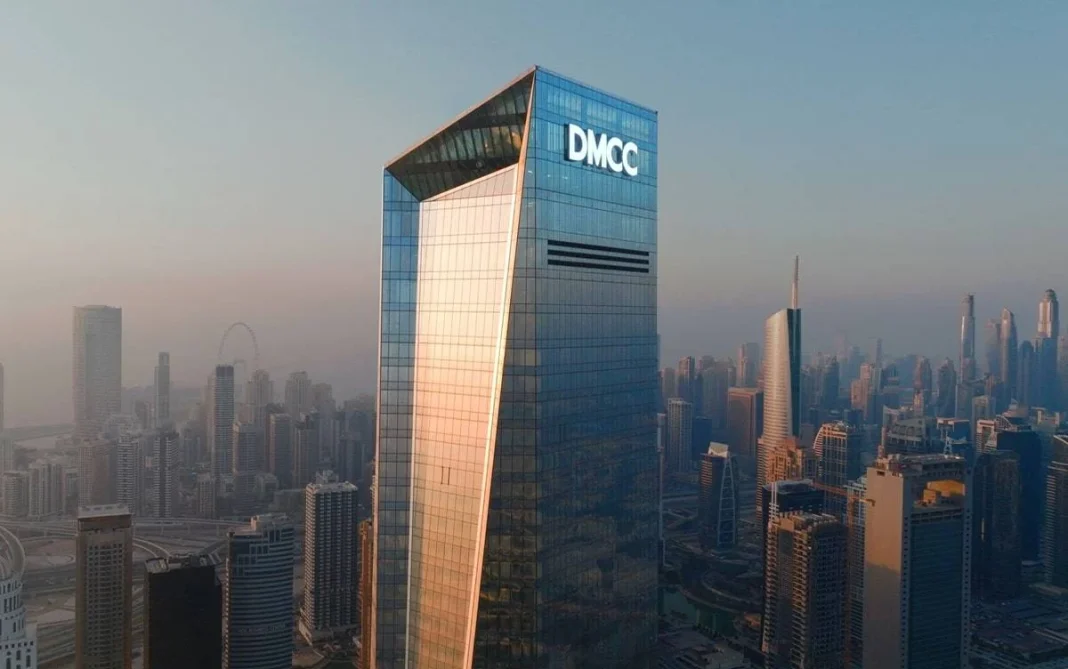
The DMCC free zone in Dubai positions itself as a strategic destination for Spanish entrepreneurs seeking to expand without tax burdens. Located in Jumeirah Lakes Towers, this special economic area allows establishing companies from 20,000 AED annually with benefits that no European territory matches.
January 2026 marks a key moment: while Spain tightens taxation on freelancers and SMEs, Dubai maintains zero corporate taxes and 100% foreign ownership without mandatory local partners. Why are thousands of entrepreneurs looking toward the Emirates when they could stay in Europe?
Dubai Multi Commodities Centre: What this business hub really is
DMCC is the free zone specialized in trade, professional services, and technology most consolidated in the Middle East. Founded in 2002, it houses more than 24,000 registered companies from 180 different nationalities. The striking fact: 9 consecutive years it led the global ranking of ‘knowledge’ type free zones before falling to fifth place globally in 2024.
But that decline doesn’t affect its real proposition. It offers three types of licenses: trading (international commerce), services (consulting, marketing, IT), and light industrial. Each modality allows billing globally without geographical restrictions or export quotas. The infrastructure includes class A corporate towers, coworking spaces, logistics warehouses, and direct metro access.
The key differential versus other 45 Emirati free zones: premium urban location without needing to travel to remote industrial estates. Jumeirah Lakes Towers concentrates banks, restaurants, gyms, and housing within a 500-meter radius. This explains why tech startups and professional firms prefer DMCC over cheaper but remote options.
Why Spanish companies are now looking toward DMCC
The Spanish tax escalation of 2025 accelerated the corporate exodus. The 15% global minimum rate approved by OECD hits less in Dubai: free zones maintain total exemption for decades through bilateral agreements. Additionally, zero taxes on dividends, capital gains, or profit repatriation.
Faced with this scenario, DMCC promises concrete advantages that go beyond tax savings:
- Commercial license from 20,000 AED (5,100 euros) per year, without needing a permanent physical office if you use flexi-desk
- 100% foreign ownership without mandatory Emirati partners, unlike Dubai mainland where sectoral restrictions still persist
- Residence visa for owner, spouse, and minor children included in standard packages, eliminating additional immigration procedures
- Corporate bank account in dirhams and dollars with international IBAN functional for SEPA and SWIFT
Timing matters. January 2026 coincides with new European restrictions on tax residency: staying less than 183 days in Spain no longer guarantees tax escape if the “center of economic interests” remains there. DMCC offers real substance through physical office and verifiable operations that protect against Tax Authority inspections.
How this option affects the average Spanish entrepreneur
Your current Spanish company can remain operational while you create a parallel structure in DMCC. The hybrid model works: international contracts are signed from Dubai, Spanish clients continue to be billed from the peninsular SL. This way you avoid raising suspicions with local suppliers while diversifying tax jurisdiction.
The immediate impact hits three fronts. First, direct tax savings: a consulting firm that bills 200,000 euros annually pays 50,000 in Spain (25% effective rate with freelancers and social security). Same billing in DMCC: zero corporate taxes, only 20,000 AED for license plus 15,000 AED for visa. The difference exceeds 40,000 euros annually that remain as reinvestable profit.
Second, multiplied commercial credibility. Having an entity in Dubai opens doors in the Persian Gulf, sub-Saharan Africa, and the Indian subcontinent. Clients from these markets perceive companies with Emirati headquarters as serious partners compared to Spanish freelancers without international structure. This explains why digital marketing agencies and software developers prioritize DMCC even though their operations remain remote.
What setting up a company in this free zone really involves
The legal process takes between 7 and 15 business days from when you submit apostilled documentation. You need a valid passport, bank statements from the last 3 months demonstrating minimum solvency (10,000-15,000 euros depending on activity), and a basic 2-3 page business plan. No requirements for paid-up share capital or prior audits for non-financial activities.
Direct processing with DMCC costs more than using local agents, but eliminates intermediaries. All-inclusive packages range around 35,000-45,000 AED the first year: commercial license, residence visa for founder, flexi-desk shared 5 days/month, and postal domiciliation. Successive years drop to 25,000-30,000 AED because you only renew existing permits.
Compliance obligations are light compared to Spain. Annual audit mandatory only if you bill more than 500,000 AED (127,000 euros). Tax returns nonexistent while you operate exclusively internationally without Emirati clients. However, maintaining real economic substance is critical since 2019: at least one employee with active work visa or yourself residing 90+ days annually in the Emirates.
What will happen with DMCC in the coming years
International pressure on tax havens doesn’t ease. OECD approved a 15% global minimum rate that enters full force in 2027, but Dubai is negotiating exceptions for free zones through a “qualified economic substance” clause. Translation: if your company generates real jobs and has verifiable activity, it will remain exempt. Empty shells without office or staff will disappear.
DMCC anticipates this by diversifying strategic sectors. It will invest 2,000 million dirhams until 2028 in blockchain infrastructure, AI, and renewable energy. The objective: become a technological hub that attracts real talent, not just digital nomads seeking zero taxes. This evolution benefits Spanish entrepreneurs with scalable projects versus one-person micro-businesses without projection.
The most likely scenario: DMCC will maintain tax advantages but tighten entry filters. Cheap licenses will disappear for generic activities; innovative sectors with demonstrable added value will prevail. Whoever positions themselves now with solid operations will shield their structure before barriers rise. Waiting until 2027 may mean facing tripled requirements and doubled costs without a competitive European alternative.