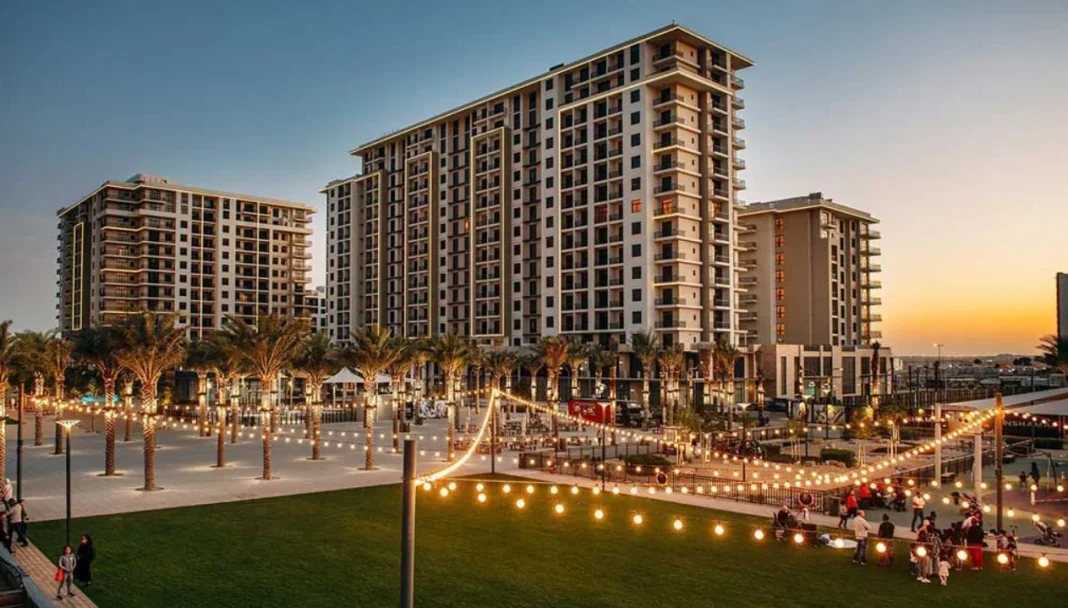



The United Arab Emirates visa system operates under a dual logic that few investors understand in depth. Currently there are two main routes: a 10-year visa that requires a real estate investment of 2 million AED (approximately €545,000), and a 5-year option with significantly lower equity requirements. This distinction is not minor. The first category allows sponsoring family members even after the holder’s death, while the second imposes stricter permanence restrictions and fewer tax benefits.
Abu Dhabi authorities have recently relaxed the criteria for obtaining the long visa, including options for qualified professionals and tech entrepreneurs. However, this expansion of categories disguises a growing regulatory risk. The proliferation of Golden Visa holders has generated pressure on infrastructure and public services, especially in premium residential areas such as Al Reem Island or Saadiyat. When a residency program reaches critical mass, governments usually opt for containment rather than unlimited growth.
To what extent will your residency resolution depend on the physical purchase of an asset that could be devalued if the program is adjusted?
Why the risk of reduction is now palpable
Beyond the immigration situation, Dubai and Abu Dhabi real estate markets exhibit symptoms of overheating that authorities cannot ignore. Housing prices have increased 18% year-on-year in certain luxury segments, driven exclusively by expatriate demand. When a local market depends excessively on foreign buyers seeking immigration status rather than profitability, it becomes vulnerable to minimal regulatory changes. Spanish investors have concentrated their purchases on unfinished developments, assuming delivery risks that would intensify with a demand contraction.
Analysts identify three immediate pressure factors on the long-term Golden Visa:
✓ Saturation of the luxury real estate stock directed at passive investors, with a pipeline supply of 40,000 additional units planned for 2026
✓ Regional diplomatic tension that could force revision of residence agreements with specific European countries
✓ Competition from other financial hubs such as Singapore or Portugal that have tightened requirements, releasing migratory flow towards the Emirates
This situation worsens when leverage is analyzed. Many Spaniards have financed their purchases through local mortgages assuming that the program’s stability is perpetual. A term cut would invalidate return projections.
How a visa contraction would affect the Spanish middle class
The next obstacle hits directly at the average investor’s liquidity. Currently, the only way to obtain 10-year residency necessarily involves the acquisition of a qualified REIT or physical real estate property. If authorities reduce the maximum term to 5 years, the intangible value of the investment would instantly depreciate between 15% and 20% according to conservative estimates by local consultancies. Buyers who acquired in 2023 and 2024 would face a double loss: overvalued asset and degraded visa.
It directly affects the hidden cost structure. Maintaining a home in Abu Dhabi involves community expenses ranging between 15 and 35 AED per square foot annually, 4% transfer taxes, and climate maintenance costs that double those of Spain. Without the guarantee of a decade-long residency, these operational outlays devour the theoretical rental profitability. The problem is that many investors did not calculate the Total Cost of Ownership for 10 years, but for 3 or 4.
This reality forces a reconsideration of the investment vehicle. Does it make sense to assume the specific risk of a physical property when there are financial instruments that replicate exposure to the Emirati real estate market without the regulatory burden?
What choosing between brick and paper implies: the structural dilemma
Faced with this scenario, the critical distinction between direct property and listed vehicles emerges. An investor who buys an apartment in Al Raha Beach is exposed to specific regulatory variations of the emirate, including possible changes in the Law on Disposal of Property to Foreigners. On the contrary, those who position capital in diversified real estate funds maintain exposure to the local market without the contractual linkage to a specific physical asset. This difference is amplified in uncertain regulatory contexts.
The relevant data is that REITs domiciled in Dubai generated average returns of 6.8% annually in dividends during 2024, exceeding the gross yield of many rented homes after deducting operating expenses. In addition, intraday liquidity allows exiting the position without the 6 to 9 months required by the sale of a physical property in the secondary market. This flexibility gains value when regulatory volatility is anticipated.
Although it may seem obvious, most Spanish investors ignore that the Golden Visa through fund investment has different equity requirements and, in certain cases, allows combining financial assets with reduced real estate investment. The next obstacle is the lack of specialized tax advice that optimizes these hybrid structures before the regulator closes them.
What will happen: scenarios for 2026 and the smart exit
Interestingly, the most reliable projections do not come from real estate analysts but from international migration firms that detect a regulatory shift towards “quality over quantity”. Emirati authorities have begun to reject Golden Visa applications from purely passive profiles, favoring investors who generate local employment or contribute technological know-how. This trend suggests that the window of residency through mere luxury purchase is progressively closing, although not through formal announcements but via restrictive administrative practice.
Therefore, those who maintain capital committed in off-plan developments should accelerate exit strategies towards internationally regulated financial instruments. Global REITs with exposure to the Emirates offer a transition path that maintains participation in regional growth without the specific risk of individual ownership. At this point, the decision is not binary between staying or selling, but between maintaining direct or indirect exposure to a market facing regulatory inflection.
The question that remains open is whether Spanish investors will act before the change becomes effective, or if they will repeat the pattern of those who bought in the previous cycle just before the corrections of 2015 and 2020 caught them unprepared.