

Palm Jumeirah has been for two decades the ultimate symbol of luxury real estate in the United Arab Emirates, with properties exceeding 10 million dirhams and an established community of more than 10,000 permanent residents. However, in January 2026 the competitive landscape has experienced a shake-up that many analysts did not anticipate.
Ramhan Island has just burst onto the scene with a proposal that combines ultra-premium floating villas, a CAP rate of 4.2% annually and appreciation projections of 8.5% until 2030. The operational figures are causing European and Asian investors to reconsider destinations that seemed untouchable.
The historical dominance of Palm Jumeirah and its fundamentals
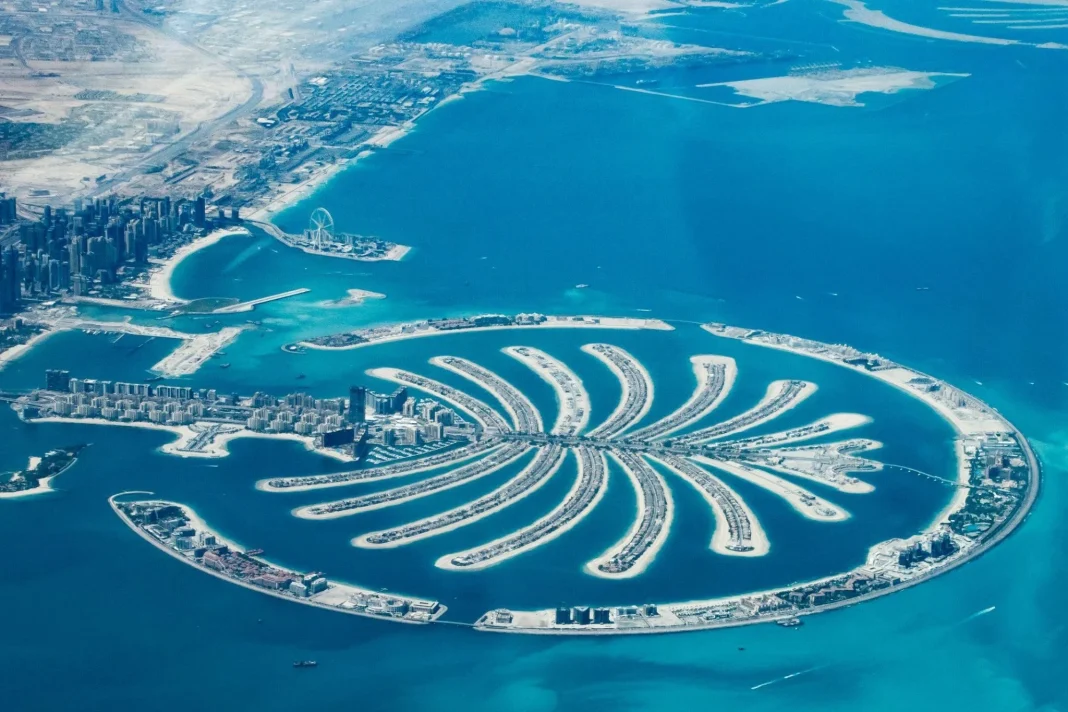
Palm Jumeirah continues to be an iconic artificial island visible from space, with 17 fronds housing villas with private beach and controlled access that guarantees absolute exclusivity. The consolidated infrastructure includes the Atlantis The Royal hotel, Nakheel Mall and its own monorail that connects to the mainland. This mature ecosystem generates constant tourist flows with robust occupancy rates throughout the year.
The traditional value proposition is based on globally recognized prestige, with Michelin-starred hotels and beach clubs like Kyma Beach that attract international clientele willing to pay premium prices. Investors have historically obtained returns of 3.1% annual average in Dubai’s luxury segment. Resale of units benefits from immediate liquidity thanks to the worldwide recognition of the enclave.
However, the market has reached a certain saturation with more than 4,000 operational residential units and a hotel supply exceeding 2,500 rooms in main complexes alone. Internal competition among owners renting vacation units puts pressure on margins and requires constant investments in renovation to maintain competitiveness. High operational costs in Dubai reduce net profits compared to other emerging jurisdictions in the region.
Ramhan Island bursts in with floating architecture and superior profitability
Ramhan Island has revolutionized the segment through the launch of the first floating villas in the Middle East, residences anchored to the seabed that merge naval engineering with cutting-edge solar technology. Eagle Hills confirmed in January 2026 an investment of 800 million dollars in the initial phase, which includes a 200-room Ritz-Carlton and a marina for 150 vessels. The Palm Jumeirah floating units reduce common expenses by 35% annually thanks to solar energy efficiency.
The CAP rate of 4.2% exceeds by more than one percentage point the average recorded in premium developments in Dubai, while vacation rental contracts generate net income of up to 600,000 dollars annually per six-bedroom villa. Occupancy during high season exceeds 75%, attracting expatriate executives and high-net-worth tourists seeking unprecedented architectural experiences. The projected appreciation of 8.5% until 2030 is based on artificial limitation of supply to 1,350 total units.
The location 20 minutes from downtown Abu Dhabi provides direct access to corporate headquarters of multinational energy companies and business hubs in accelerated expansion. Government investment in cultural infrastructure such as the Louvre Abu Dhabi adds sustained residential value. Structured payments in plans of up to five years allow locking in current prices mitigating currency volatility during construction.
Comparison of profitability and hidden operational costs
✓ Palm Jumeirah offers immediate liquidity in resale but CAP rate of 3.1% with high community costs for established premium services
✓ Ramhan Island provides CAP rate of 4.2% with 35% reduction in common expenses thanks to solar technology integrated from initial design
✓ Annual appreciation of 8.5% in Ramhan Island versus 5-6% historical in Palm Jumeirah according to transaction data 2020-2025
✓ Ramhan Island limits total supply to 1,350 units while Palm Jumeirah exceeds 4,000 residential properties generating greater internal competition
✓ Institutional investors value controlled scarcity of Ramhan Island that prevents saturation of the vacation rental market
The structural risks that few investors consider
The buyer profile in Ramhan Island requires net worth exceeding 50 million dollars, limiting the potential investor base compared to the diversity of prices available in Palm Jumeirah. European family offices dominate initial acquisitions, but concentration in the ultra-premium segment increases vulnerability to global economic crises. Dependence on corporate expatriates based in Abu Dhabi exposes profitability to energy cycles and corporate relocations.
The construction phase until 2029 implies delivery risk in an Emirati market that has experienced historical delays in island megaprojects such as Palm Jebel Ali. Off-plan buyers assume interest rate volatility during five years of structured payments. The absence of operational history in Ramhan Island contrasts with two decades of verifiable data in Palm Jumeirah that allow modeling scenarios with greater statistical precision.
Liquidity in resale remains a fundamental unknown, given that Abu Dhabi traditionally records lower transactional volume than Dubai in the luxury residential segment. Investors may face extended periods to materialize capital gains if the secondary market does not reach critical mass. Success critically depends on perfect execution of the master plan and Eagle Hills’ ability to sustain demand in an enclave without prior global recognition.
Geographic diversification strategy within the Emirates
Institutional investors are adopting mixed portfolios that combine consolidated assets in Palm Jumeirah with speculative positions in Ramhan Island to capture both security and accelerated growth. This strategy mitigates geographic concentration risk while taking advantage of profitability differentials between Dubai and Abu Dhabi. The imperfect correlation between both markets provides diversification benefits within the same federal regulatory framework.
The window of opportunity in Ramhan Island will progressively close as construction advances and prices increase in the primary market during 2027-2028. Initial buyers locked in pre-appreciation valuations that could generate returns of 25-30% before final delivery. However, the strategy requires a minimum time horizon of five years and tolerance for illiquidity during the development phase.
Abu Dhabi’s positioning as the administrative and financial capital of the Emirates strengthens long-term fundamentals compared to Dubai’s more touristic profile. Government policies for economic diversification beyond oil directly benefit premium real estate developments in the capital. Competition between both emirates to attract high-net-worth residents is generating tax and regulatory incentives that favor the entry of foreign capital in both jurisdictions.