

Ras Al Khaimah has stopped being the younger sibling overshadowed by Dubai and Abu Dhabi to become the epicentre of a real estate revolution that has international investors watching every transaction closely. Throughout 2024, this northern emirate recorded double-digit growth in key areas such as Al Marjan Island and Al Hamra Village, consolidating itself as the most profitable alternative in the region. However, the massive arrival of new units raises an uncomfortable question: how long can this party last before the market gets indigestion?
The speed of sales of luxury villas is not an anecdotal figure, it is the leading indicator that signals whether RAK is building on solid rock or speculative sand. When branded properties (Waldorf Astoria, Ritz Carlton, Nikki Beach) sell quickly off-plan, the message is clear: real demand exceeds supply and prices have room to rise. But if those same units start to pile up in inventory and developers begin offering discounts or aggressive payment plans, the canary in the coal mine will have stopped singing.
The growth that makes Dubai nervous
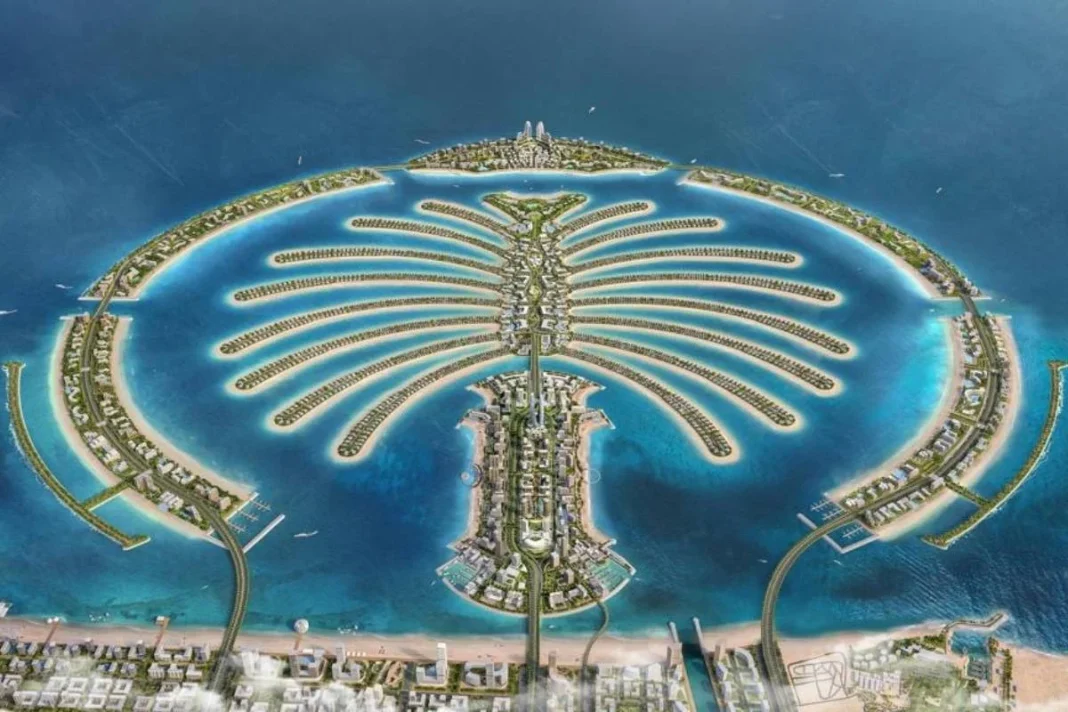
RAK recorded increases of 9.37% in Al Hamra Village and 10.5% in Al Marjan Island during 2024, far outpacing the growth rates of consolidated areas in Dubai. Villas posted gains of 3.55% while apartments exploded with an impressive 18.5% appreciation. This performance is no coincidence: it responds to a strategic plan that aims to diversify the Emirati economy beyond oil, attracting foreign capital with lower-density residential proposals and greater contact with nature.
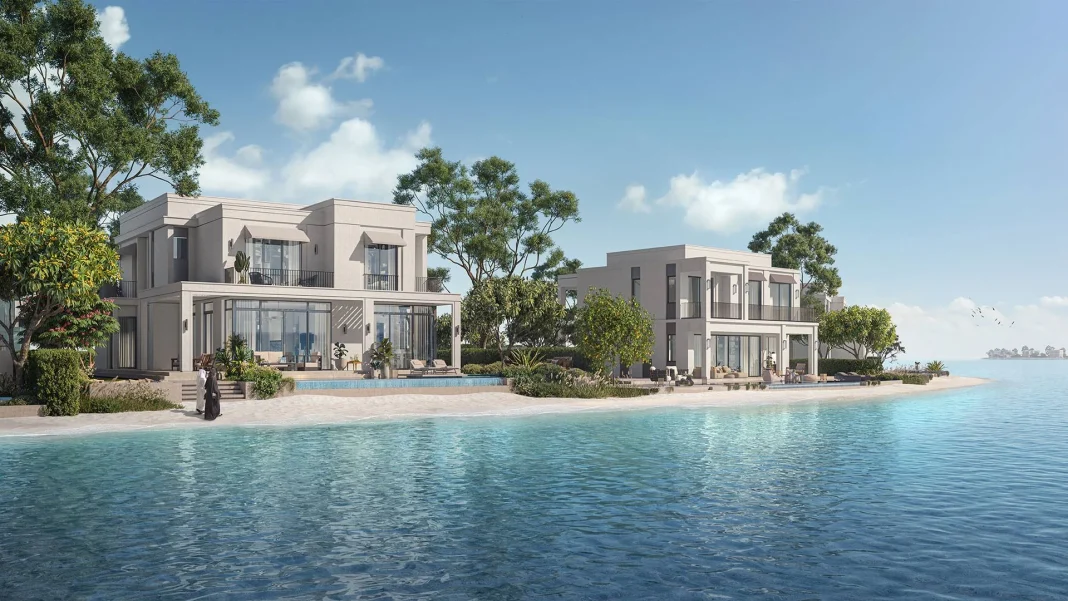
International brands saw the move before anyone else. Waldorf Astoria, Ritz Carlton, Nobu and Nikki Beach announced projects that add thousands of units in previously untouched parts of RAK, targeting a buyer profile that rejects Dubai’s skyscrapers and looks instead for villas with gardens, direct access to private beaches and mangrove landscapes. This differentiated positioning explains why European, Asian and Latin American investors have begun redirecting capital toward an emirate that barely registered on real estate radars just two years ago.
However, the euphoria has a dangerous blind spot: between 2026 and 2029 more than 14,000 new units will come to market, of which 5,600 will be branded residences. If the absorption of this inventory does not keep pace with current levels, prices could stagnate or even correct, turning what now looks like an opportunity into a liquidity trap for those who bought at the peak of the cycle.
The canary metaphor: what to watch in real time
In coal mining, canaries warned of toxic gases before humans could detect them. In RAK’s property market, the speed of sales of luxury villas plays exactly the same role: it is the leading indicator that reveals whether the air is clean or poisoned. When units in projects such as Waldorf Astoria Residences or Ritz Carlton Villas sell out within weeks during the pre-sale phase, the market is healthy and genuine demand supports prices. But when those same properties remain available months after launch, the canary has stopped singing.
Professional investors do not look only at sale prices; they analyse the days on market metric (DOM) and the percentage of units sold out of the total launched. If a project of 200 villas sells 80% in the first quarter, the signal is bullish. If it barely moves 30% in six months, the signal is bearish even if developers keep list prices artificially high. The speed at which inventory turns over does not lie: it reveals whether there are end buyers willing to pay or only speculators waiting to flip.
Another critical thermometer is the financing conditions offered by developers. When the market is hot, payment plans are conservative: 20–30% during construction and the rest on handover. When the market cools, aggressive schemes appear, such as 10% down with five-year post-handover terms. These changes in financial conditions are the real estate equivalent of the canary wobbling in its cage: a clear sign that real demand is weakening.
The 14,000-unit inventory: blessing or curse
RAK plans to add more than 14,000 residential units between 2026 and 2029, a figure that represents almost double the emirate’s current inventory. This explosion in supply can be interpreted in two opposite ways: as the consolidation of a mature market capable of absorbing large volumes, or as the prelude to an oversupply that will crush returns. The history of real estate markets in the Middle East is full of examples where excessive optimism ended in thousands of empty units and brutal losses for late investors.
The key lies in the composition of demand: if the 14,000 units are split between end buyers (families who will occupy the properties) and a reasonable share of investors (20–30%), the market can digest the supply without trauma. But if most buyers are speculators planning to resell before handover, the system becomes a real estate Ponzi scheme that collapses when there are not enough end users at the base of the pyramid.
Hotel occupancy and tourism data in RAK offer clues about real demand. The emirate posted sustained growth in international visitors during 2024–2025, driven by new air connections and mega tourism projects. If this trend continues, luxury villas will see genuine demand both for permanent residence and for holiday rentals. But if tourism stalls or geopolitical conflicts in the region scare off foreign capital, those 14,000 units will turn into a drag that pulls prices down for years.
Vision 2030 Plan: the institutional backing that changes the game
RAK’s growth is not an isolated phenomenon; it stems from the UAE’s Economic Vision 2030 Plan, which aims to diversify every emirate’s economy by reducing dependence on oil. This institutional backing includes massive improvements in infrastructure (an expanded international airport, new highways, commercial ports) and regulatory frameworks that favour foreign investors. The difference between a speculative bubble and sustainable growth lies precisely in this factor: governments that support real estate development with genuine public investment create solid markets, while those that only grant building permits without infrastructure create bubbles.
RAK has shown it can execute: projects announced in 2022–2023 are under active construction with realistic timelines, not virtual renderings with no delivery date. The Al Marjan Island area has electricity, desalinated water, paved roads and operational municipal services, basic elements that are conspicuously absent in other emerging markets. This operational strength reduces the risk of buying off-plan, though it does not eliminate it entirely.
The ecotourism and sustainable construction component of the 2030 Plan adds a differentiating factor that can attract European and North American capital focused on ESG (environmental, social and governance) criteria. If RAK manages to certify its developments under international sustainability standards, it will gain access to a premium segment of buyers willing to pay a premium for eco-friendly properties. This variable could be the ace up its sleeve that keeps demand strong even when the supply peak hits in 2028–2029.