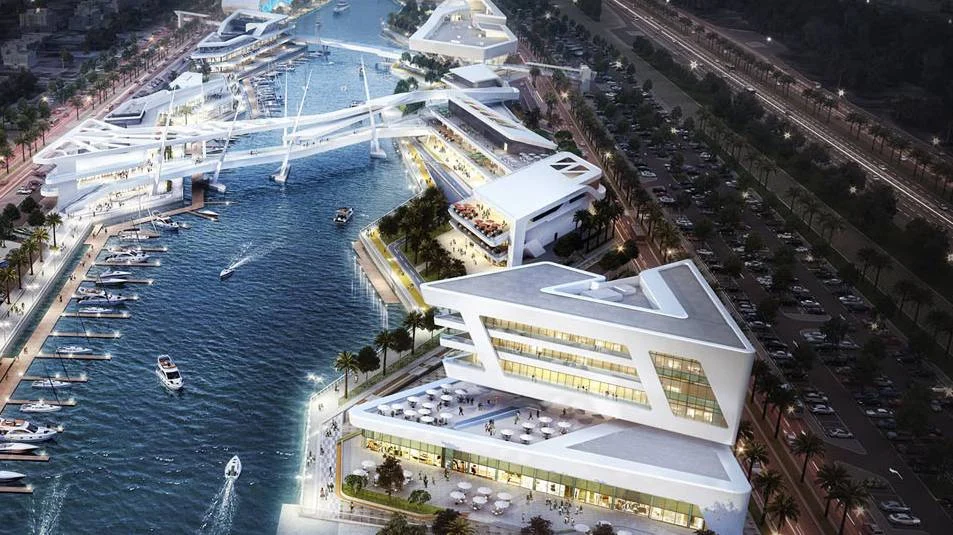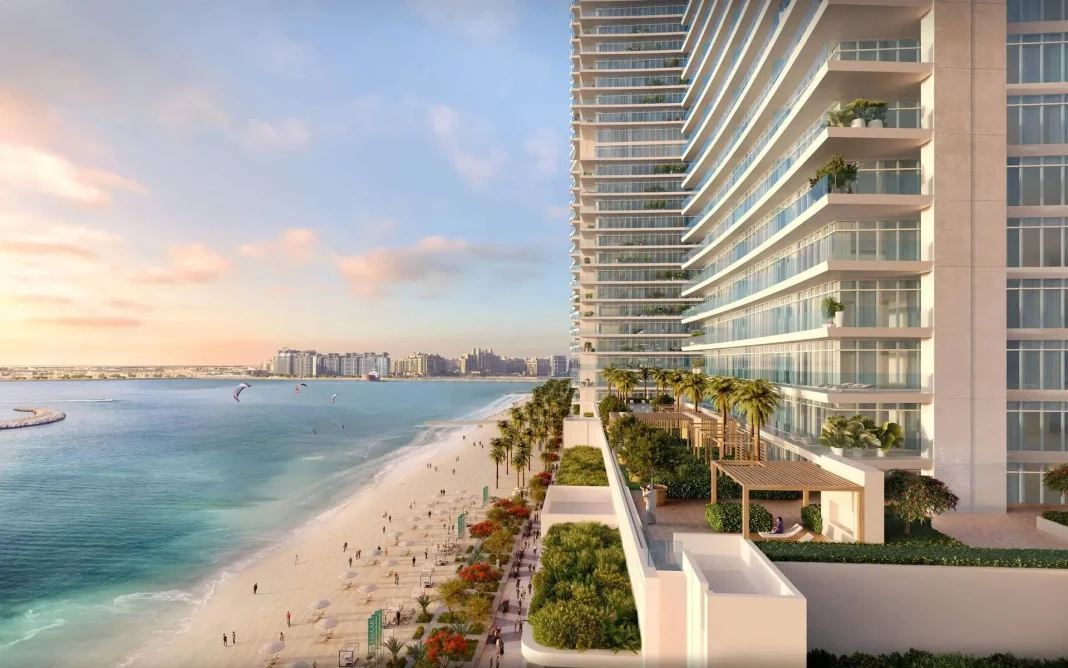


Nakheel, the state-backed developer behind Palm Jumeirah, has confirmed the launch of 2,002 luxury villas distributed across 16 themed fronds on Palm Jebel Ali. This 13-square-kilometre development with 110 kilometres of coastline marks the rebirth of a project that was put on hold after the 2009 financial crisis. The villas, priced from 22 million dirhams and offered in 5 to 7-bedroom configurations, replicate the model that turned Palm Jumeirah into a global benchmark for the ultra-luxury real estate market.
The announcement comes in January 2026, when Dubai is experiencing record international demand in premium segments. However, the magnitude of this inventory raises questions about absorption velocity and price evolution during the construction period, with handover projected beyond 2026 according to the already awarded infrastructure contracts.
Market absorption: the invisible factor that governs your investment
Market absorption measures how many units are sold each month in a specific development. In Palm Jebel Ali, with 2,002 villas available, this metric determines the full commercialization cycle. Conservative projections estimate between 50 and 100 units sold per month, which implies a period of 20 to 40 months to clear the initial phase. This pace is not abstract: it defines whether you buy with an early-bird discount or pay a premium in the secondary market.
The first buyers gain access to 80/20 payment plans and base prices without inflationary adjustments. By contrast, investors who wait for resale data and real occupancy will have consolidated information but will pay increases of 15–30% over initial prices, according to Nakheel’s historical patterns on Palm Jumeirah. The decision between early risk and late certainty is the central trade-off in this investment.
✓ Phase 1–6 months: Base prices, maximum uncertainty about delivery dates and construction quality
✓ Phase 7–18 months: First price adjustments, initial buyer testimonials, visible construction progress
✓ Phase 19–30 months: Demand consolidation, inventory reduction, prices 10–20% higher
✓ Phase 31–40 months: Last units, premium prices, full certainty on infrastructure and amenities
The absorption rate also reveals market saturation. If it falls below 40 villas per month, it signals demand resistance or excessive competition. Above 120 villas per month, it indicates aggressive speculation and potential overheating, as occurred in 2008 before the collapse.
Entry timing: brutal maths of the early buyer vs. the late buyer
Buying at launch means betting on Nakheel’s track record without tangible evidence of the current project. The benefit: access to base prices of 22 million dirhams and the possibility of reselling during construction with gains of 20–35%, mirroring patterns on Palm Jumeirah where off-plan villas bought in 2012 were resold in 2024 with capital gains above 500%. The risk: construction delays, changes to the final design, or incomplete infrastructure at handover.
Buying in later phases (months 24–36) eliminates construction uncertainty. Investors can observe real construction progress, finish quality, and confirmation of promised amenities. They also have secondary market data to validate appreciation. However, they pay for this certainty with prices 4–7 million dirhams higher per comparable unit, reducing future profit margins.
Infrastructure and timelines: Q4 2026 as the critical validation date
Nakheel has awarded contracts worth 5 billion dirhams for basic infrastructure with a completion date in the fourth quarter of 2026. This milestone marks the transition from promise to tangible reality. Current works include excavation, installation of utilities, and the first foundation slab completed in January 2026, according to the developer’s official updates. These advances validate the schedule but do not guarantee on-time delivery of individual villas.
Connectivity is decisive: Palm Jebel Ali is located 5 minutes from Sheikh Zayed Road and 28 minutes from Al Maktoum International Airport. However, internal road infrastructure—bridges, access to each frond, underground utilities—must be completed before real occupancy. Any delay in these critical works directly impacts handover timelines and secondary valuations.
Investors should monitor construction milestones on a quarter-by-quarter basis. A delay of 6–12 months is not unusual in projects of this scale, but it radically alters the annualized return on investment and may trigger penalty clauses in early resale contracts.
Comparison with Palm Jumeirah: lessons from the secondary market
Palm Jumeirah provides the only valid benchmark for projecting Palm Jebel Ali’s behaviour. Villas bought off-plan between 2012 and 2014 for 3–4 million dirhams are currently trading at 15–20 million, with annualized returns of 12–15% sustained over a decade. However, this success followed a decade of paralysis after the 2009 crisis, when early buyers (2002–2008) experienced nominal value losses of up to 40%.
The critical difference lies in the macroeconomic context. In 2026, Dubai has greater economic diversification, a pro-investor regulatory framework, and consolidated international demand from Chinese, Indian, and European buyers. As a result, the risk of a total collapse is lower, but oversupply-driven saturation remains a real threat with 2,002 simultaneous units.
Absorption data for Palm Jumeirah in its mature phase (2018–2025) show monthly transactions of 15–25 villas in the secondary market. Palm Jebel Ali needs to multiply this figure by 4–6 in the primary market to complete commercialization within projected timelines, which requires unprecedented demand or drastic price adjustments.