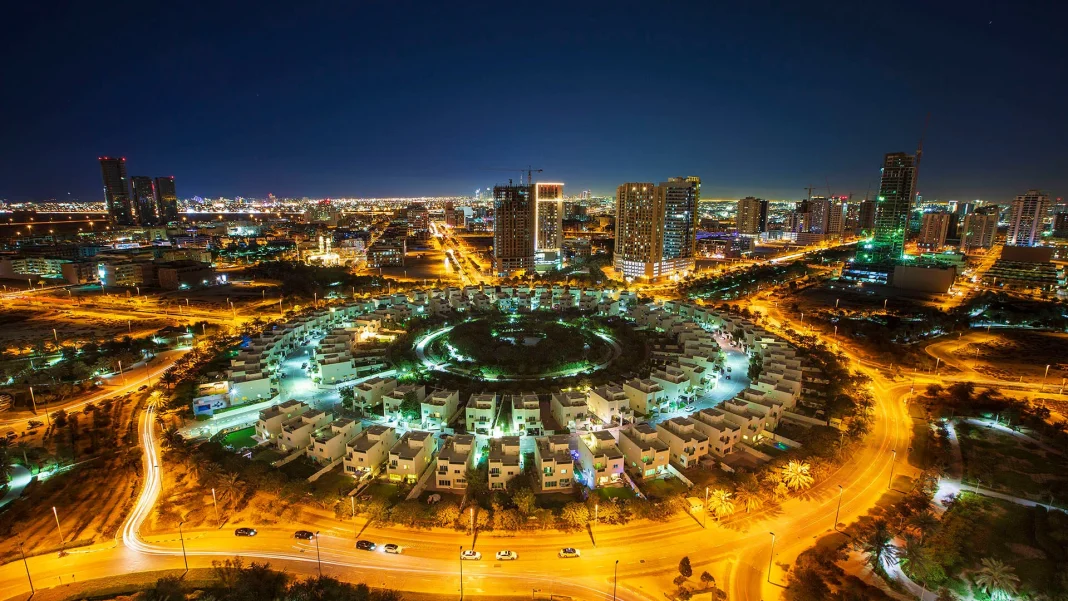



Emaar Properties has shaken Dubai’s real estate market with the announcement of its most ambitious project yet: the phased launch of 40,000 ultra-premium villas priced at more than 10 million dirhams per unit. This development, valued at more than 55 billion dirhams, represents the group’s largest bet on the luxury residential segment in the emirate’s history. The magnitude of the project raises critical questions about the market’s ability to absorb such a volume of supply without prices undergoing a downward adjustment in the coming years.
The announcement comes at a time of sustained growth in Dubai’s real estate market, driven by the arrival of international investors and high-net-worth buyers seeking tax efficiency and quality of life. However, demand elasticity in the ultra-premium segment is notably low, which means that an increase in supply does not automatically translate into a proportional rise in buyers willing to pay these multimillion-dirham prices.
Key features of the ultra-premium segment defining the project
The villas that Emaar plans to launch are in the 10,000 to 20,000 square foot range, with built-up areas that far exceed mid-market standards. These properties incorporate advanced home automation technology, designer finishes, and private plots with fully equipped gardens, swimming pools, and leisure areas. The target audience is families with ultra-high net worth (UHNW) with fortunes above 30 million dollars, an extremely small demographic niche even in global markets.
The project includes master-planned communities with wellness centers, championship golf clubs, and prestigious international schools, elements designed to create self-sufficient residential ecosystems. Strategic locations near the new Al Maktoum International Airport and areas such as Dubai South add logistical value and global connectivity. However, the fundamental question remains: are there truly 40,000 buyers with the financial capacity and interest to acquire properties in this price bracket within a reasonable time horizon?
Market size and demand elasticity analysis
✓ The global number of UHNW individuals is around 250,000 people, concentrated mainly in the United States, China, and Europe
✓ Dubai attracts approximately 2–3% of this segment annually, which represents between 5,000 and 7,500 potential buyers
✓ Competition with other luxury markets such as London, Singapore, and Miami further fragments this already limited pool
✓ The ultra-premium market requires longer sales cycles, with decision periods that can extend from 12 to 24 months
✓ Market saturation could force developers like Emaar to offer financial incentives or discounts to maintain the pace of sales
Price-demand elasticity in this segment is particularly rigid because UHNW buyers do not respond significantly to price reductions. Their purchasing decision is based on exclusivity, location, and brand prestige, not on opportunities for relative savings. Therefore, an excess of supply may not translate into a higher volume of transactions, but rather into unsold inventory and downward pressure on prices.
The risk of price erosion is real if we consider that similar, smaller-scale projects in Dubai have experienced 10–15% corrections when supply outpaced the market’s natural absorption capacity. The question is not only whether there is demand for 40,000 villas, but whether that demand can materialize at the pace required by the phased launches.
Impact on the competitive dynamics of the real estate sector
Emaar’s massive launch will inevitably transform the competitive dynamics of Dubai’s luxury real estate market. Other developers such as Damac, Nakheel, and Dubai Properties will have to recalibrate their pricing and positioning strategies in order not to be overshadowed by Emaar’s dominant supply. Concentrating so much supply in the hands of a single developer could generate monopolistic effects that distort natural price formation in the market.
In addition, financing for this type of project raises questions about the credit exposure of the local banking sector. Mortgage loans for ultra-premium properties represent concentration risks for financial institutions that could see their portfolios compromised if the market experiences corrections. The sustainability of the model depends not only on final demand, but also on the capacity of the financial ecosystem to support the volume of associated credit.
The market is watching closely to see whether Emaar has correctly gauged global appetite for luxury properties in Dubai or whether the project will face timeline and pricing adjustments in later phases. The history of the real estate sector is full of ambitious developments that underestimated the market’s absorption capacity, resulting in delays, restructurings, and losses for early investors. The ultimate test will come with the first launch phases and their sales velocity over the next 18 to 24 months.