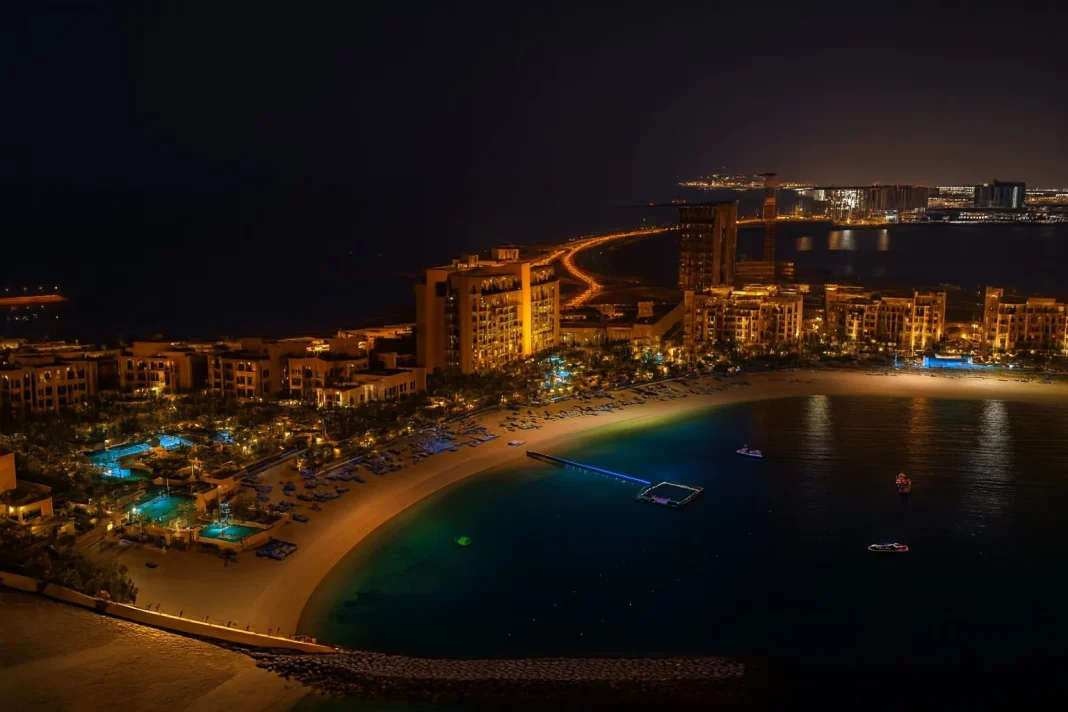


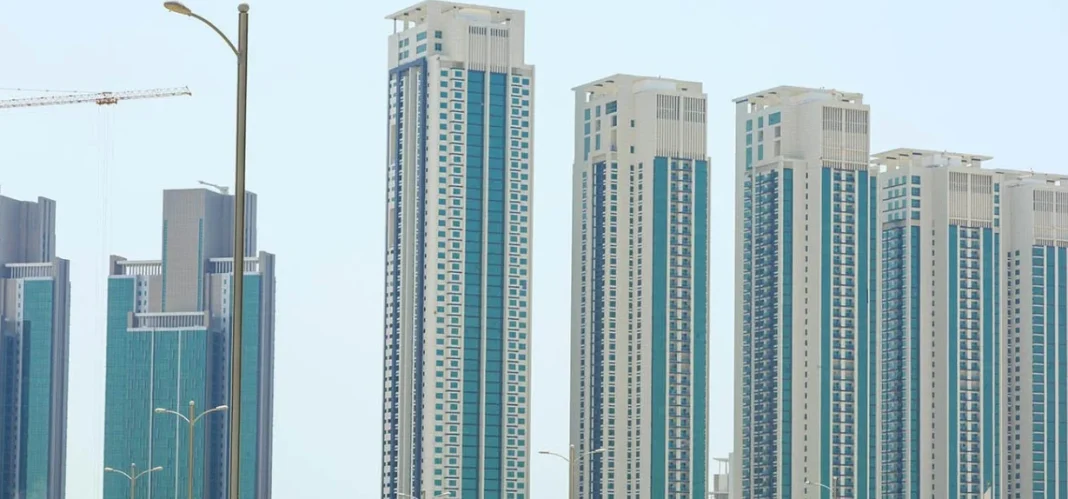
Shams, located in Al Reem Island, has become the epicenter of massive real estate acquisitions by investment funds from China, Singapore, and South Korea. During 2025, transactions of complete towers in this area have surpassed the records of the previous decade, concentrating capital seeking profitability in emerging markets with a solid legal framework. The wholesale purchasing strategy reflects the interest in controlling the entire value chain: rental management, comprehensive maintenance, and revaluation potential without intermediaries.
The proximity to Abu Dhabi’s financial district and the consolidation of key infrastructure have driven these investors to anticipate price increases. Additionally, the regulatory environment of the United Arab Emirates, characterized by freehold property for foreigners and the absence of income taxes, reinforces institutional confidence. According to market data, the annual net return in Shams can reach 7% for one-bedroom apartments, a figure that exceeds expectations in other urban centers in the region.
Profile of the Asian Institutional Investor
Asian investment funds operating in Shams share common characteristics: they seek high-end assets, immediate liquidity, and locations with long-term growth projections. Many of them manage diversified portfolios in Singapore, Hong Kong, and Shanghai, and have extended their scope of action to the Persian Gulf as an alternative to saturated markets in their region. The acquisition of complete towers allows them to control supply, avoid competition in auctions, and establish rental prices without depending on individual owners.
Another strategic advantage lies in the possibility of obtaining residence visas for executives and key employees, facilitating direct supervision of operations. At the same time, Abu Dhabi’s reputation as a safe city with world-class infrastructure attracts high-income expatriates willing to pay high rents. This constant flow of demand guarantees occupancy and minimizes vacancy periods, crucial aspects for funds that prioritize predictable cash flow.
Operations are usually closed in cash or through local bank financing, taking advantage of competitive interest rates and flexible terms. Institutional buyers negotiate directly with the original developers or with investor portfolios that consolidated positions in early phases of Shams development. In this way, they avoid intermediation surcharges and accelerate the legal process, reducing the time between contract signing and property transfer.
Competitive Advantages of the District in Al Reem Island
The Shams district occupies approximately 25% of Al Reem Island, with capacity to house more than 100,000 inhabitants in 22,000 residential units. Its urban planning integrates green areas, shopping centers, international schools, and direct connections to the financial center through bridges and tunnels. This self-sufficiency transforms the island into a satellite city that reduces dependence on public transportation and optimizes travel times.
Architectural projects stand out for their intelligent vertical design, with elevator-level services that include gyms, infinity pools, electric vehicle charging stations, and 24-hour concierge. The residential offering ranges from studios to five-bedroom penthouses, adapting to different profiles: young professionals, families, and expatriate executives. This diversity favors the stability of the rental market, as each segment maintains active demand throughout the year.
✓ Freehold property for foreigners without nationality restrictions
✓ Absence of taxes on rental income and capital gains on sale
✓ Average annual net return of 6% to 7% on residential units
✓ Constant price appreciation since the beginning of the Shams project
✓ Solid legal framework with standardized contracts and official registration
✓ Liquidity of the secondary market with active institutional buyers
Impact on the Regional Real Estate Market
The massive entry of Asian capital into Shams has generated a ripple effect throughout Al Reem Island, raising valuations of adjacent projects and accelerating the construction of new phases. Local developers have adapted their commercial strategies to attract institutional investors, offering volume discounts and flexibility in delivery deadlines. Meanwhile, the secondary towers market has experienced a 15% increase in price per square meter over the past year, consolidating Shams‘ position as a benchmark for secure investment.
This phenomenon has driven the professionalization of property management, with specialized property management companies that guarantee maintenance, tenant turnover, and regulatory compliance. Investment funds demand international standards of financial reporting and auditing, which has increased transparency in the sector. Additionally, the presence of institutional buyers has stabilized the market against the volatility of individual investors, reducing sharp price fluctuations.
The mortgage financing offer has also diversified, with local and international banks competing to capture large-volume operations. Financial institutions offer up to 75% of the property value under preferential conditions for corporate clients, facilitating leverage with fixed or variable rates. This access to liquidity enhances the multiplier effect of investments and expands the range of opportunities for funds operating with mixed strategies of direct purchase and structured financing.