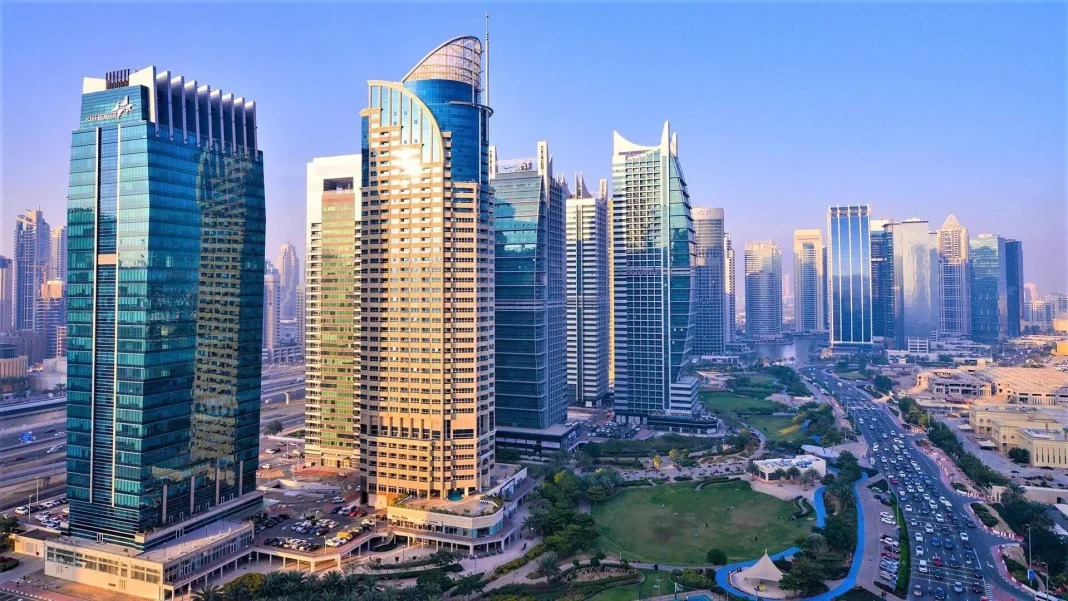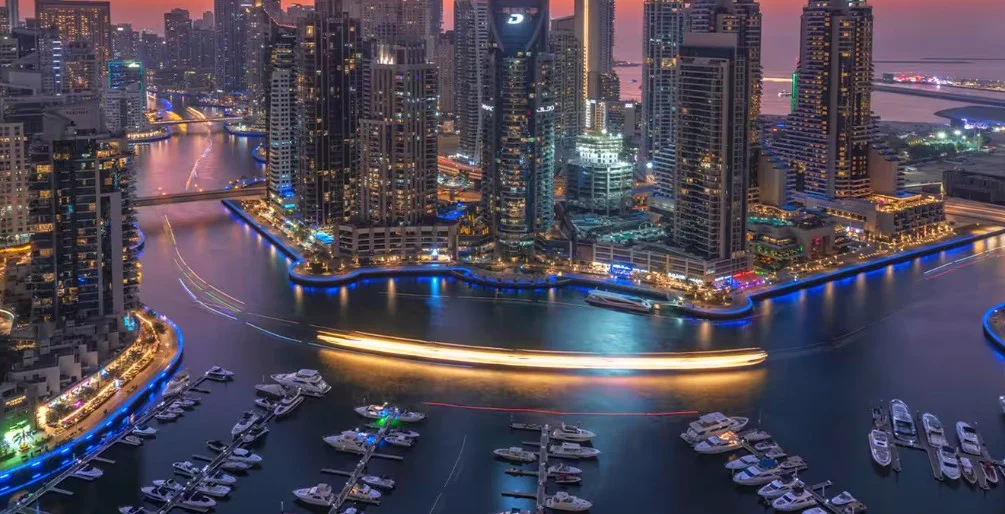


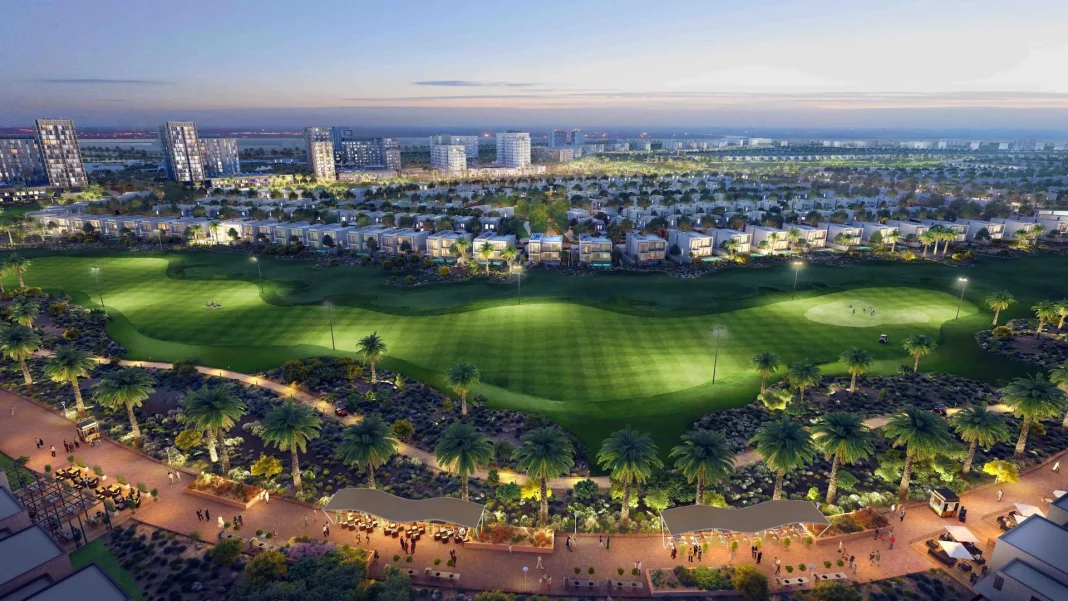
When people talk about Dubai South, they are actually referring to a city planned from scratch around Al Maktoum Airport and a major logistics corridor connected by land, sea and air. It is not a simple bedroom community, but an urban project of 145 square kilometers designed to concentrate air cargo, e-commerce, offices and housing in the same environment. This mix puts it on the radar of companies seeking efficiency and individuals looking for price opportunities. For many investors, it is the typical place worth looking at now, before it fully matures.
Unlike other more consolidated areas of Dubai, Dubai South is still in a visible development phase, with construction sites, new projects and services being added in stages. This entails certain initial inconveniences, but also an appreciation potential that many real estate analysts highlight for the coming years. That is why more and more retail investors are considering entering now, with moderate tickets, betting on the boost that the expansion of the airport and the logistics ecosystem can generate. For many, it is about finding a balance between patience, diversification and long-term vision within the Dubai market.
DUBAI SOUTH: FROM “DUBAI WORLD CENTRAL” TO A PLANNED CITY
Dubai South was born as Dubai World Central, a macro project conceived to strengthen Dubai as a global hub for trade, aviation and logistics, leveraging its position between Europe, Asia and Africa. Instead of simply expanding scattered infrastructure, the authorities designed a complete city around the new airport and several specialized districts. The stated goal is for it to function as an integrated ecosystem where companies, residents and services feed into each other. This long-term vision helps explain why so many urban planning decisions look more to 2040 than to the short term.
The master plan divides the territory into different areas: logistics district, aviation area, business parks, residential zones and spaces dedicated to retail and leisure. Each piece contributes something different but shares the same logic of fast connectivity with Al Maktoum Airport, Jebel Ali Port and the main highways of the Emirates. All this is supported by very intensive public investments, already visible in roads, services and announcements of new real estate projects. For the small investor, it is a way to “join” a movement that does not depend solely on residential demand.
A LOGISTICS HUB DESIGNED FOR FREIGHT AND ECOMMERCE
The main economic draw of Dubai South is its logistics district, conceived as a multimodal platform that integrates air cargo, road transport, future rail connection and proximity to Jebel Ali Port. This structure helps reduce time and costs in global supply chains, something key for sectors such as e-commerce, pharmaceutical distribution or high value-added logistics. The area is prepared to handle millions of tons of goods per year when the airport reaches full capacity. This productive base underpins, in the background, much of the real estate narrative of the area.
Within the complex, EZDubai has been promoted, a hub specialized in e-commerce that offers warehouses, industrial units and services tailored to digital operators. For companies that need to move parcels quickly to Europe, Asia or Africa, setting up there provides advantages in transit times and flexibility to grow. This consolidated logistics vocation reinforces the stability of the environment and translates into sustained demand for offices, industrial land and support services. Anyone investing in housing is interested in having employment nearby, and here the real economy is not a mere backdrop.
AL MAKTOUM INTERNATIONAL, THE AIRPORT ENGINE OF THE FUTURE
Al Maktoum International Airport, located in the heart of Dubai South, is the big engine that can boost the value of the area in the coming decades. Dubai has approved a multibillion-dollar expansion plan that will turn the complex into one of the largest airports in the world, with five runways, hundreds of gates and capacity for between 150 and 260 million passengers a year in different phases. The idea is that, once it is ready, it will take on the role of Emirates airline’s main hub and replace Dubai International. This shift in economic pulse is far from minor.
This bet is not just a terminal change, but a move that will shift passenger traffic, jobs and economic activity towards the Dubai South area. Staged construction implies a constant flow of investment, contracts and new companies linked to aviation, maintenance, services and tourism. Various market players anticipate that each jump in air capacity will be reflected in demand for housing, retail and offices in the surrounding area. For a small investor, following the construction schedule can be almost as important as looking at price charts.
RESIDENTIAL IN DUBAI SOUTH: PRICES, RENTS AND DAILY LIFE
The residential market in Dubai South has gradually filled up with apartments, townhouses and villas aimed both at workers in the area and families that prioritize more contained prices than in central Dubai neighborhoods. There are projects in affordable segments and others more geared towards the mid-range, with services such as schools, green areas and neighborhood shopping centers. For those arriving from Europe, the lists of new developments with installment payment facilities and plans designed for foreign investors come as a surprise. This explains the growing interest of Spanish and Latin American buyers.
In terms of profitability, various sources indicate that Dubai South offers gross rental yields that can sit above seven percent, driven by the combination of moderate entry prices and rising demand. As the airport expansion progresses and logistics and service companies become consolidated, the logic is that the resident population will continue to grow. This could strengthen the rental market in the medium term, both for housing and for serviced apartment-style accommodation. Those who buy today are precisely looking to accompany that growth cycle.
OPPORTUNITIES AND RISKS FOR THOSE INVESTING IN DUBAI SOUTH
For an investor, Dubai South combines several very attractive factors: a large volume of public investment already committed, a project with a multi-decade horizon and demand tied to sectors such as aviation, logistics and e-commerce. All this, together with current prices still below those of more mature areas of Dubai, fuels expectations of appreciation over three-to-ten-year horizons. In addition, local regulations offer ownership frameworks and visas linked to real estate investment that many foreign buyers value. This is where Spanish interest in diversifying outside the eurozone fits.
However, it is not a risk-free bet. As it is still a development under construction, it depends on construction timelines, future decisions about the airport and global economic trends. It is also advisable to analyze each project carefully, its reputation, delivery schedule and real connection with key employment zones within Dubai South. Not all projects have the same potential, and fine selection can make significant differences in rental income and capital gains. Prudence here is more about gathering information than improvising.
HOW DUBAI SOUTH FITS INTO A BROADER INVESTMENT STRATEGY
For a Spanish saver looking to diversify, Dubai South can be one piece within a broader strategy, not the only pillar of their wealth. Its profile fits better as a growth bet tied to an expanding area, complementing more stable assets in markets they already know better. The investment horizon should be several years, assuming that value will not skyrocket overnight, but rather as the project completes stages. This time factor is almost as relevant as the purchase price.
Before taking the step, it makes sense to compare Dubai South with other Dubai neighborhoods or with alternatives in Europe, assess currency exposure and review taxes and legal requirements in detail. It is also advisable to study market reports, talk to several agents and, if possible, visit the area to check on the ground the current level of services, occupancy and activity. With this more complete view, it is easier to decide what weight to give Dubai South within the overall portfolio. For many profiles, the key is to enter without rushing and with a clear plan.