

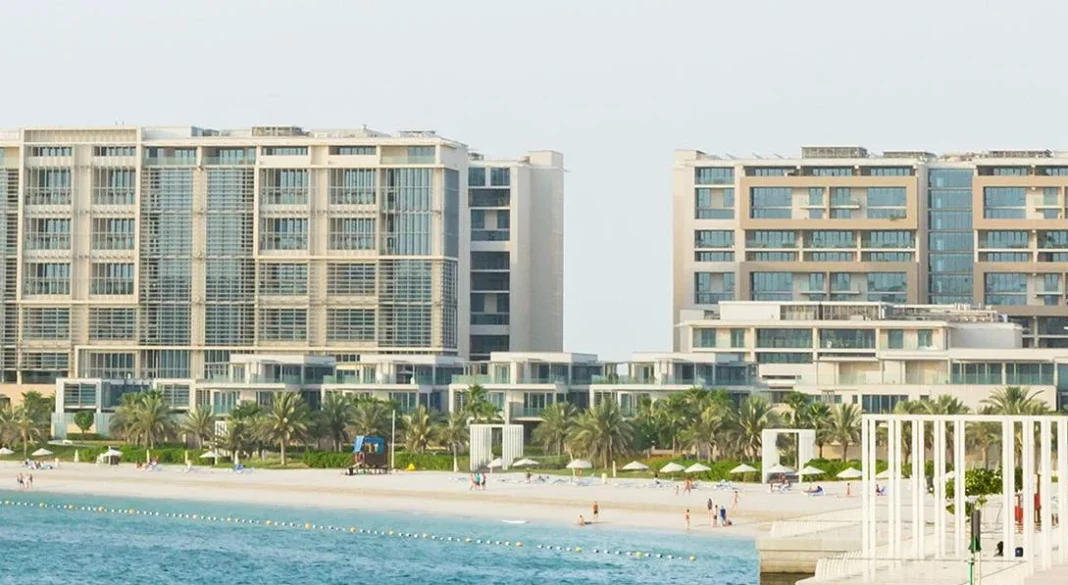
Al Raha Beach has consolidated its position as one of the most interesting coastal areas to combine quality of life and real estate income in Abu Dhabi. This is a waterfront community designed down to the last detail, where apartments, villas, marinas and retail spaces coexist in a carefully planned environment. For many international buyers, it represents a way to enter the Emirati market with a tangible, visible asset that is easy to explain to future tenants. And for residents, it quite literally means living with the beach just a few steps away.
In recent years, the numbers have supported that aspirational image, with significant increases in both sale prices and rents in Al Raha Beach. Market reports place gross rental yields at around 5–7%, an attractive range for profiles seeking recurring income without taking on extreme risk. In addition, the constant improvement of infrastructure and services along the Abu Dhabi–Yas Island corridor has reinforced its position as a “core” area on the emirate’s investment map.
LOCATION AND SEAFRONT SETTING
Living or investing here means being in a continuous coastal strip that stretches for approximately eleven kilometres along the Gulf. The community runs alongside the E10 highway, between the international airport and Yas Island, making it easy to move quickly to leisure areas, business districts or international flights. This balance between a certain sense of residential refuge and direct connection with Abu Dhabi’s main hubs is key to sustaining demand. Many tenants value precisely that combination of comfort and access.
Day-to-day life unfolds between promenades, small docks, beach clubs and shopping centres such as Al Raha Mall, designed to cover the essentials without having to cross the entire city. This layer of nearby services—supermarkets, gyms, international schools and clinics—means the neighbourhood works almost like a “city within the city”. For the cautious investor, having a base of residents who can resolve most of their daily needs on foot or within a few minutes by car reduces turnover and gives stability to rental income. That stability often weighs as much as the income level itself.
TYPICAL RESIDENT AND TENANT PROFILES
Those who end up renting in Al Raha Beach usually fall into two main groups: expatriate professionals with good salaries and families looking for quality schools, the sea and a safe environment. This profile, willing to pay a premium for water views, services and proximity to work, tends to sign medium- and long‑term contracts. For a landlord, this translates into fewer vacancy periods and a higher probability of renegotiating upward when the market is favourable. Many reports already highlight this very clearly.
There is also a segment of buyers who purchase for mixed use: they spend seasons in the Emirates and rent out the property for the rest of the year, generally furnished. In this case, the key lies in good property management and careful tenant selection, so that the asset remains in good condition and retains its appeal over the long term. This hybrid strategy allows owners to personally enjoy the coastal lifestyle without renouncing the income the property can generate when it is vacant. It is an increasingly common formula among international investors.
WHY AL RAHA BEACH ATTRACTS INVESTORS
The first argument is usually quantitative: rents in Al Raha Beach rank among the strongest in Abu Dhabi’s coastal segment, with recent increases close to 9% per year in some types of housing. On top of this, sale prices have shown double‑digit increases, around 14% year‑on‑year in certain apartments, pointing to additional appreciation potential. For those seeking to balance cash flow with future capital gains, that dual lever is very powerful.
The second argument is more qualitative: it is a community planned by a leading developer such as Aldar Properties, with an urban design intended to integrate housing, leisure and offices by the sea. This reduces the risk of the environment deteriorating in the medium term and gives visibility on how the neighbourhood will continue to evolve, something that does not always happen in more improvised areas. In practice, many advisers already include it as a “core” component in portfolios focused on the Emirates, thanks to its combination of liquidity, stable demand and an attractive narrative for future buyers.
RISKS, HIDDEN COSTS AND HOW TO MITIGATE THEM
Despite all its strengths, it is important not to idealise the scenario: this is a “prime” development, with higher entry prices and community fees than inner‑city neighbourhoods in Abu Dhabi. Maintenance charges in buildings with marinas, infinity pools and high‑end common areas can erode part of the profitability if they are not properly calculated from the outset. That is why, before committing capital, it is sensible to request detailed breakdowns of service charges, insurance, reserves for future maintenance and any potential special assessments. This analysis helps avoid unpleasant surprises.
Another factor to consider is how sensitive demand is to macroeconomic changes, interest rates or visa policies, which can affect high‑earning expatriates. To mitigate that risk, many investors diversify within the district itself, combining studios or one‑ and two‑bedroom apartments, which tend to rent out faster, with larger units aimed at families. Keeping prudent margins in occupancy projections and contemplating scenarios with slight rent decreases helps maintain peace of mind even in less favourable cycles. In this way, the asset continues to fit within a conservative portfolio.
STRATEGIES FOR A DIVERSIFIED PORTFOLIO
Integrating Al Raha Beach into a diversified portfolio does not mean betting everything on coastal real estate, but rather leveraging its role as a generator of relatively predictable income. A common approach is to combine a property in this area with other assets geared more towards growth, whether in emerging neighbourhoods within Abu Dhabi or in international stock markets. In this way, rents in dirhams help offset the volatility of other components of the portfolio. That complementarity is especially useful in the long term.
For very cautious profiles, it may make sense to start with a small unit, finance part of the purchase and use the rental income to repay the loan more quickly. If the market is favourable and the experience as a landlord is positive, there will always be room to scale up to a second property in the same district or rotate into larger assets with higher rents. The key is not to chase the highest possible annual return, but to seek a reasonable balance between income, liquidity and the overall risk of the portfolio.
FUTURE TRENDS IN ABU DHABI
Abu Dhabi’s expansion plans point to a continued strengthening of the axis that connects the city centre with Yas Island, consolidating Al Raha Beach as one of the main gateways to the “new city”. The combination of new infrastructure, more leisure options and the ongoing policy of attracting international talent acts as a tailwind for established coastal neighbourhoods. In this context, it is reasonable to think that both residential and rental demand will maintain a healthy tone, always with the normal ups and downs of the market.
At the same time, recent reports on rents and prices in the emirate show how “prime” seafront areas, including Al Raha Beach, remain among the preferred locations for high‑end housing. If investors accompany that trend with good asset selection, cost analysis and a medium‑ to long‑term horizon, they are more likely to enjoy both the calm of living by the sea and rental income that continues to rise in an orderly way. Ultimately, it is not about chasing a windfall, but about building a solid income stream that fits within a diversified and sensible portfolio.