

Is Dubai truly still a high-risk bet, or has it become the safe-haven asset that many European investors still don’t dare to acknowledge out loud? The luxury real estate market in Dubai closed 2025 with a 15.60% appreciation in the general residential index, while premium villas recorded growth of 17.81% — figures that challenge conservative narratives about this market.
Data from the first quarter of 2026 reinforces this trajectory: luxury transactions climbed 42% compared to the same period of the previous year, driven by the continuous arrival of family offices, European investors, and ultra-high-net-worth buyers prioritizing tax efficiency and sustained capital appreciation. The landscape is not speculation: it is a structural trend with institutional backing.
Dubai and the New Geography of Global Luxury Real Estate Capital
The city already competes on equal terms with London, Monaco, and Singapore to capture global premium real estate capital, with a structural advantage that other locations cannot match: zero property income tax and a long-term visa regime for investors. This combination makes Dubai the world’s most efficient destination for generating real net capital gains.
The buyer profile has changed significantly in 2026. It is no longer mostly speculative investment, but end-user demand from ultra-high-net-worth buyers relocating their primary residence to areas such as Palm Jumeirah or Dubai Hills Estate, consolidating demand and reducing volatility in the premium segment.
What is Generating Capital Gains in Dubai and How the Equity Engine Works
The Dubai of branded residences — properties linked to luxury brands like Bugatti, Armani, or Jacob & Co — is leading capital gain generation in the ultra-prime segment. These assets combine a real scarcity of supply, growing international demand, and a brand premium that increases the asset’s value from the pre-sale stage through to delivery.
The drivers sustaining this equity growth are quantifiable: limited premium land supply in waterfront areas, the net arrival of over 50,000 new high-net-worth residents in 2025, and the stability of the dirham pegged to the dollar, which eliminates currency risk for Eurozone investors. All this creates an environment where capital appreciation is not accidental, but structurally programmed.
Dubai Areas with the Highest Appreciation Potential This Semester
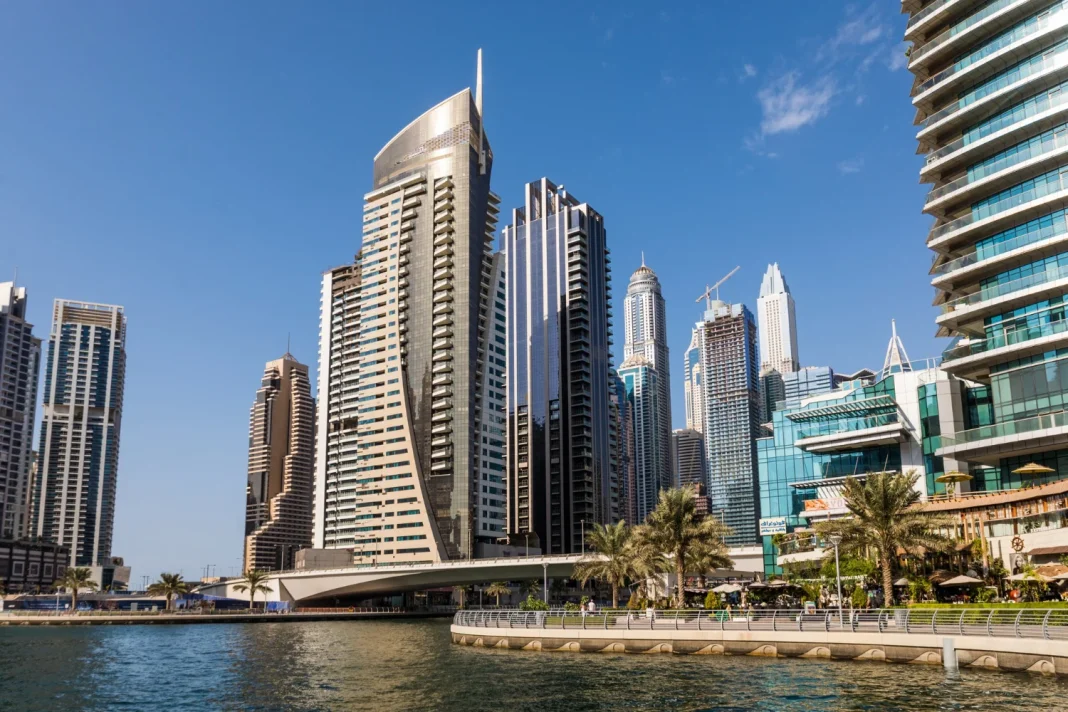
Palm Jumeirah, Downtown Dubai, and Dubai Marina concentrate the highest historical appreciation rates, but the capital gains map for 2026 is expanding into new areas. Dubai Islands — the Nakheel megaproject in the north of the city — is recording gross returns exceeding 8% in the premium apartment segment, with controlled supply and growing demand from European expats.
The key to identifying assets with the highest potential for double-digit equity this semester lies in waterfront land scarcity, the developer’s delivery schedule, and the area’s positioning within the Dubai 2040 master plan. New-generation areas with mixed-use projects and access to world-class infrastructure show the greatest differential between pre-sale price and market value upon delivery.
The Investor Profile Capturing the Greatest Equity in Dubai
The investor generating the most capital gains in Dubai is not the one buying a finished unit in a consolidated area, but the one entering the pre-sale phase in projects by tier-1 developers such as Emaar, Nakheel, or Binghatti with flexible payment plans like 40/60 or 50/50. This structure allows capturing the full appreciation of the construction cycle, which has historically generated between 20% and 35% revaluation from signing to delivery.
The segment generating the most traction among European investors in 2026 is branded residences with an entry ticket between $1 and $3 million, offering an optimal combination of liquidity, capital gain potential, and rental yields between 5% and 7% net in cases of non-owner occupancy.
| Area | Estimated Annual Appreciation 2026 | Net Rental Yield | Ideal Investor Profile |
|---|---|---|---|
| Palm Jumeirah | 12–18% | 3.5–4.5% | Ultra-HNW, end-user |
| Downtown Dubai | 10–15% | 4.0–4.5% | Institutional and private investor |
| Dubai Marina | 8–12% | 4.5–5.5% | International mid-range investor |
| Dubai Islands | 10–16% | 7.5–8.5% | Early adopter, high yield |
| Emaar Beachfront | 13–19% | 5.0–6.0% | Branded residence, long term |
Dubai Premium Market Projection for the Next 18 Months
The sector consensus for the second half of 2026 and the 2027 horizon points to a moderation of general growth in the market — with more units entering the middle segment — but a clear resilience in the premium waterfront and branded segment, where the scarcity of differentiated assets will protect capital gains. Areas with limited supply and end-user demand will continue to generate double-digit equity.
Expert advice for investors looking to position themselves in this cycle is clear: prioritize scarcity over price, enter areas with consolidated infrastructure or an executed master plan, and work with developers with a proven delivery track record. Dubai is not going to stop growing — the 2040 Plan guarantees massive public investment in infrastructure — but the difference between ordinary and extraordinary capital gains will, as always, be in the timing and location.