

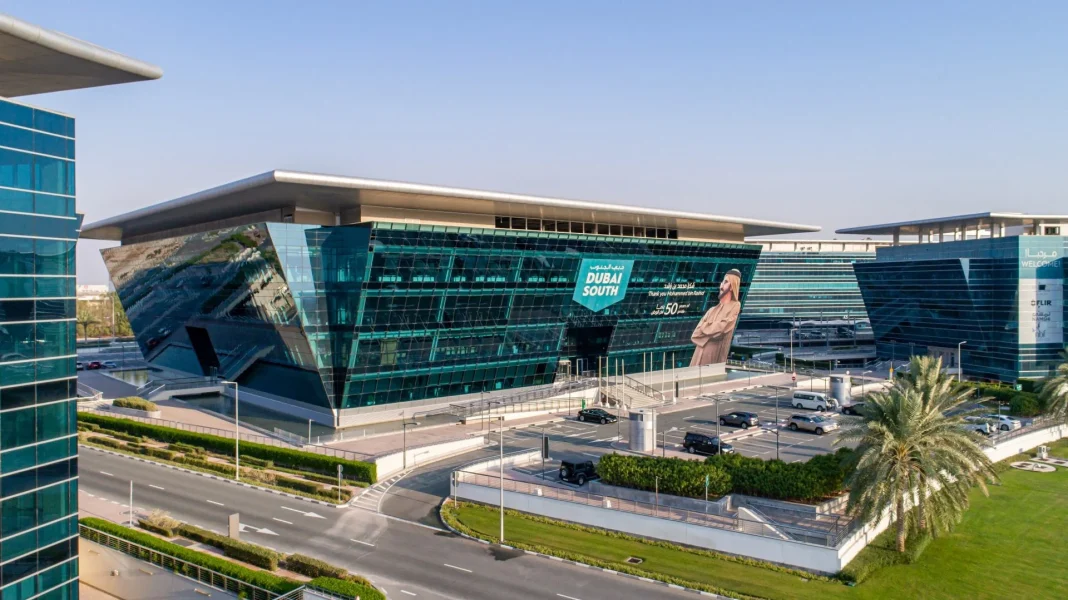
Would you still bet on saturated downtown prices when the world’s largest airport is being born just a few kilometers away? The rise of Dubai South is challenging traditional investment logic, forcing Downtown landlords to rethink their profitability strategies in the face of unprecedented supply.
The data doesn’t lie: the Dubai real estate market closed 2025 with record transaction volumes and faces 2026 with the delivery of 120,000 new apartments. This massive injection of inventory promises to ease rents in peripheral areas and attract thousands of residents seeking quality of life at competitive prices.
The impact of new inventory in Dubai South
Is it possible that oversupply is actually the best news for your pocket this quarter? The concentration of projects in Dubai South is creating an absorption phenomenon where logistics and airport demand guarantee sustained occupancy despite the volume of keys delivered.
While in previous years the fear of oversupply held buyers back, today’s market maturity shows astonishing resilience. New developments are bringing more than just roofs; they bring critical infrastructure that transforms deserts into vibrant communities fully connected to the global economy.
Investment Opportunities after the massive delivery
The deployment of Dubai South as the global aviation epicenter has turned any investment in this area into a strategic move for the medium term. Proximity to Al Maktoum International Airport ensures these new apartments have a constant flow of corporate tenants and qualified professionals.
Unlike downtown, where the margin for appreciation is tighter, these emerging areas offer much more friendly entry prices. Investors entering now are taking advantage of the value “gap” before the airport infrastructure is fully operational, maximizing their capital gains potential.
Yield Comparison: Dubai South vs. Downtown
Is a downtown address prestige really worth it if the net return is less than 6% annually? The market for modern apartments in secondary zones is outperforming the iconic Burj Khalifa towers in yield due to a simple matter of lower operating expenses.
The battle for tenants will be fought on the ground of amenities and maintenance cost efficiency. In the south, new communities are designed under advanced sustainability standards, reducing utility bills and improving the net yield for the final owner.
Resident migration to new districts
Why are thousands of families leaving established neighborhoods to move to the southern outskirts? The answer lies in the spaciousness and the drastic reduction in commute times to the logistical work zones that dominate today’s landscape.
Population growth, which already exceeds 4 million inhabitants, naturally and organically pushes the urban footprint southward. New apartments offer smart technology integrated as standard, something older downtown buildings cannot replicate without extremely expensive renovations and unnecessary costs.
| Analysis Zone | Price per m² (Average) | Rental Yield | Tenant Profile |
|---|---|---|---|
| Dubai South | 1,400 AED | 8% – 10% | Logistics and Aviation |
| Downtown Dubai | 2,800 AED | 5% – 6% | Tourism and Finance |
| JVC / Arjan | 1,200 AED | 7% – 9% | Families and Services |
The future of Dubai South after the 2026 surge
Market forecasts indicate that after the absorption of these 120,000 units, land prices in the south will experience a gradual and steady rise. We are not facing a bubble, but rather a planned expansion that seeks to balance supply with the mass arrival of international talent.
My advice as an expert is clear: do not fear quantity; seek quality and strategic location within the master plan. The smart housing market in the south is today what Dubai Marina was two decades ago: the foundation of tomorrow’s great real estate fortunes under a climate of total confidence.