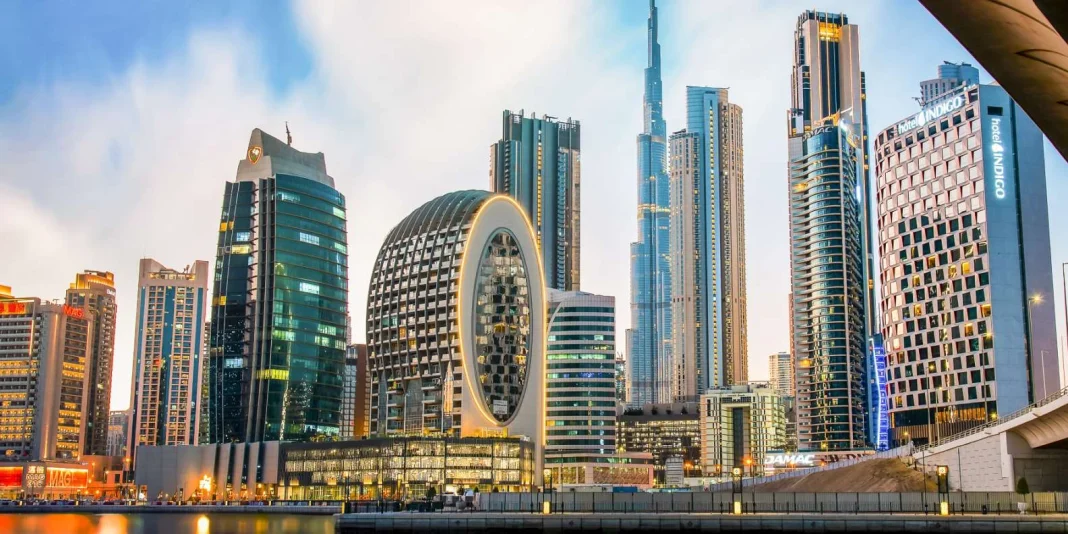


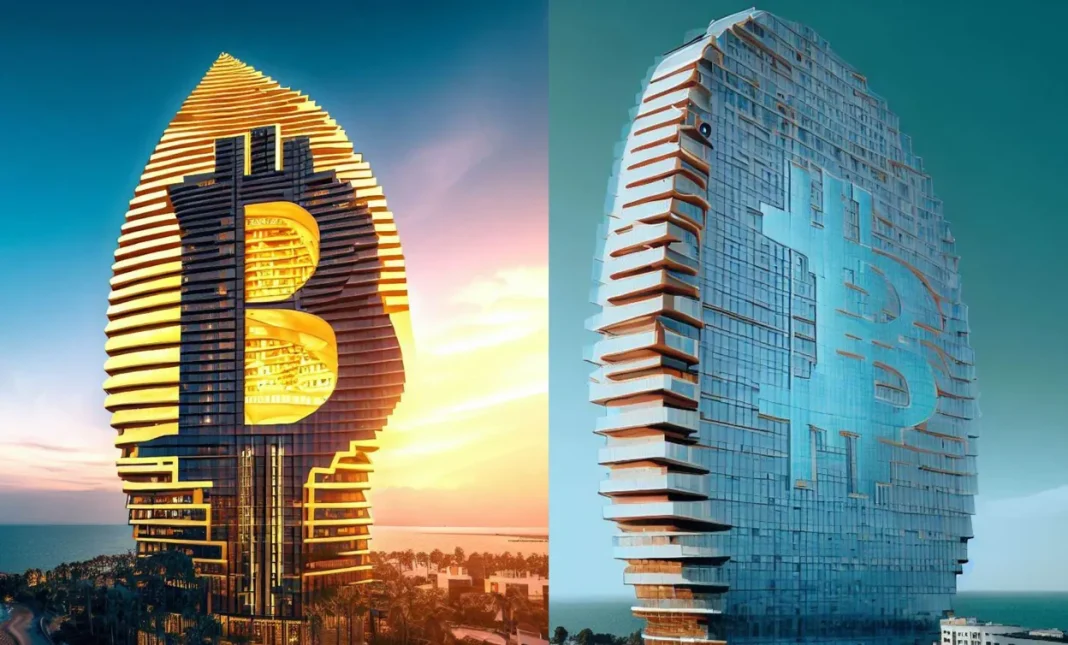
Would you still buy an entire house if you could own the source code of the most profitable buildings in the world? Dubai’s transformation has crossed a red line in 2026, leaving behind the sale of concrete to focus on the export of digital legal certainty.
The Land Department has confirmed that physical ownership is now a secondary asset compared to the immediate liquidity of tokens. This transition marks the birth of an urban infrastructure where the right to housing is managed as a software protocol.
The Digital Registry Revolution in Dubai
Who needs a traditional notary when a smart contract can validate your ownership in milliseconds? The new system implemented in Dubai allows any investor, regardless of their initial capital, to participate in the development of the most advanced urban infrastructure.
This paradigm shift not only reduces transaction costs but also eliminates entry barriers for the small saver. The city has become a living laboratory where financial yield is programmed directly into the architecture of the buildings.
The Impact of Blockchain Technology on the Local Market
At the heart of this transformation lies the Blockchain network, the invisible engine that ensures every apartment fraction in Dubai is unique and inviolable. We are no longer talking about technological promises, but about a title registry that operates 24/7 without human intermediaries.
The stability offered by this Blockchain network has attracted a steady flow of institutional capital to the emirate during this year. Spanish investors are discovering that the total transparency of the system in Dubai offers asset protection superior to any traditional European market.
Smart Cities: Living in the Urban Operating System
Is it possible for an entire city to operate under the same criteria of digital efficiency and service automation? Dubai’s free zones have integrated the management of utilities and rents into a single platform that optimizes energy consumption and owner profitability.
This integration turns every building into a node of a larger network, where software decides the best way to distribute resources. For the investor, this means that buying in Dubai is acquiring a license to use the most efficient and technologically advanced city on the planet.
Real Estate Software vs. Traditional Brick
The fundamental difference lies in the speed with which capital can enter and leave the market thanks to the Blockchain network. While in other countries selling a property can take months, in Dubai, the sale of a tokenized share is executed instantly and securely.
This dynamism is what defines the success of the 2033 strategy, where 7% of total transactions are expected to be digital. The agility of the system in Dubai is forcing other financial centers to rethink their outdated asset management models.
| Key Aspect | Traditional Model | Dubai Tokenized Model |
|---|---|---|
| Settlement Time | 30-90 days | Instant (On-chain) |
| Entry Barrier | High (Mortgage/Savings) | Low (From 500 USD) |
| Expense Management | Manual and bureaucratic | Automated via Software |
| Transparency | Opaque/Intermediated | Real Blockchain Audit |
The Future of Dubai as a Global Financial Center
The forecast for the coming years points to a total consolidation of this model, where the Blockchain network will be the norm and not the exception. The investor who understands today that property is software will have a massive competitive advantage in the digital economy of tomorrow.
My advice as an expert is to closely observe how Dubai’s regulation continues to evolve to protect the end user from volatility. Success lies in smart diversification and trusting infrastructures that prioritize liquidity over static physical possession.